He bumblebee of Franklin (Bombus franklini) is a native and exclusive species from a very small strip of southern Oregon and northern californiain it western United States.
Their population has decreased and they are no longer observed. specimens in the wild since 2006. Its disappearance was a mystery.
Now, a study published in the journal Proceedings of the National Academy of Sciences (PNAS) revealed that Franklin’s bumblebee collapse was not due to diseasebut to a combination of low genetic diversity, inbreeding and environmental factors such as fires and droughts.
The decline began thousands of years before modern human activity, a finding that changes the perspective on how and why some pollinators disappear.
The study was led by Rena Schweizergeneticist at the Insect Research Unit at USDA, in Utah, along with collaborators such as Lynn Kimseyprofessor emerita, and the renowned specialist Robbin Thorpwho monitored the species for more than two decades since the University of California at Davis.
The researchers reconstructed the evolutionary history of the species thanks to DNA from collected specimens. Much of the genetic material was obtained thanks to the collection of the Entomology Museum Bohart.
He decline of Franklin’s bumblebee shows that invisible threats can affect other native species. These risks often go unnoticed until it is too late.
He Franklin’s Bumblebee It is an apocritic hymenoptera insect, a member of the family Apidaenative to the western United States and with a very restricted range of approximately 34,437 square kilometers.
This limited area made it one of the most vulnerable pollinators of the continent.
Between 1998 and 2005, observations went from 94 individuals to just one before disappearing from the records in 2006, when one individual was last sighted on Mount Ashland, Oregon.
The population decline of Franklin’s bumblebee was abrupt and raised questions about whether this advanced extinction was due to an infectious agent, recent environmental pressure, or an accumulated process over thousands of years.
The team of researchers attempted to reconstruct the genetic and demographic history of the Franklin’s Bumblebeeby using DNA extracted from specimens preserved in museums.
They analyzed DNA extracted from females collected between 1950 and 1998 and kept in the Museum. The results showed that the Franklin’s bumblebee genetic diversity was very lowwhich weakened its ability to resist major environmental changes.
The team identified extensive patterns of homozygosity. This proved repeated cases of inbreeding that limited survival options.
The demographic reconstruction allowed us to know that the population decline of Bombus franklini It began more than 11,000 years ago, in the Pleistocene late.
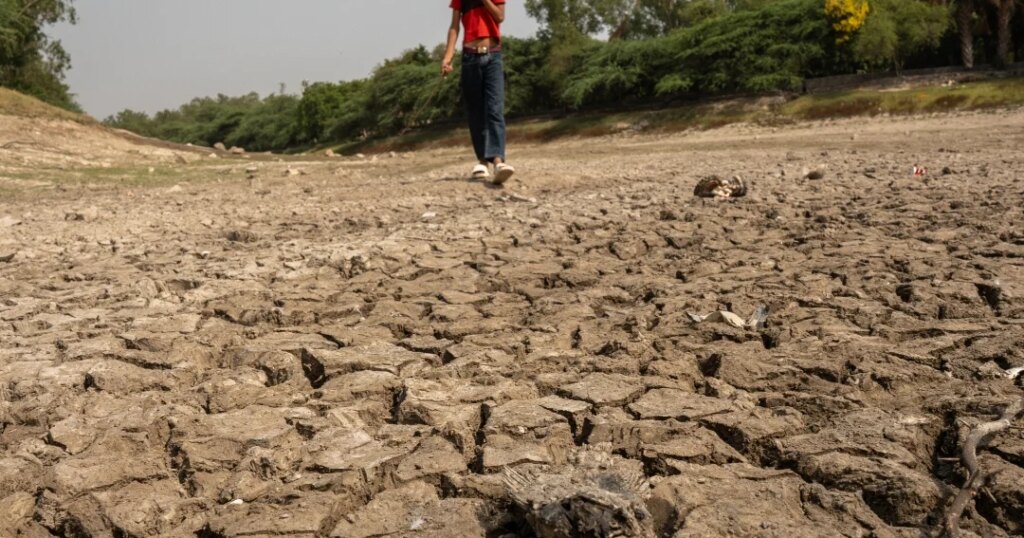
Losses accelerated in the last 400 years due to fires and droughts, which were extreme events associated with their restricted habitat.
The analysis ruled out infections as the main cause. “We found no evidence that pathogens drove the initial declines, contrary to what was previously believed,” the researchers noted.
Henry J. Franklin had described the species in 1912 and documented its pollination habits, which included plants such as California poppies, lupines, clovers, wild roses, mint, and peas, among others.
Its annual activity cycle, from May to September, is now conspicuous by its absence in southern Oregon and northern California. The value of the results of the new study is that they show how the loss of genetic diversity and environmental factors can endanger key pollinators, such as the Franklin bumblebee.
By understanding the causes of your decline, you can have tools to prevent similar extinctions in other species that fulfill essential functions in the reproduction of plants and crops.
Scientists suggest accompanying genetic studies with field monitoring that allows us to know the health of current pollinators.
Franklin’s bumblebee was already in irreversible decline long before the rise of human activity. But other factors, such as fires and droughtsjoined in and favored its disappearance.
“We conclude that a combination of historically low population size and limited genetic diversity along with environmental randomness increased vulnerability to extinction prior to recent anthropogenic effects,” the researchers stated.