The increase in traffic flow on roads has raised alerts about the presence of illegal checkpoints in Colombiaa practice that puts the safety of drivers at risk and can lead to extortion or scams. In the midst of official operations, the authorities have insisted on the importance of correctly identifying authorized checkpoints.
Legal checkpoints are part of security and control strategies on national roadsespecially during high traffic seasons such as holiday weekends. At these points, agents verify documents, vehicle conditions and possible antecedents, with the aim of guaranteeing road safety, according to information cited by Semana Magazine.
In contrast, illegal checkpoints are installed by people who pretend to be authorities or who take advantage of drivers’ lack of information to commit crimes. These points do not have institutional support and usually operate in isolated areas or with little visibility.
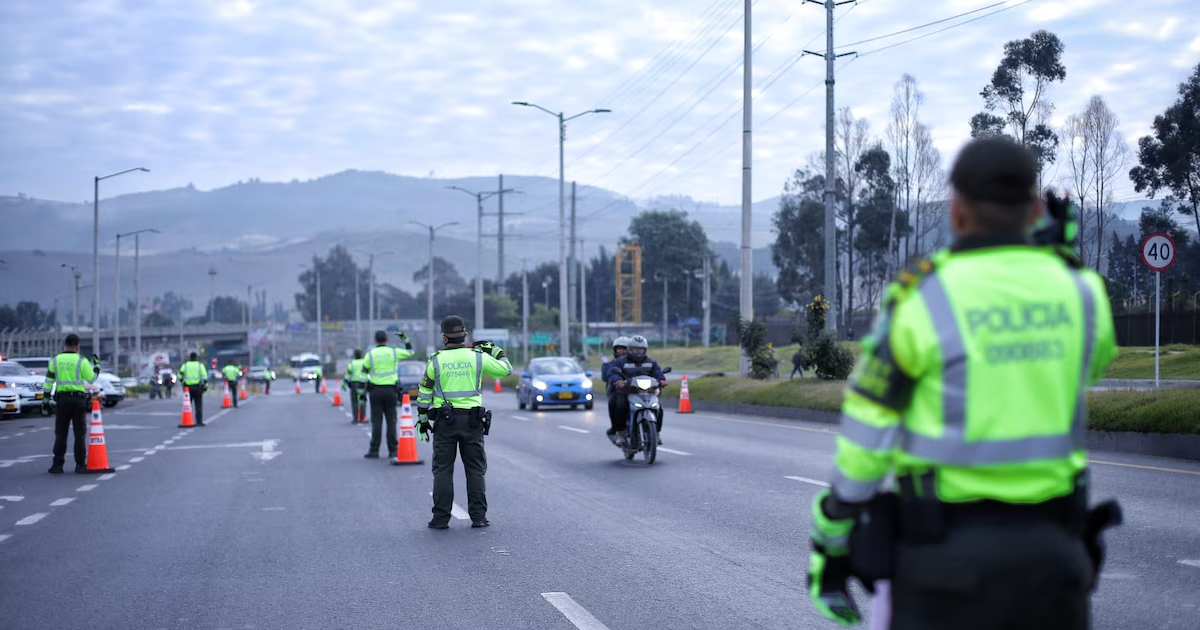
One of the main elements to identify a legal checkpoint is the presence of properly uniformed authorities. Agents must wear a complete uniform, visible badges and identification elements that allow them to verify their membership in an official institution.
In addition, authorized checkpoints must have prior signage. This includes cones, reflective fencing and lights that warn drivers of the approaching checkpoint, allowing them to reduce speed in advance.
Distance is also a key factor. Legal checkpoints must be marked with at least 50 meters aheadallowing a safe reaction by drivers. The absence of these measures can be a warning sign.
Another relevant aspect is the number of uniformed personnel. In small urban operations, between 4 and 6 agentswhile in larger seals the presence of more than 10 uniformedaccompanied by official vehicles such as patrol cars or motorcycles.
During the procedure, officials may request documents such as the driver’s license, property card and SOAT. These verifications are part of the usual controls and must be carried out in a transparent and respectful manner.
On the contrary, irregular behavior may occur at an illegal checkpoint. The lack of identification, the absence of signage or the refusal to explain the reason for the control are signs that should generate distrust.
Drivers also have the right to ask about the reason for the stop and to record the procedure, as long as they do so in a respectful manner. If the alleged agents prevent this type of actions, it may be an irregular situation.
In case of suspicion, it is recommended to immediately contact the emergency line 123to verify the legality of the procedure and receive guidance from the authorities.
Knowledge of these characteristics allows citizens to make informed decisions and reduce the risk of being victims of road crime. Identifying a legal roadblock not only protects the driver, but also contributes to strengthening safety on the country’s roads.
Added to this panorama is that official checkpoints are usually articulated with operations previously announced by the authorities, especially in high mobility seasons. These actions seek to prevent accidents, control illegal transportation and reinforce security in strategic corridors, so their presence responds to structured plans and not to improvised decisions on the road.
It is also important to note that legitimate authorities do not request cash or impose sanctions informally at the scene of the procedure. Any fine or summons must be recorded in official systems, allowing for later consultation. In the event of any irregular demand or undue pressure, drivers must refrain from handing over money and immediately report the situation to the competent entities.