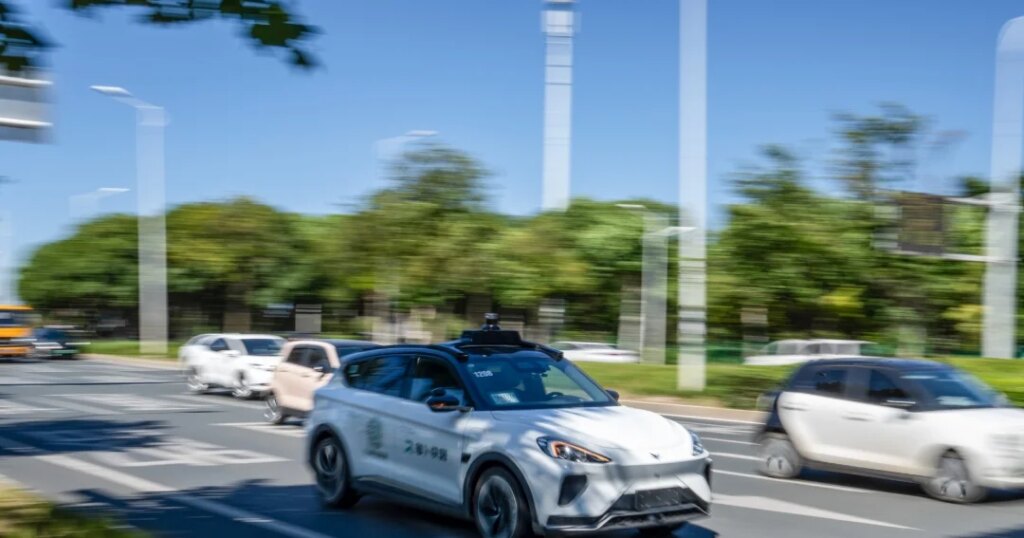
According to sources familiar with the matter, China has suspended the issuance of new licenses for autonomous vehicles, after dozens of Baidu Inc.’s Apollo Go robotaxis suddenly stopped in Wuhan last month, leaving passengers stranded and disrupting traffic.
The incident alarmed authorities, and three agencies, including the Ministry of Industry and Information Technology, They called a meeting earlier this month with officials from cities that have robotaxis or autonomous driving pilot programs, according to sources close to the case. Regulators urged local governments to conduct a thorough self-assessment and strengthen security surveillance to prevent similar incidents, added the sources, who preferred to remain anonymous because they were not authorized to speak publicly.
The suspension of new licenses prevents autonomous vehicle companies from adding new robotaxis to their fleets, starting new test projects or expanding to new cities, according to sources close to the matter. It is unknown how long the suspension will last.
Baidu shares fell 2.8% in Wednesday’s trading session in Hong Kong. Its rivals, robotaxis providers Pony AI Inc. and WeRide Inc., They also suffered decreases of 5.5% and 4.7%, respectively.
The shutdown is a setback for a fast-growing industry that, according to an analysis by Soochow Securities, will be worth 83.1 billion yuan ($12.2 billion) by 2030. Chinese companies are at the forefront of introducing this technology to global markets, competing with rivals such as Alphabet Inc.’s Waymo in the United States.
This is at least the second time regulators have suspended the issuance of new permits due to an incident involving Baidu.
In the Wuhan incident, more than 100 Apollo Go robotaxis broke down on the city’s streets on March 31, Chinese media reported. Local police indicated that the outage was probably due to a system failure, although Baidu has not yet commented on the matter. Apollo Go is the largest robotaxis supplier in China, with hundreds of vehicles in more than a dozen cities.
According to sources close to the case, Baidu’s robotaxis operations in Wuhan have also been suspended while local authorities investigate the incident.
MIIT, the Ministry of Public Security and the Ministry of Transportation did not respond to faxed requests for comment. A Baidu representative did not immediately respond to emailed questions.
Pony AI stated that its services in Beijing, Shanghai, Guangzhou and Shenzhen are operating normally. A spokesman said preparations for Changsha and Hangzhou were progressing as planned. WeRide stated that it supports the authorities’ efforts to ensure the highest safety standards throughout the sector and that its services in China continue to operate normally.
Beijing is trying to balance security concerns and negative public sentiment over AI-related job losses with the desire to boost national technology in the race for autonomous driving against the United States.
The licenses refer specifically to level four autonomous driving vehicles, which implies a high degree of driving automation in which human intervention is not necessary.
Two years ago, Wuhan residents protested the deployment of Apollo Go robotaxis in the city, fearing taxi drivers would lose their jobs. To calm public discontent, regulators froze permits at the end of 2024 for several months, and it was not until early 2025 that permits resumed.
Shares of the two U.S.-listed Chinese robotaxis companies have fallen this year: WeRide is down nearly 10% and Pony AI is down about 30%. These companies have not yet made a profit and need to invest heavily in developing new products and supporting their global expansion plans.