Follow and read us on Google Discover
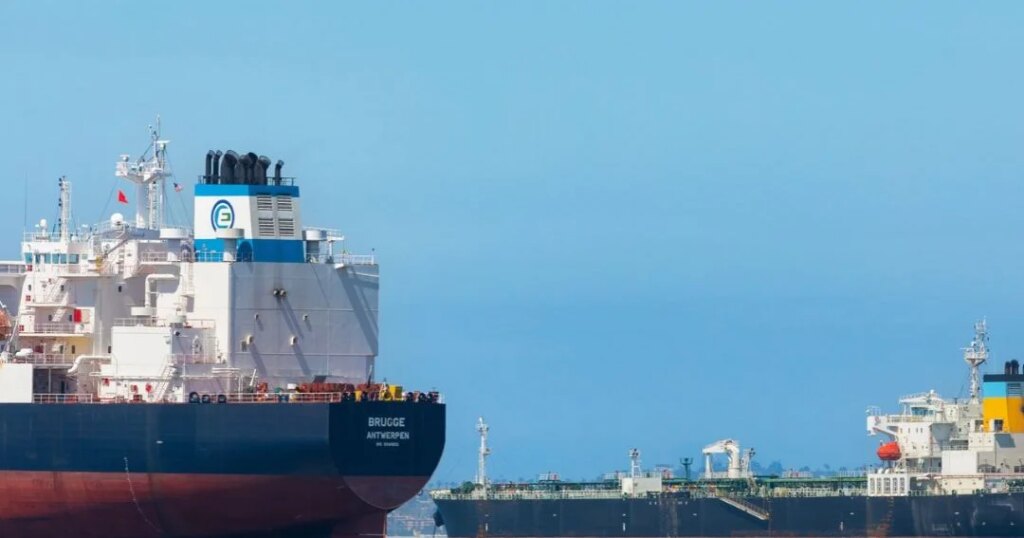
Prices on the busiest shipping routes of the Panama Canal have reached a new record, as lower water levels – linked to an increasingly intense El Niño phenomenon – and strong demand derived from the war with Iran are restricting maritime traffic.
Daily auctions for August transit space through the canal’s most-used locks have averaged $1.1 million so far this month, more than 16 times the average price for the same period last year. Prices have skyrocketed since the US and Israel began bombing Iran on February 28, resulting in the closure of the Strait of Hormuz.
At the same time, an increasingly intense El Niño phenomenon, a warming of the surface of the Pacific Ocean capable of causing severe droughts and warmer winter temperatures, began to take shape in June and could be stronger than usual this year, according to the National Oceanic and Atmospheric Administration, Noaah.
Prices are rising as low water levels are expected to limit the amount of cargo ships can carry through the canal and potentially reduce the number of passage slots later this year.
“The current problem is that water levels are constantly dropping, something that should not happen between May and December,” he explained. Ross Griffithdirector of freight pricing for the Americas at Argus. This year’s El Niño phenomenon has already affected maritime traffic on European rivers such as the Rhine and Danube, causing the cancellation of cruises and the diversion of cargo.
Meanwhile, the closure of the Strait of Hormuz, a strategic point through which 20% of the world’s oil used to transit, has forced Asian buyers to increase their purchases of crude oil and petroleum products on the US Gulf Coast, boosting demand and prices for transit through the Strait of Hormuz. Panama Canal.
In recent weeks, the average price to use the canal’s largest locks — which allow the passage of larger ships — reached $2.5 million, the highest recorded at an auction, according to data compiled by Argus. The prices of some individual auctions for the locks Neopanamax and Panamax have reached US$3.78 million and US$2.63 million, respectively, since July 28. The names of the locks refer to the size of the ships according to their carrying capacity.
Large shipowners that frequently use the Panama Canal, such as large container ships and liquefied petroleum gas companies, typically reserve slots in advance at fixed prices, generally well below average auction prices, rather than competing for them in daily auctions. However, up to 30% of the channel’s total traffic can compete in daily auctions instead of reserving time slots in advance.
The recent price increase occurs after the entry into force, in July, of restrictions by the Panama Canal Authority that regulate the minimum height of ships in the water, known as draft.
Reducing draft forces ships to carry less cargo, so they float higher. This raises prices for shipping companies and their customers and can lead to long queues of ships at the entrance to the 80-kilometre-long waterway.
Three draft restrictions announced last month for locks Panamax would reduce the water level in which a ship can operate to 47.5 feet (14.3 meters) by Sept. 3, from its usual level of 50 feet.
On August 3, some 113 ships were waiting to transit the canal, either through previously reserved spaces or participating in daily space auctions, compared to 40 on January 2.
Water levels in the artificial Gatún Lake, which flows into the Panama Canal, are below the 1965-2022 average and are expected to fall further in the coming months, according to calculations by Argus. Although water levels are higher than in 2023, which was an exceptionally dry year, the projected decline is much steeper and ahead of the dry season that begins in December.
The Panama Canal Authority declared to FT that some vessels that recently transited paid amounts exceeding US$1 million in auctions to meet their needs and reflected “temporary market fluctuations,” not a rate set by the Panama Canal.
“The announced adjustments will not reduce the number of daily ship transits,” said an authority spokesperson. But depending on how conditions change, the authority could impose more restrictions, the spokesperson added.