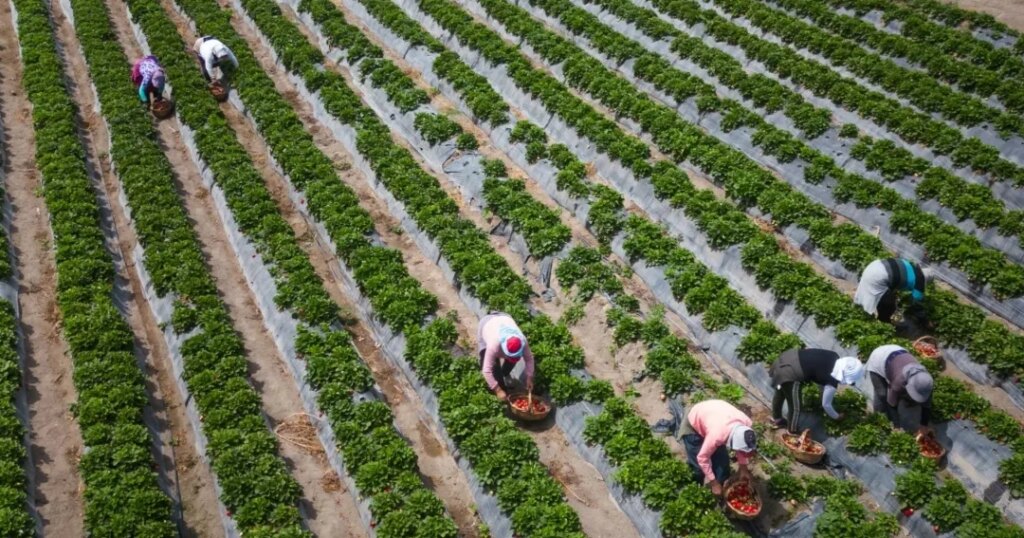
He positioning of Peru’s agro-exports is beginning to be reflected on the regional board. In 2025, our country, with US$ 14,485 million, will surpass Chile in international agricultural shipments (US$13,209). However, the neighboring nation still maintains a slight advantage in the total calculation of the agricultural sector.
Although the balance seems tilted so far, there is good news for 2026. Gabriel Amaro, president of the Association of Agricultural Producers Guilds (AGAP), explained this turn in the game and maintained that The sector maintains a certain margin of resilience even in the face of possible climate events.
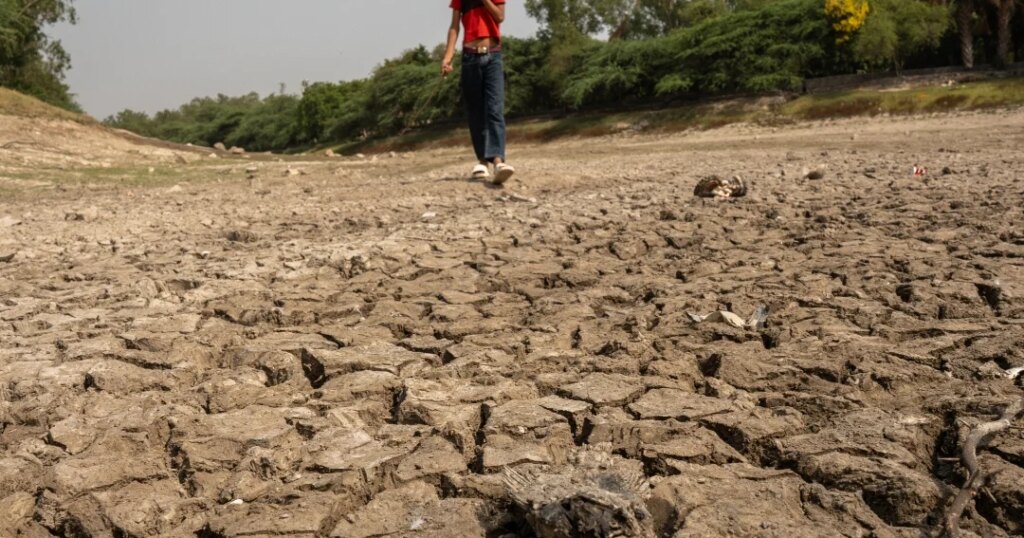
For this reason, he believes that agro-export, compared to traditional agriculture, will be better able to face a scenario where, as Gestión reported, 9 million hectares are at risk from El Niño.
THE STRONG “LETTERS”
In detail, When adding the livestock component (US$ 1,778 million compared to just US$ 94 million for Peru), Chile’s agricultural exports reached US$ 14,897 million, figure that is above US$ 14,579 million Peruvians.
The gap, however, is minimal and the union spokesperson anticipated an adjustment in the ranking: “I am sure that we will surpass Chile in 2026.”because in the last five years, with all the factors we have had: El Niño, coup d’état and seven presidents, we have grown much more than Chile,” declared Amaro.
He argued, along these lines, that Every year, national agricultural exports advance faster than those of their competitors: “From 2024 to 2025, Peru grew 17% and Chile only grew 2%.”
But, it should be noted, the sector’s optimism is accompanied by a warning: “The new government must be pro-investment and pro-legal security, and not one that is going to expropriate all economic groups or that is going to create a second agrarian reform. If a government does not come out against investment, I am sure that we will surpass Chile this year.”
In this context, Management consulted Amaro whether the leadership that Peru would achieve would be lasting or whether it would be more of a still fragile advance.
“There are several important issues to consider (that impact the long term)(…) The State policies that have allowed Peru to continue growing must be maintained. For example, regardless of the Government, free trade agreements continue to be promoted. Furthermore, the issue of the Agrarian Law has been recovered last year,” he responded.
He even made a point about the last point: “If the Agrarian Law had not been repealed in 2020, we would be at US$ 17,000 or US$ 18,000 million.”
To this he added a comparison linked to infrastructure: “Chile does not have the irrigation projects that Peru does. We have more than 24 irrigation projects along the entire coast, which will incorporate more than 1.4 million hectares.”
“On the other hand, there is an important aspect: the geographical position of Peru. The country is one of the ten in the world that has the most fresh water, which is not the case with Chile. And it has the majority of climates that exist in the world; Therefore, it allows you to diversify production in different regions. From everything I tell you, Peru is going to surpass Chile this year and in the following years. It will be sustained,” he concluded.
EXPANSION POTENTIAL?
According to Amaro, Chile’s agro-export portfolio maintains strengths in specific crops in which Peru does not yet participate, but could within a while. Among them the cherry stands out (our country is already taking the first steps, as this newspaper reported), which generates more than US$ 3,000 million, as well as apples and kiwis. In contrast, Peru has opted for other lines in order to nourish its offer.
For the expert, This scenario does not necessarily imply a structural disadvantage, but rather that both countries have followed different productive strategies in the map of agro-export trade. Therefore, the possible increase in logistics costs due to United States tariffs would affect them homogeneously.
He also noted: “Even though we have an excellent climate, an excellent geographical position, ports in which investments have been made for years and an Agrarian Law, we could lose the opportunity if the government does not act as it should.”
“In the next ten years, if the State does its share of work, We are going to reach, at least, US$30,000 million. “That is the potential we have,” estimated.
EXTERNAL MARKETS
Beyond the current factors, the agro-export sector sees growth opportunities if the market opening strategy is maintained. According to Amaro, In recent years, access to new countries has been possible thanks to the joint work between the private sector and the National Agrarian Health Service (Senasa): together they have promoted health processes to enter economies of the stature of China and Japan.
In his opinion, It will be essential for the incoming government to accompany the union in diplomatic and promotional efforts that replicate the previous movements.
Even so, the performance of exports will also be subject to climatic factors that, although they would not extinguish the “via”, they would adjust the number a little. Among the products that could be most exposed are avocado, citrus, pomegranate and asparagus; while grapes and mango would register a lower impact due to the calendar of their agricultural campaigns.
“We would have to see the effects, because a moderate Coastal El Niño also affects Ica with the activation of streams, or Áncash or Lima. Everything will depend on how much it varies and how strong it is. It (the phenomenon) can take a product in the flowering stage and cause, due to the variation in temperatures, the flower to dry out or not mature. That is, it is very relative,” he analyzed.