The leaders of the NATO They will meet next week in Ankara, where the Europeans aim to ease disagreements with US President Donald Trump over Iran and Greenland, and demonstrate that they are stepping up to defend the continent, while Washington cuts its commitments to the alliance.
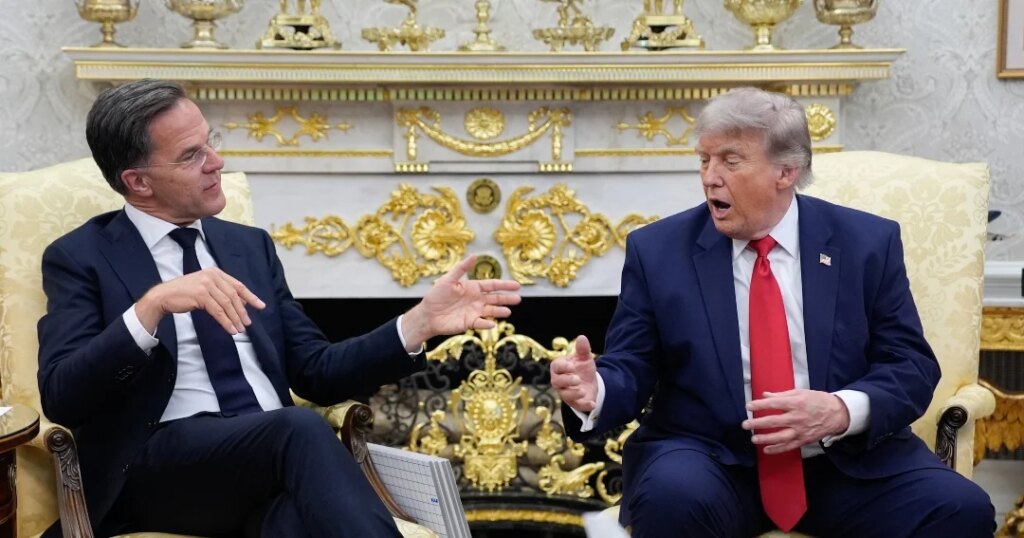
The Secretary General of NATO, Mark Ruttesays the meeting next Tuesday and Wednesday will show that Europeans are keeping their promises to increase defense spending to deter Russia of any attack, and that arms deals worth tens of billions of dollars will be signed.
The leaders are also expected to pledge to continue funding arms supplies for Ukraine’s fight against the Russian invasion. The Ukrainian president, Volodymyr Zelenskywill attend a dinner hosted by the Turkish president, Tayyip Erdoganwho will also hold bilateral talks with trump.
European officials say they hope strong relations between trump with Erdogan and Rutte guarantee a smooth summit, but they cannot be sure, given the persistent transatlantic tension over the Iran war and the US president’s frequent criticism of the NATO.
In a publication in Social Truth on thursday, trump complained that the United States was spending money to protect members of the NATO “without obtaining any benefit in return.”
Rutte and other leaders of the NATO have insisted that the alliance contributes to the United States’ own security and that the Europeans are heeding repeated calls requests of trump to increase spending on their own defense.
“Next week’s summit will focus on converting additional spending into operational capabilities and significantly expanding our defense industries,” he declared. Rutte on Wednesday in Berlin.
“The NATO “It is, and always will be, a transatlantic alliance, but we must rebalance it for the better,” he added. “In close collaboration with the United States, European allies and Canada are assuming greater responsibility for conventional defense in Europe.”
Rutte noted last month that European members of the NATO and Canada spent $90 billion more on defense in 2025 than the previous year, reaching a total of more than $570 billion.
Last year, in The Hague, leaders of the NATO They agreed to allocate 3.5% of GDP to fundamental defense items, such as weapons and troops, by 2035, which represents an increase compared to the previous objective of 2%. They also agreed to invest an additional 1.5% of GDP in broader defense-related investments, such as strengthening cybersecurity.
European officials hope that that summit will be repeated, in which trump He reaffirmed the US’s commitment to the 32-member alliance and its Article 5 mutual defense pact, while also praising his counterparts.
However, the last 12 months have severely tested the alliance, with trump threatening to seize Greenland from Denmark, also a member of the NATOand then waging a war against Iran that has shaken the world economy without consulting European allies.
The United States has also announced the withdrawal of troops from Europe, has reduced the forces it allocates to the defense plans of the NATO — including an aircraft carrier, refueling aircraft, fighter jets and drones — and has launched a six-month review of its military presence on the continent.
“The alliance is still alive and well, but a little bruised,” said one European diplomat, who spoke on condition of anonymity.