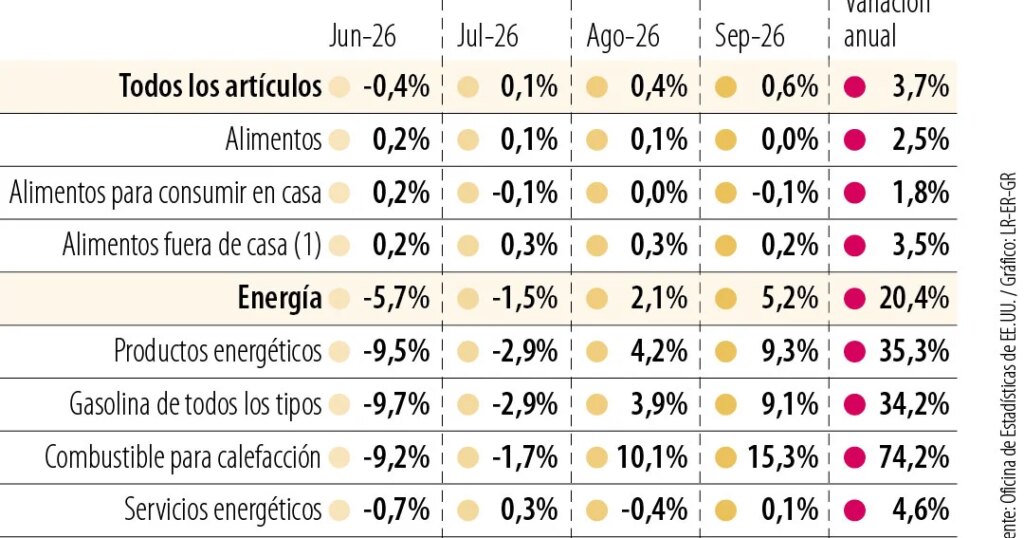
Inflation accelerated again in the United States and put more pressure on the Federal Reserve, FEDto raise interest rates again. Consumer prices increased 0.6% in September compared to August, the largest monthly increase since April, and accumulated an increase of 3.7% in the last 12 months, according to the Bureau of Labor Statistics.
The increase was driven by fuels, but price pressures also extended to other products and services. The inflation Core, which excludes food and energy to better identify the behavior of other prices, rose 0.3% monthly, more than expected, and stood at 2.6% annually.
The figures complicate the picture for the FEDwhich in September raised rates for the first time since 2023 in response to the rise in inflation. Although its officials have indicated they have time to review the data before making another decision, their latest projections point to a further increase before the end of the year.
He report September is the last reading of consumer prices before the central bank meeting on October 27-28. Therefore, its results are especially important to define whether the entity raises rates again this month or pauses to evaluate how the economy evolves.
Raising rates seeks to curb inflation by making loans more expensive and moderating consumption and investment. However, it also makes it more expensive to finance purchases and projects. The FED You must evaluate whether you need to apply another increase to contain prices or if you can wait to see the effects of the decision you made in September.
The president of the central bank, Kevin Warshis scheduled to speak Thursday night New York time from the meetings of the International Monetary Fund in Bangkok. His intervention could give new signals about how the entity interprets the rise in prices and what factors it will take into account at its next meeting.
Gasoline was one of the main drivers of inflation in September, with an increase of 9.1% compared to the previous month. It was its biggest increase since March, when the outbreak of war with Iran sent fuel prices soaring. The fear now is that this increase in costs will continue to be transferred to other household expenses.
When fuel prices rise, transporting goods costs more. Over time, that increased spending can be reflected in the prices of food, furniture and other products that depend on transportation to reach the consumer. Therefore, the concern of economists goes beyond what it costs to fill a vehicle’s tank.
“Americans are seeing inflation reduce their income,” he said. Heather Longchief economist of Navy Federal Credit Union. The expert added that the FED does not observe progress in controlling inflation and that the increase in fuels It is beginning to have repercussions in other sectors.
Health care services increased 0.3% monthly. The equivalent rent for owners, an indicator that estimates the cost of living in one’s own home, also increased 0.3%.
Used cars, clothes and toys
Pressures also appeared in used cars, clothing and toys. In addition, services, excluding energy and rentals, recorded a strong increase for the second consecutive month. These results fuel concerns that price increases are becoming more widespread. The report also highlighted increases in technology products, amid pressures associated with the construction of data centers. Prices of computer software and accessories rose 28.4% compared to the previous year.