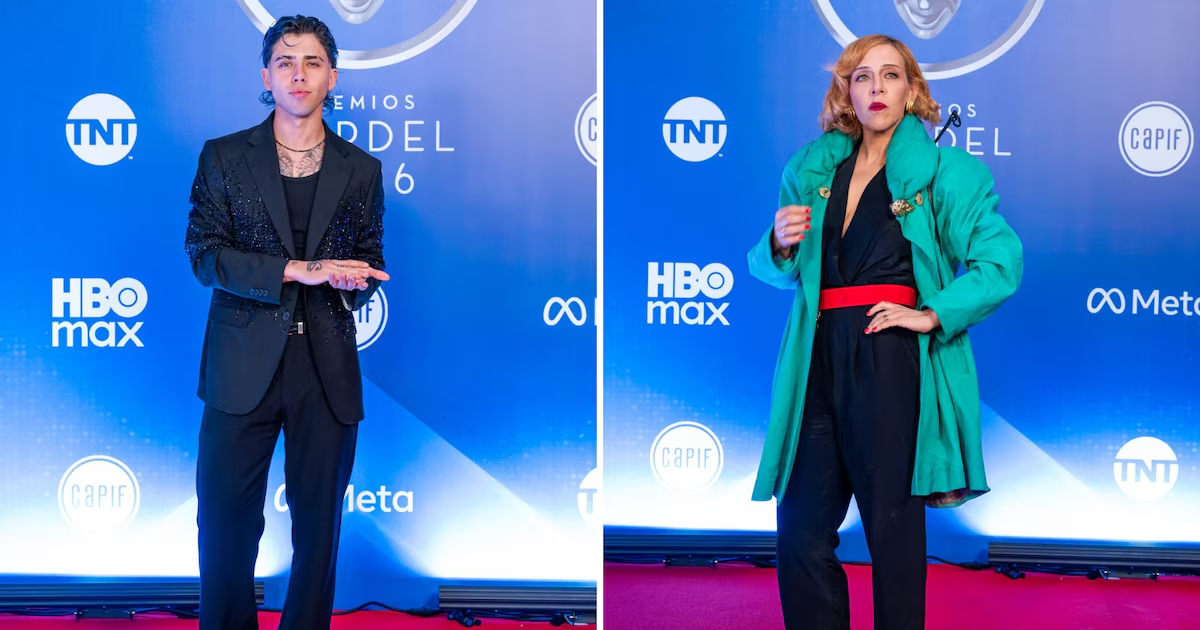
On a night in which Argentine music celebrated its highest distinction, the red carpet of the Gardel Awards 2026 It became the scene of a true aesthetic revolution. The celebrities surprised with looks that opted for textile experimentation and the richness of materialschallenging the traditional codes of local fashion. This year’s edition made it clear that the visual impact no longer depends only on color or silhouettes, but on how the garments feel and react to light and cameras.
The first big moment of the night was experienced with the arrival of Lali Espositowho chose a two-piece tailored set made of a high-gloss synthetic material with “croco”-type relief. The jacket, with marked shoulder pads and pointed lapels, emphasized the artist’s silhouette and added drama to the look, while the cut pants oxford provided movement and fluidity. The key detail was a wide-brimmed hat in the same fabric, unifying the style and generating an imposing visual block, representing the Gardel Awards logo. By dispensing with garments under the jacket, Lali’s skin was integrated as part of the design. The singer sought a balance between gothic and haute couture.
Luck Rafor its part, presented a renewed version of the classic men’s suit. The interpreter chose a black two piece suitintervened on the upper part with rhinestone appliqués, beads and sparkles that generated a rough and shiny texture under the flashes. The transition to the waist returned opacity to the ensemble, achieving a sophisticated gradient. The look was completed with a plain T-shirt and a link necklace, in a synthesis of etiquette and rock spirit. lMen’s tailoring showed its most playful and experimental side.
Juliana Gattassinger of Miranda!emerged as an absolute benchmark for the use of winter textures on the red carpet thanks to a three-quarter length cover-up made of thick ribbed corduroy, dyed in a vibrant emerald green. The garment, with maximalist volume and eighties-style oversized collar, broke with traditional protocol and took the historically informal fabric to the realm of haute couture. Embossed gold buttons and a deep red belt marked bold blocks of color, while a plain black jumpsuit base balanced the composition. The styling was completed with dark tights and tricolor platforms, reinforcing a staging that re-signifies the corduroy as a symbol of avant-garde and visual play in Argentine fashion in 2026.
The trend of transparencies was consolidated as one of the great axes of the night, with figures such as Angela Torres and Olivia Wald betting on lightness and the layering of materials. Torres chose a long light blue chiffon dress, with an organic fall and a subtle train, which played with transparency to reveal the silhouette of her legs. The bare back, supported only by metal straps, added risk and sophistication. The fluidity of the design evoked the glamor of old Hollywood as interpreted by Generation Z.
In the case of Olivia Waldthe contrast of textures was the most commented point. The singer combined a dress base of ivory chiffonwith a draped bodice and semi-sheer skirt, with a short faux fur coat made of voluminous panels. This mixture of “fur coat” and lightness generated a visual contrast that referred to European winter maximalism, but adapted to the Argentine music scene. The trend of the fluffy coat over transparencies was imposed as a symbol of luxury.
Angela Leiva opted for architectural sophistication on the red carpet, choosing an asymmetrical gala dress in petrol blue that stood out for its visual strength and originality. The design incorporated an irregular neckline, resolved with a single shoulder and a thin opposite strap, accompanied by a textured fold at the top of the corset. This work of overlapping layers provided a three-dimensional relief, making the light from the flashes highlight each fold and curve of the dress.
In a context saturated with brightness and relief, the well-executed sobriety captured the public’s attention. Carlos Baute He opted for a matte black double-breasted suit, with satin lapels and no shirt, replaced by a fine knit T-shirt. The patent leather shoes provided the only reflective flash to the outfit. The combination of formal and casual textures defined the concept of contemporary luxury. Classic tailoring is updated with small gestures that break the rigidity.
The musician and content creator Ian Lucas He also opted for the global trend of the tuxedo on bare skin. Her suit, with an impeccable cut and structured shoulders, added a rhinestone choker and square-toed shoes, enhancing the contrast between the texture of the textile and the skin. This proposal consolidated the resignification of men’s tailoring at the event.
Juan Ingaramo brought a renewed take on menswear tailoring to the red carpet, fusing urban elegance with the carefree spirit of pop. Her outfit, made of light fabrics and with a semi-oversized fit, offered freedom of movement in both the sleeves and the fall of the pants, moving away from the traditional rigidity of the label.
The group Turf He resorted to the aesthetics of film noir and the gangster culture of the 1930s to present themselves in a coordinated manner. All members wore double-breasted suits with pinstripes, white shirts and red or wine satin ties, accompanied by fedora hats and dark glasses. The use of the pinstripe as a base textile pattern and the combination of cloth, satin and felt recreated the vintage style with a dose of pop irony. Turf’s staging definitely showed that fashion is also part of the show.
The 2026 edition of the Gardel Awards It marked a turn towards the prominence of textures, the combination of opposite materials and experimentation with layers and volumes. The men abandoned the traditional flat suit to explore new shapes and textures, while the female artists opted for sensuality through transparencies, draping and superimpositions. The garments were designed to be portrayed in high definition, with materials that interact with light and movement.
Among the keys observed, the coexistence of opposites (faux fur with chiffon, vinyl with bare skin), the resignification of tailoring and the return to embossed fabrics They were the most outstanding concepts of the night. Argentine fashion thus showed a textile complexity that brings it closer to the main international capitals.
Photos: RS Photos and Press of the Gardel Awards