The president of the United States, donald trumpdeclared on Saturday that he had rejected an Iranian proposal to reopen the Strait of Hormuz and end fighting in the Middle East.
Iran presented the initiative in the General Assembly of the UN in New York, stating that it had been conveyed to the Americans through Qatari mediators and could reopen the strategic waterway and end hostilities in the region within seven days.
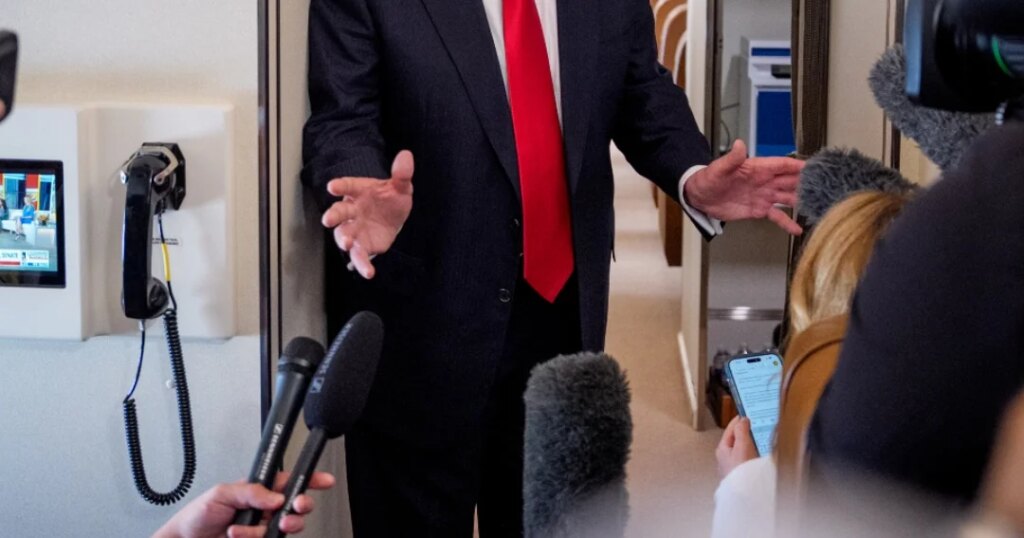
However, speaking to reporters at the White House, trump He stated: “I reject your proposal… I have rejected your agreement.”
“They want to reach an agreement to open the Strait of Hormuz immediately because they are losing badly,” he said before leaving for Tennessee. “We are winning by a landslide.”
“They want to reach an agreement and I think that is good, I also like to reach agreements. What they want is to immediately open the Strait of Hormuz… because they do not get money, since they obtain their income from the Strait of Hormuz,” he said.
The United States has imposed an economic blockade on Iran to pressure Tehran to lift its blockade of Hormuz, which has sharply reduced shipping traffic through the strait, although Trump again asserted that the United States was in control of the waterway.
He Wall Street Journal was the first to report that trump had rejected the Iranian proposal, citing unnamed US officials.
According to the newspaper, trump He was privately skeptical that Iran would meet his demands and had told his team that a new bombing campaign was likely after the November midterm elections.
A US official had previously stated that talks with Iran through mediators were “positive and constructive.”
The Iranians also held talks with their Saudi rivals over the Strait of Hormuz, underscoring the stakes in a seven-month conflict that has disrupted the flow of oil through a crucial shipping route and taken its toll on the global economy.
The Iranian Foreign Minister, Abbas Araqchi, declared to the press on Friday in United Nations that the proposed agreement would lead to a seven-day countdown to the reopening of the strait and a truce in regional fighting.
“If there is seriousness on the part of the United States to reach an agreement and reopen the Strait of Hormuz, everything is already prepared,” Araqchi said. If the United States agreed, the warring parties could begin broader talks “on mutually agreed upon issues.”
This could potentially include debates over Iran’s nuclear program. trump has said that Tehran should never acquire a nuclear bomb, while a senior Iranian official told Reuters that Iran would not show any flexibility regarding its nuclear program, even if the United States accepted its peace deal.
Iran would not make concessions on its rights, including enriching uranium or shipping its highly enriched uranium out of the country, the official said.
The Iranian president, Masoud Pezeshkianin an interview on the program C.B.S. Face the Nation, stated that Tehran was willing to hold talks on its nuclear program and other issues, but would not accept “intimidation or coercion.”
“Iran does not seek war, but will defend itself against pressure, threats and attacks,” he said. Pezeshkianadding that it had already been agreed that “we should not develop nuclear weapons.”
Previous diplomatic attempts have failed to end the war, which began on February 28 with American and Israeli attacks.
Since then, the war has alternated between pauses and new attacks, causing thousands of deaths, while weakening Iran’s conventional forces and damaging its already ailing economy.
Iran and its allies have responded by spreading the conflict throughout the region. Iran has attacked US allies in the Gulf with drones and missiles, while its Houthi allies in Yemen have attacked Saudi interests.