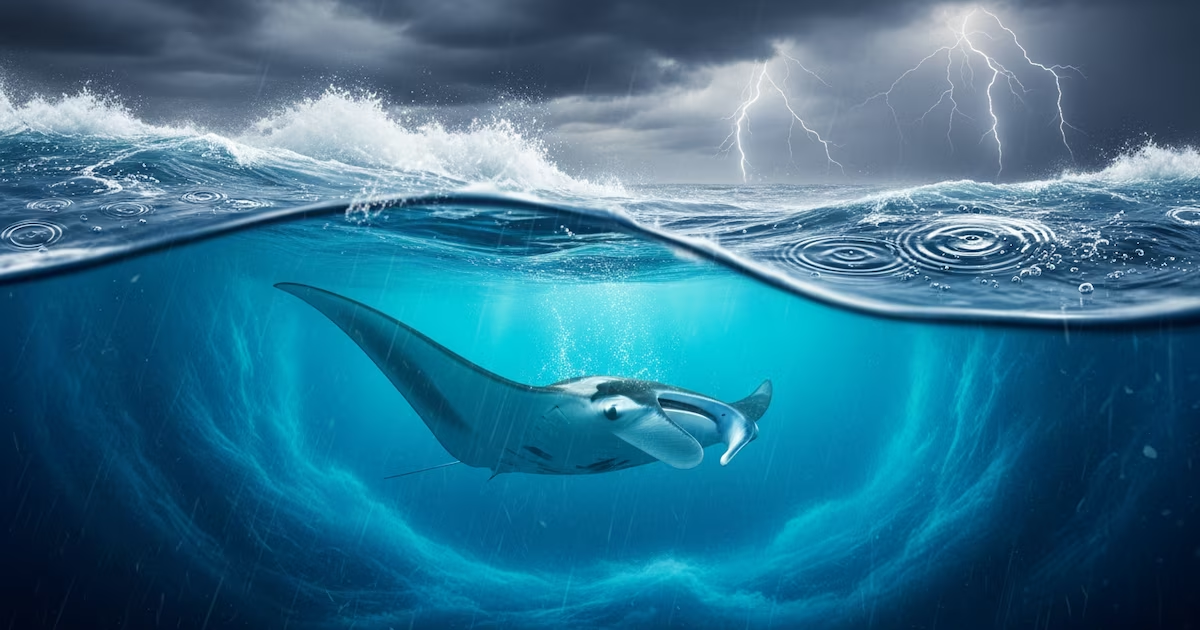
The manta rays of reefs dive to great depths to survive intense storms, according to a study by the Sunshine Coast University conducted in southeastern Papua New Guinea. The work, published in the journal PLOS One, reveals how this adaptive behavior can help in the conservation of a vulnerable species.
The manta rays reef They face storms and oceanographic changes by descending to deeper areas of the ocean, which allows them to access food and avoid threats. This vertical adjustment in their behavior represents an essential mechanism for their survival in extreme conditions, without having to leave their usual habitat.
The scientific team of the Sunshine Coast University tracked these manta rays for three years using satellite tags and found that the 75% of the specimens It remained less than 10 km from its marking point in Milne Bay, even during two different monsoons, that is, the seasons in which intense changes in rainfall and winds occur in the region.
The greatest distance traveled by one of these animals was 87 kmmuch smaller than expected for its size. Anna Knochel, lead author of the study, highlighted that the data shows an expansion in the vertical use of water, instead of leaving the region to search for prey.
According to Knochel, the ability to modify the diving pattern in response to oceanographic fluctuations allows manta rays to avoid threats such as overfishing and bycatch. The work details that the species Mobula alfrediweighing up to 850kg and a wingspan of up to 4.5 metersinhabits mainly tropical and subtropical waters of the Indo-Pacific. Until now, there were no detailed studies of its behavior in this region of Papua New Guinea.
The data collected shows that manta rays maintain limited mobility around the islands Samarai and the Milne Baywhich confirms the relevance of this coastal habitat. Dr. Guy Stevensexecutive director of The Manta Trust and collaborator of the study, stated that the fact that these animals continue to be closely associated with the Samarai Islands and the surrounding waters demonstrates the importance of this environment for the species.
The research included experts from Conservation International Asia-Pacific, Re:wild US, the University of Plymouth and Columbia University. The results showed that, when the surface layer of the ocean changes, manta rays descend even further, showing behavioral flexibility in the face of seasonal variations.
The permanence of manta rays in limited areas during extreme weather events suggests that localized management can be effective for your protection. Having accurate data on their functional habitat in depth and movement patterns is essential to prevent threats such as overfishing and guide conservation policies. Furthermore, this information allows identify shelter and feeding areas more precisely that should be prioritized in management plans.
Anna Knochel stressed that the results can provide a solid basis for the development of the manta ray sighting tourism and to design sustainable management plans in the region. Understanding how these species interact with their environment allows us to create conservation strategies that benefit both environmental protection and local economic development.
These findings provide the first detailed record of the ecology and movements of reef manta rays in Papua New Guinea. They also lay the foundation for long-term protection measures and new economic opportunities supported by the University of the Sunshine Coast. They also open the door to new research that helps evaluate how their movements vary depending on the season and sea conditions.