The Panama Canal expects its revenue to exceed its forecast of $5.2 billion for fiscal 2026, after the closure of the Strait of Hormuz spurred more maritime traffic through the waterway that connects the Caribbean Sea to the Pacific Ocean.
Ilya Espino de Marotta, The new head of the Panama Canal Authority stated in an interview Thursday that revenue for the fiscal year ending Sept. 30 will be “a little bit higher” than the initial estimate, driven by increased traffic and auction payments for ships willing to jump the line. In April, one ship paid an extra $4 million to move to the front of the queue as wait times for unreserved crossings had increased.
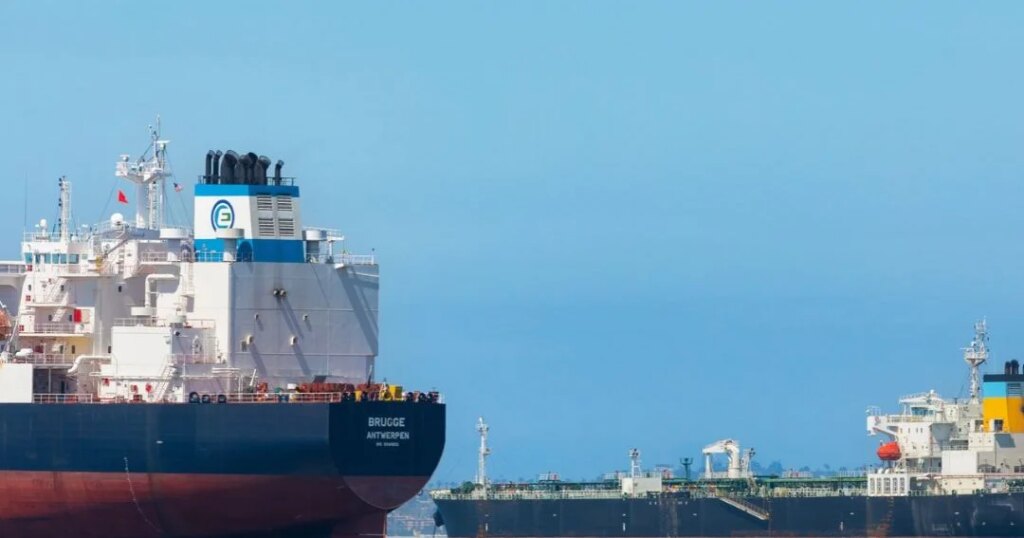
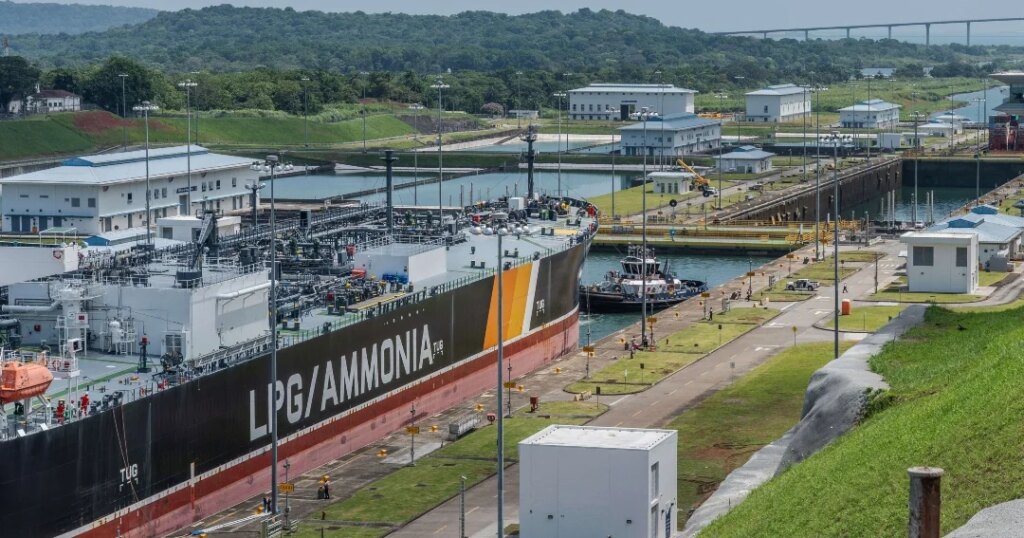
Liquefied natural gas tankers flocked to the canal as buyers from Japan, China and Korea turned to American suppliers to replace Middle Eastern producers, such as Qatar, affected by the war in Iran. Also increase the number of tankers carrying American crude oil to Asia through the canal.
At the height of the Hormuz Canal closure, it handled between 40 and 41 ships a day, up from the usual 34 or 35, according to Espino de Marotta. Since then, traffic has been reduced to about 36 or 38 ships per day. Bookings for June and July are strong, which should contribute to an increase in revenue, he added.
The canal currently sees an average transit of one LNG carrier per day, as American suppliers continue to ship goods to Asia even after the agreement to reopen the Strait of Hormuz. That trade had largely disappeared in recent years, he explained, as European buyers absorbed American supply following Russia’s invasion of Ukraine.
Channel expansion
Espino de Marotta, a Panamanian engineer who graduated from Texas A&M University, has worked at the canal for 41 years. She helped oversee the canal’s expansion, which opened in 2016, and was appointed deputy administrator in 2019. In May, the canal’s board of directors appointed her administrator for the period 2026-2033. He will take office in September.
Espino de Marotta will oversee several major projects, including a new dam and reservoir, two ports and an LPG gas pipeline, the total cost of which is estimated at around US$8.5 billion.
“The channel has always been an institution with long-term planning,” said Espino de Marotta. “We are executing a very ambitious strategic plan for the next 10 years.”
Last year, Donald Trump threatened to regain control of the canal over alleged Chinese interference in the waterway. In January, the Supreme Court of Panama annulled a contract awarded to the Hong Kong company CK Hutchison Holdings to operate two ports near the canal. The government of President José Raúl Mulino took control of the ports and awarded their interim operation to APM Terminals, a division of AP Moller-Maersk, and Mediterranean Shipping Co., based in Switzerland.
According to Hawthorn by Marotta, The canal is prequalifying bidders for the reservoir and its own port terminals, separate from those previously operated by CK Hutchison, and expects construction on both projects to begin in late 2027 or early 2028.
The canal authority is in talks with the energy industry to finalize the details of the pipeline, including the hydrocarbons it will transport, and aims to complete all projects by 2032, it said. Financing for the dam is already secured, and the canal is likely to turn to international markets and seek multilateral loans to finance part of the ports and pipeline.