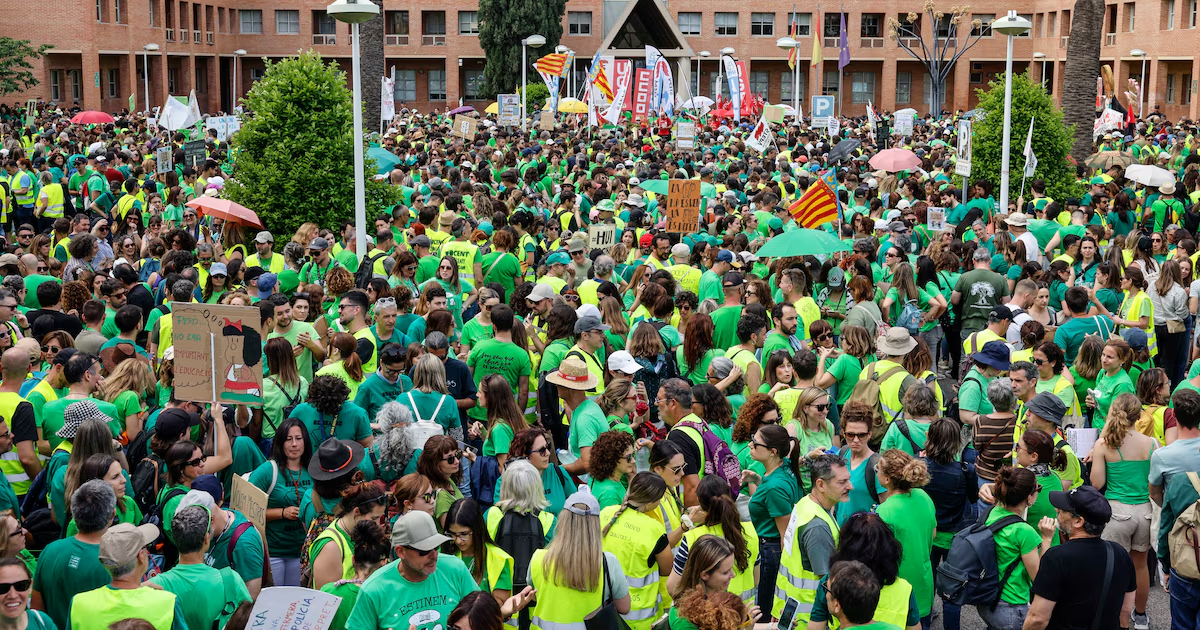
The tide of protests in the world of education expands. The Federation of Independent Teaching Unions (FSIE) has launched a state campaign of mobilizations in response to the “lack of effective progress” by the Ministry of Education in the face of the demands of publicly funded subsidized education. The announcement comes in the middle of the negotiations of the VII concerted education agreement, which affects one million teachers. The concerted teachers want the salary and rights that those in the public have, but the battle is not proving easy.
FSIE has reported that, despite the institutional support of the State School Boardobtained through the unanimous approval in Plenary of the extension of their request to the opinion of the Bill, the teachers of the concerted network continue to be excluded from the reduction in the teaching load that is currently being processed. The Government has promised that the weekly teaching day for teachers in public centers will be 23 hours in Early Childhood, Primary and Special Education, and 18 hours in the rest of the teachings. The concerted teachers are left out.
With all this, the union organization emphasizes that this demand has been transmitted to both the Ministry and the parliamentary groups, and they reiterate that the lack of progress by the administration negatively affects thousands of workers and families linked to the sector.
The organization has detailed that the protests will take place every Friday, from May 29 to June 19, in front of the Ministry headquarters, as well as before Government Delegations and Subdelegations. The movement, of national scope, uses the motto “Same public service, same conditions” to make their demands visible.
Among the demands raised by FSIE are the urgent convening of the Concerted Education Roundtable, the launch of working groups aimed at calculating the real cost of maintaining a school place and the need to ensure sufficient financing so that decent working conditions exist and effective equality is achieved throughout the educational system financed with public resources. The organization has assured in its press release that the absence of concrete actions by the Ministry “still fails to make effective progress on issues that FSIE considers fundamental for the future of the sector.”
The general secretary of FSIE, Enrique Ríos, has highlighted the contradiction between the official discourse and the exclusion of concerted education from the improvements that do apply to other groups within the educational system. Ríos has stated that “it is difficult to understand that constant appeals to equal opportunities continue while an essential part of the public service remains excluded educational system of basic improvements that are applied in other areas of the system,” according to statements included in the note released by FSIE.
The union has warned of the effects of persistent underfunding in its sector. According to FSIE, this situation mainly harms the administration and services staff (PAS)affects the management and organization of the centers and has a negative impact on the quality of the education offered. Enrique Ríos added that “without sufficient funding it is not possible to guarantee either decent working conditions or true equality of opportunity for families who choose concerted education supported by public funds.”
FSIE maintains that it is incoherent for administrations and political leaders to repeatedly appeal to quality and educational equity, when, according to the union, these are not guaranteed in the real conditions of the concerted sector. The organization has recalled that the Organic Law of Education expressly recognizes the role of subsidized centers supported by public funds as part of the public educational service, which, in its opinion, makes it even more unjustifiable that thousands of employees and families remain excluded of the improvements applied to other educational areas financed with public funds.