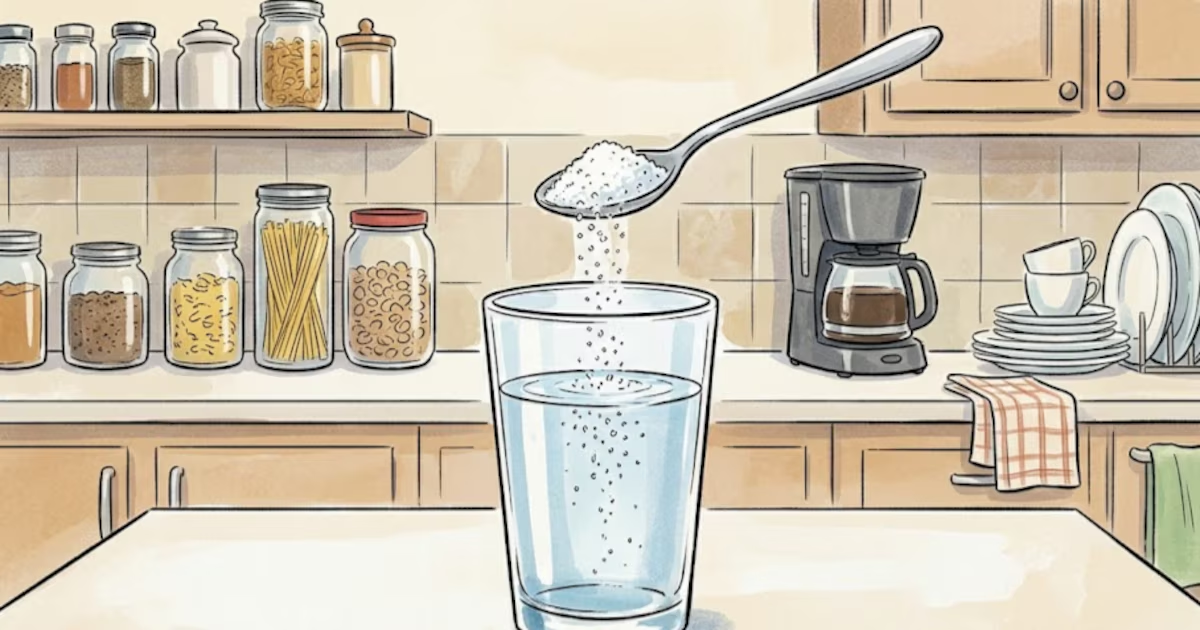
The trend of adding salt water to the daily routine as a method to improve hydration has gained momentum on social media, especially driven by influencers. However, the scientific community and health specialists warn about the limited relevance of this practice and the possible risks of adopting it without criteria.
Various medical organizations, such as World Health Organization (WHO)agree that adding salt to water It does not improve hydration in most people and can be harmful. Only those who experience large fluid or electrolyte losses—such as high-performance athletes or people subjected to intense heat—may require additional sodium replacement.
For most people, everyday food already provides sufficient amounts of sodium, so it is not usually necessary to add extra. The American Heart Association (AHA) warns that excessive salt consumption is linked to an increased risk of hypertension and cardiovascular disease.
Jen Burning, expert cited by Verywell Healthexplains that although sodium is essential to regulate fluid balance and acts as an electrolyte, its contribution through diet is sufficient for almost all people.
He also mentions that most people do not need to replace sodium outside of specific sports or medical contexts.
Dr. Mark Hyman, a leader in longevity, advises starting the day with a glass of simple water, without other ingredients, as part of well-being habits supported by scientists consulted in GQ.
The medical community and organizations such as the WHO and AHA insist that adding salt to water does not improve hydration for the general population and may increase health risks, such as hypertension and heart disease.
Adding salt to water without medical need or in excess can cause adverse effects, including increased blood pressure. blood pressurethe risk of heart diseases and the fluid retentionwhich can aggravate pre-existing conditions. Unsupervised sodium supplementation can alter electrolyte balance and impair kidney function.
Modifying the sodium content in daily water does not provide benefits for most people, it is enough to drink sufficient fluids on a regular basis.
Those who suffer from kidney disease, hypertension, heart problems or type 2 diabetes should strictly avoid consuming extra sodium in any form.
Salt water can be useful only for highly specific groupslike the high performance athletes or people whose activity involves sun exposure and profuse sweating.
In these scenarios, the significant loss of water and electrolytes justifies replenishing sodium, either with salt water or electrolyte drinks, always under professional supervision.
Those who go through episodes of fever, vomiting or diarrheasituations that cause loss of fluids and electrolytes and require medical advice. Outside of these contexts, best practice remains to maintain regular natural water consumption.
For those who work or study in closed, air-conditioned places or without exposure to heat, adding salt to the water is unnecessary, since the body does not face sodium losses that justify such a measure.
The proliferation of viral challenges and wellness tips on platforms has amplified the dissemination of practices without support from health authoritiesgenerating misinformation among users. Following non-personalized instructions, such as adding salt to water without medical indication, can lead to negative health consequences, especially in the case of undiagnosed previous conditions.
Excessive salt consumption is recognized as a preventable risk factor that, in the long term, contributes to the development of cardiovascular diseases, hypertension and kidney disorders in millions of people. Furthermore, the repetition of habits promoted by influencers can lead to the adoption of inappropriate measures, displacing recommendations based on scientific evidence.
Faced with the abundance of unregulated information, consultation with certified health professionals is crucial to receive proper guidance on hydration and electrolyte management.
Avoiding the imitation of viral trends helps preserve both cardiovascular health and metabolic balance and prevents complications associated with unnecessary sodium consumption or arbitrary modification of the daily diet.