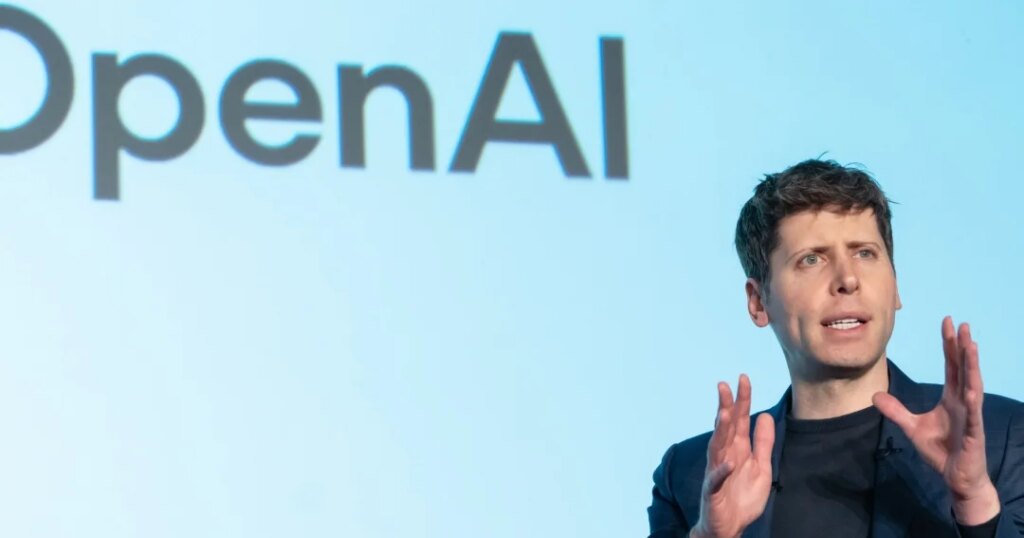
OpenAI closed a deal to raise US$122 billion from investors at a valuation of US$852 billion, marking by far the largest financing round in its history and reinforcing its expensive bet on more chips, data centers and talent.
Most of the financing, which had been negotiated for months, came from three large technology companies. Amazon.com Inc. agreed to invest $50 billion in the round, while Nvidia Corp. and SoftBank Group Corp. contributed $30 billion each. A significant portion of Amazon’s investment — $35 billion — is conditional on OpenAI going public or reaching the technological milestone of artificial general intelligence.
The ChatGPT creator also raised funding from a long list of other notable investors, including Andreessen Horowitz, Abu Dhabi’s MGX, DE Shaw Ventures, TPG, and T. Rowe Price. The company’s valuation includes the capital raised. Bloomberg News previously reported the details of those negotiations and the financial terms of the deal.
OpenAI’s funding is, by any measure, one of the largest transactions in history — surpassing not only previous rounds of private equity-backed startups, but also acquisitions and initial public offerings. It reflects the enormous appetite to participate in a technology considered transformative not only for companies and industries, but for entire economies. The deal far surpassed recent funding rounds from other AI startups such as Anthropic PBC and xAI, according to data compiled by Bloomberg.
In a first for the company, OpenAI raised more than US$3 billion from individual investors through banking channels. The startup also indicated that it will be included in several exchange-traded funds managed by Cathie Wood’s Ark Invest, with the goal of giving more people exposure to the artificial intelligence firm.
OpenAI CFO Sarah Friar said the funding “far exceeds even the largest initial public offering ever.” As he explained, the agreement seeks to give the company “a lot of flexibility” to invest in computing resources and its AI roadmap in a context of uncertainty in public markets, including the war with Iran.
The AI developer has previously noted that it is committed to spending more than $1.4 trillion on physical infrastructure in the coming years to support its software. To fund those bets, OpenAI and rival Anthropic have tapped a matching group of venture capital funds and tech companies, including cloud and chip providers like Amazon and Nvidia. This complex web of alliances has raised concerns about the consequences if the technology does not meet today’s high expectations.
Both startups are also expected to go public this year, raising additional capital and testing Wall Street’s appetite for unprofitable but fast-growing AI companies. Fray said OpenAI needs to be “prepared to be a public company,” calling it “good practice,” without offering specific details on IPO plans. He also noted that an IPO can serve as a “trust-building moment” in the firm.
OpenAI said Tuesday that it currently generates $2 billion in monthly revenue. The company, which gained notoriety as a product for everyday users, is also gaining traction among corporate customers. Enterprise sales now represent 40% of its revenue, a figure that is expected to increase 50% by the end of the year.
Amazon’s financial commitment also includes a cloud agreement to host and distribute OpenAI models to enterprise customers. This alliance will contemplate an income sharing scheme, Fray said, without revealing amounts.
OpenAI has stepped up its revenue strategy this year by introducing advertising on ChatGPT, an option that CEO Sam Altman had previously described as a “last resort.” The company, which typically relied on a subscription model, said its ad pilot program reached $100 million in annualized revenue after just six weeks.
In recent weeks, OpenAI has made progress in simplifying its wide range of products. The company said it will stop supporting the Sora AI video generator. It is also developing a desktop application that will integrate its chatbot, programming tool and web browser, a product that OpenAI calls on its blog “our SuperApp.”
“Users don’t want disconnected tools. They want a single system that can understand intent, execute actions, and operate across applications, data, and workflows,” the company said in a blog post Tuesday, confirming the plans.
In an internal memo about the decision to remove Sora, Altman said OpenAI will also reorganize some of its security teams to better integrate that work into the development process. and allow the CEO to dedicate more time to infrastructure projects and capital raising.