The appointment of Mario Alberto Alejo García at the head of the Technical Inspection Unit of the National Electoral Institute (INE) was challenged by three advisors of the organization that they consider does not meet the experience requirements required by law.
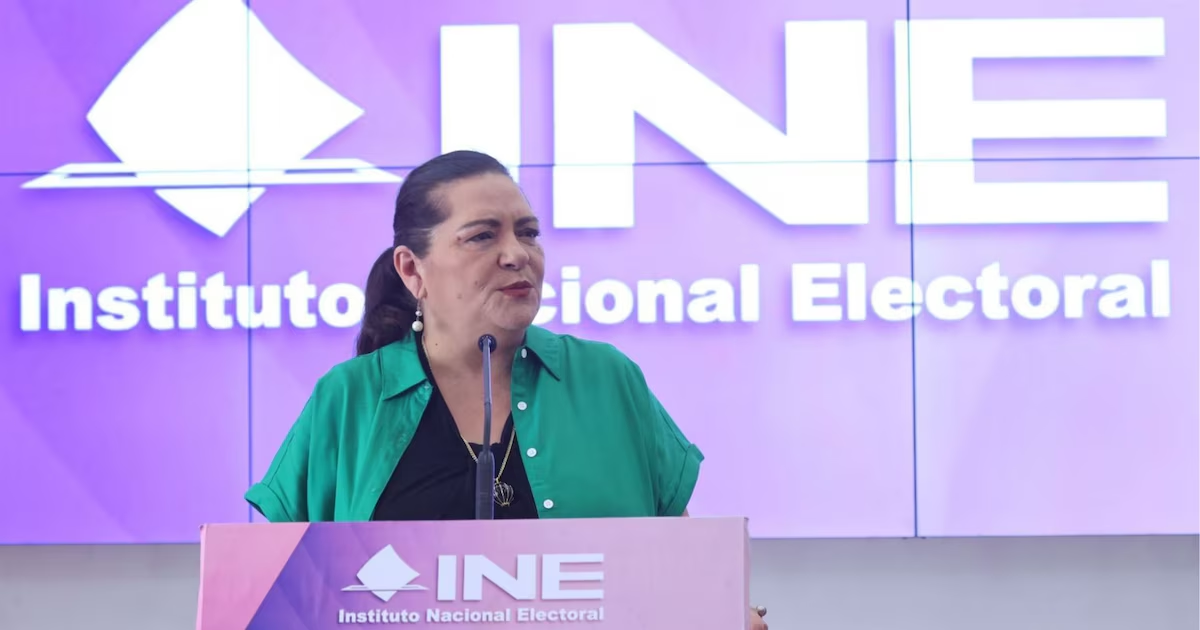
The appeal presented by the directors Martin Faz, Carla Humphrey and Arturo Castillo before the Electoral Tribunal of the Judicial Branch of the Federation requests to revoke the official letter signed on April 22 by the president of the INE, Guadalupe Taddei, who appointed Mario Alberto Alejo García as head of the Technical Inspection Unit.
The councilors argue that the law requires at least five years of experience as a supervisory manager, a requirement that, according to them, Alejo García does not meet.
His professional career has been mainly at the municipal level and in the local Congress of Tabascowhere he was a law intern, legal representative, parliamentary advisor and technical secretary in committees. From 2023 until his appointment, he served as advisor to advisor Jorge Montaño.
The directors affirm that these functions are not equivalent to managerial experience in supervision and that the resume presented was “inflated” to pretend that he does fit the profile.
The resource warns that the lack of verifiable experience can affect the surveillance and operation of the INE, since electoral oversight requires specialized knowledge and decision makingfundamental to guarantee the transparency and legality of the electoral processes.
In 2025, a legal reform allowed the presidency of the INE to make direct appointments in the General Executive Board, without requiring the consensus of the General Council.
Guadalupe Taddei used this power to appoint six new startersincluding Alejo García. The directors who presented the challenge consider that this scheme limits the collective review of profiles and makes it difficult to monitor compliance with legal requirements. Furthermore, they point out that this situation affects collegiality and reduces transparency in the integration of the internal bodies of the INE.
The challenge highlights that before the reform, appointments went through a collegiate process, which allowed an exhaustive review of the profiles. Without that filter, directors warn that there is less control over the suitability and experience of those in key positions.
The Inspection case joins other internal allegations in the INE regarding the integration of the General Executive Board. Of the ten main positions, only one was held by a woman, which breaks the legal principle of gender parity.
advisors like Martin Faz and Carla Humphrey They warned that the majority of the new incumbents do not come from the Professional Electoral Service, which shows a preference for external and non-technical political profiles. They also criticized that there was no technical review or collegiate consultation before making the appointments.
In recent changes, several positions were assigned to people close to allies of President Taddei. In addition, officials close to other counselors were left out of the new structure, which deepened internal differences. These decisions have generated an atmosphere of division within the INE, where some councilors have publicly expressed their disagreement and concern about the direction the institute is taking.
The president Taddei defended his decision, ensuring that all files were reviewed by the Legal Directorate and that the legal requirements were verified. He clarified that only documented activities were considered and that the process was legal and transparent.
Now it will be the Electoral Court who decides whether the appointment of Alejo García is maintained or revoked, as requested by the dissatisfied councilors.