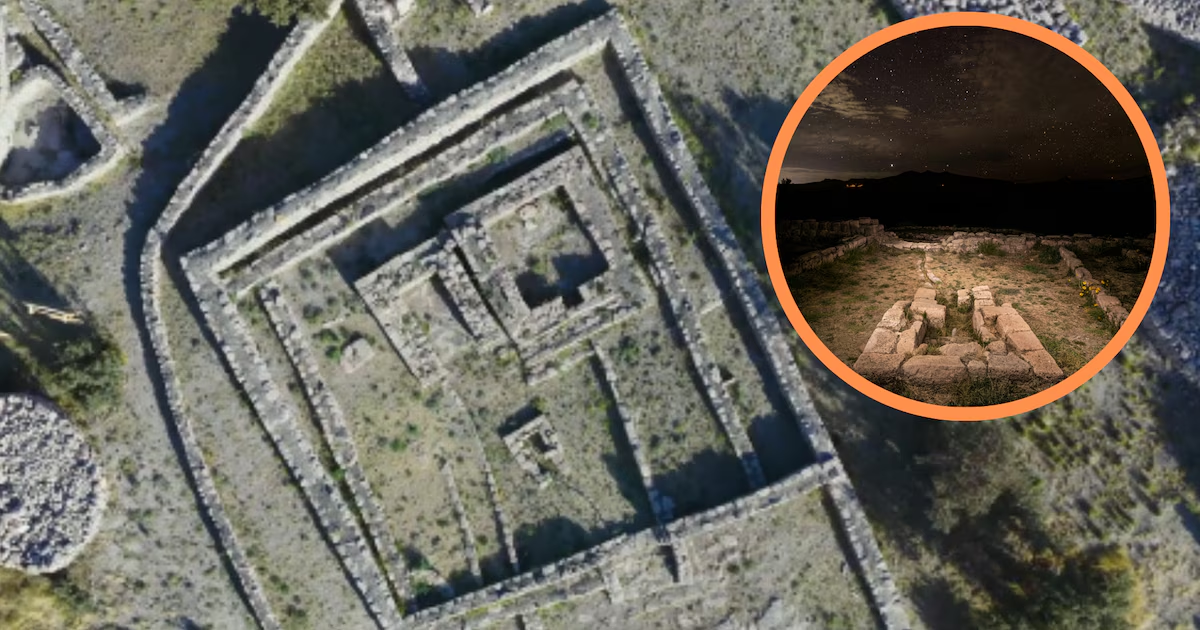
For decades, T’aqrachullo remained a set of little-explored ruins in the southern Andes of Peru. The site, located in Cusco on a plateau near the Apurimac Riverhardly aroused interest outside the academic field. Farmers in the area used part of the land for farming. grazing and cultivationwhile archaeologists recorded pottery fragments and scattered structures without a definitive interpretation of their true importance.
That perception began to change after a series of excavations promoted by the Ministry of Culture between 2019 and 2024. The work allowed the discovery of ceremonial objects, monumental structures and evidence of occupation by different Andean cultures. The set of findings opened a new discussion among specialists about the possibility that T’aqrachullo corresponds to Ancocaguaa citadel mentioned in colonial chronicles and considered one of the most important temples of the Inca Empire.
The research achieved international repercussion after a publication by National Geographic Magazinewhich exposed the magnitude of the archaeological site. According to the report, The ruins extend over 17 hectaresa dimension that far exceeds the size of Machu Picchu. The complex includes homes, tombs, sanctuaries and ceremonial spaces associated with different historical stages of the Peruvian Andes.
The decisive moment for the excavations occurred in September 2022. The archaeologist Dante Huallpayunca was participating in work inside a stone enclosure when one of the team members detected metallic remains buried under the soil of Inca occupation.
The discovery allowed us to recover almost 3 thousand sequins made of gold, silver and copper. The objects remained wrapped in a camelid leather bag and covered with remains of animal hair. Later studies determined that the pieces belonged to the 16th century and were part of ornaments used by members of the Inca elite in religious ceremonies.
“Many archaeologists never find something like this in their entire career,” Huallpayunca told National Geographic. The discovery changed the focus of the investigation and led specialists to reconsider the historical importance of the site.
Subsequent excavations also revealed necklaces, bracelets, rings, stone tools and ceramic remains. Part of the materials appeared within ceremonial sectors linked to rituals related to water, the sun and other Andean religious expressions.
The main debate among researchers revolves around the identification of T’aqrachullo with the legendary Ancocagua. References to that place appear in colonial texts written by Spanish chroniclers such as Pedro Cieza de León and Juan de Betanzos.
According to these descriptions, Ancocagua was among the most relevant temples of the Inca Empire along with ceremonial spaces such as Qorikancha and Pachacámac. The chronicles also indicated that the place was the scene of clashes between the rebel Incas and Spanish troops during the years after the conquest.
The American archaeologist Johan Reinhard He maintained since the late 1990s that T’aqrachullo matched the geographical features described in those historical documents. However, for years the theory remained without conclusive support.
Recent research strengthened that hypothesis. The discovery of a large ceremonial temple, along with remains of ancient Wari and Qolla occupations, reinforced the idea that the site maintained religious relevance for centuries.
In statements to SuccessfulHuallpayunca indicated that the researchers concluded that “This temple was very importantboth for the Inca era, but also even for other eras.”
One of the aspects that caught the most attention of archaeologists was the urban extension of the complex. According to studies carried out by the Ministry of Culture team, the site contains more than 300 stone enclosures used as homes.
The structures They were built with blocks worked manually and joined with mortar made with earth and clay. Specialists also found lithic tools used in the construction of the enclosures.
Huallpayunca explained that the magnitude of the citadel allowed us to estimate the existence of a considerable population. In addition to homes, the site features tombs, ritual areas and sectors dedicated to religious ceremonies.
The magazine National Geographic reported that the excavations identified nearly 600 structures among homes, sanctuaries and funerary spaces. The researchers also found remains of ceremonial fountains and deposits with metal objects embedded in stone.
The archaeologist Emerson Pereyrawho participated in the excavations, stated that he never observed similar discoveries during his experience in Machu Picchu. “I have never seen anything in Machu Picchu comparable to what we have found in T’aqrachullo,” he said.
The investigations also detected signs of armed conflicts within the archaeological complex. Among the materials found were stone projectiles, obsidian spearheads and skeletons with traces of violent wounds.
Archaeologists maintain that these elements could be related to clashes that occurred during the last years of the Inca Empirea stage marked by rebellions after the Spanish invasion led by Francisco Pizarro.
Another relevant aspect corresponds to the presence of remains linked to the Wari culture. Archaeologist Alicia Quirita identified ceramic fragments associated with that civilization during explorations carried out in the 1990s.
Recent discoveries confirmed that the place maintained occupation long before the Inca period. Part of the ceremonial structures would be close to 2 thousand years old, according to the studies cited.
After the excavations, the Ministry of Culture He carried out restoration and conservation work in different sectors of T’aqrachullo. In 2024, an interpretation room was also set up for visitors.
According to Huallpayunca, the site already receives local tourists, mainly from Cusco. The archaeologist indicated that a tourist route that integrates other nearby archaeological complexes located in the province of Espinar still needs to be developed.
The specialist pointed out that there are sectors reserved for future excavations and new researchs will depend on resources and state management. “Archaeology right now in Cusco is just growing and has many more years to come,” he declared during the interview.