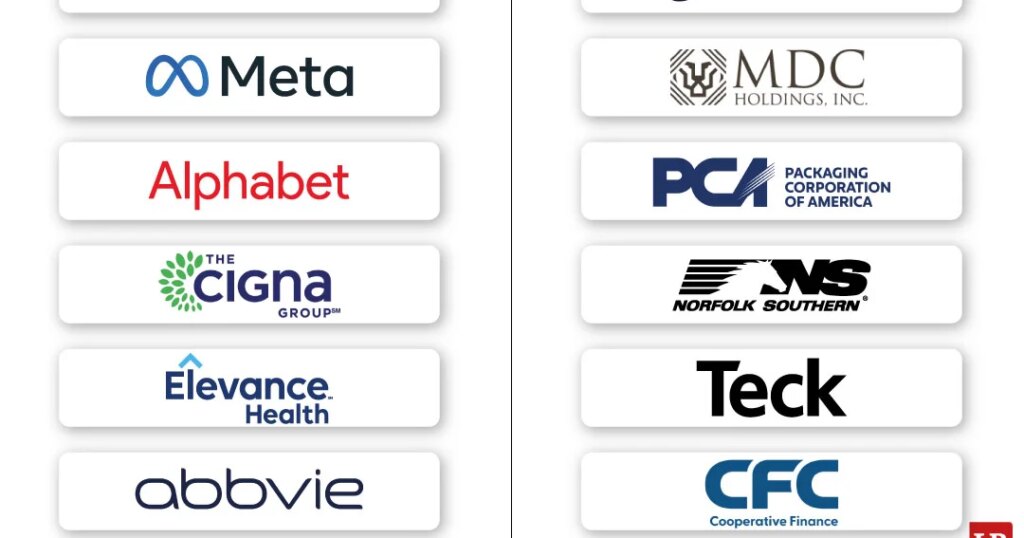
The Addition of Meta Platforms Inc., Alphabet Inc. and Microsoft Corp. to a Highly Rated Corporate Credit Default Swap Index It’s another sign that investors are increasingly covering hyperscale companies’ debt amid skyrocketing bond sales.
The trio are among those included in S&P Dow Jones Indices’ CDX Investment-Grade index, which went into effect Friday. This index, which measures perceived credit risk, is updated every six months and allows investors to protect themselves against possible losses or speculate on the solvency of companies.
“The incorporation of hyperscale companies underlines not only the importance that these issuers have acquired for the corporate credit markets, but also the increased activity in technology CDS,” Jigar Patel, macro credit strategist at Barclays Plc, told Bloomberg News. He added that this move should make the CDX index “a better representation of the US corporate bond market and a more effective hedging tool.”
Big tech companies are tapping into global debt markets at a record pace to fund AI infrastructure. This has contributed to a considerable increase in interest in derivatives.
A year ago, swaps tied to individual companies did not exist for many top-tier tech giants. However, according to the Depository Trust & Clearing Corp., they are now some of the most traded US derivatives contracts outside the financial sector.
Oracle leads the way
Oracle Corp. has the most liquid investment grade CDS, with an average weekly trading volume of its default swaps exceeding $830 million, according to Nicholas Godec, head of tradable fixed income and commodities at S&P Dow Jones Indices, who cites data from DTCC.
“A few years ago, I don’t think anyone would have predicted that hyperscale companies would fall into the investment grade category of the CDX,” Godec said in an interview. “They have become some of the most relevant names in the market, and their inclusion will only improve the overall profile of the CDX IG index.”
The cost of protecting Oracle’s debt against default for five years began to skyrocket in September amid concerns about AI-related spending, and in December it reached levels not seen since 2009 for the first time.
S&P Dow Jones Indices, which became the index manager after S&P Global acquired IHS Markit Ltd, announced last week the change in the composition of the latest CDX index, the 46 series.
The index is rebalanced every March and September, taking various factors into account. These include the liquidity of the CDS, the credit rating, the debt structure of the issuer and the liquidity of the corporate bond market, according to Godec. Companies that are downgraded to junk status, such as Paramount Skydance Corp. following its recent downgrade, are excluded from the index.
According to Godec, the new components restore the maturity of the index and generally increase trading volume as traders move to the new series, which becomes in fact the so-called reference index.
For their part, corporate bond indices typically rebalance each month.