The commemoration of Menstrual Hygiene Daycelebrated on May 28, marks a key moment to reflect on the reality faced by thousands of people in the Mexico City.
The Council to Prevent and Eliminate Discrimination of Mexico City (COPRED) made it known that the menstrual management It is not just a matter of healthbut a matter that involves human rightssocial justice and equity in access to education and work.
This biological process remains wrapped in prejudices, stigmas and structural obstacles that unequally affect girls, adolescents, women, trans men, non-binary people and all menstruating people. These barriers translate into discrimination and limit opportunities for development and social participation.
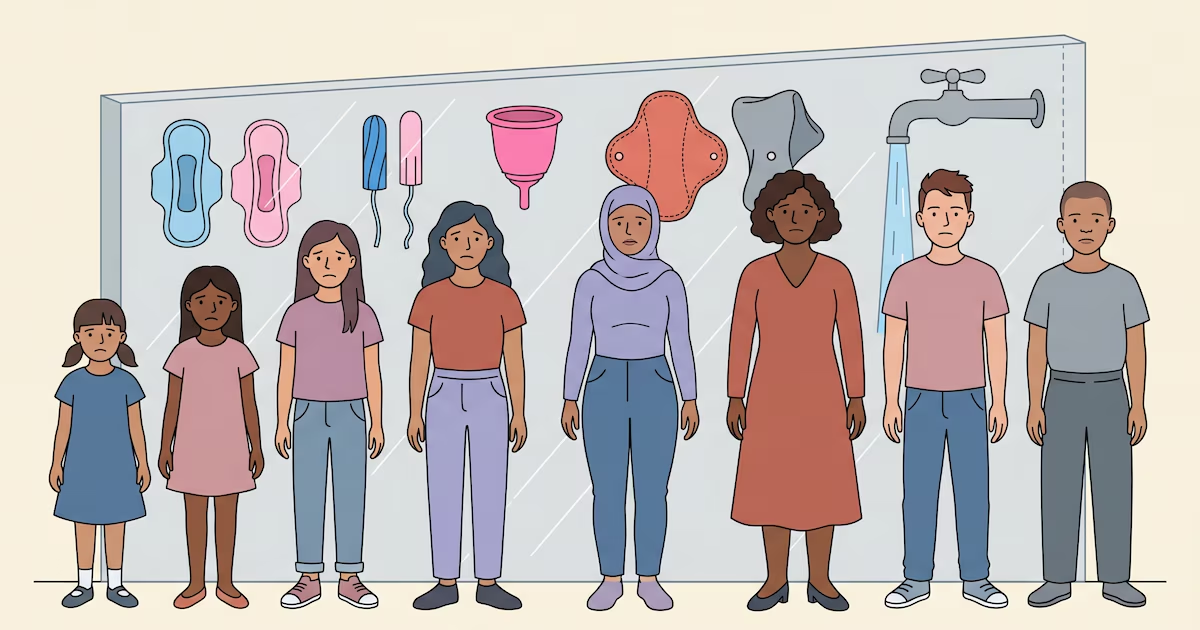
Access to menstrual products, drinking water, adequate sanitation spaces and scientific information continues to be insufficient for many people.
According to the survey on Menstrual Management in Mexico City, prepared by COPRED, at least 40% of women in the capital face menstrual poverty. This figure reveals the magnitude of the problem; those who suffer from it must resort to cloths, socks or toilet paper to cope with their cycles, exposing themselves to health risks.
The lack of appropriate supplies and services especially affects those who live in vulnerable conditions: people deprived of liberty, people with disabilities, indigenous people, homeless people, students and other historically discriminated groups.
Likewise, the lack of resources for a decent menstrual hygiene Not only does it affect physical well-being, but it perpetuates discriminatory practices that normalize silence and shame around menstruation. This phenomenon maintains the cycle of inequality and excludes those who are already in disadvantaged situations.
The problem in the country’s capital shows the urgency of implementing comprehensive solutions. It is necessary to guarantee that all menstruating people have adequate supplies, appropriate infrastructure and education focused on respect and inclusion.
Since 2023, COPRED has been working together with civil organizations and activists to diagnose and make visible the relationship between menstrual management, discrimination and inequality. These efforts have allowed progress in the construction of an agenda that prioritizes menstruation free of stigma and discrimination.
To answer the question about what period poverty entails, it is enough to observe how the lack of access to hygiene products and services affects the exercise of basic rights and deepens exclusion. Overcoming this situation requires strong public policies and social commitment to transform the demands of menstrual activism into effective regulatory frameworks.