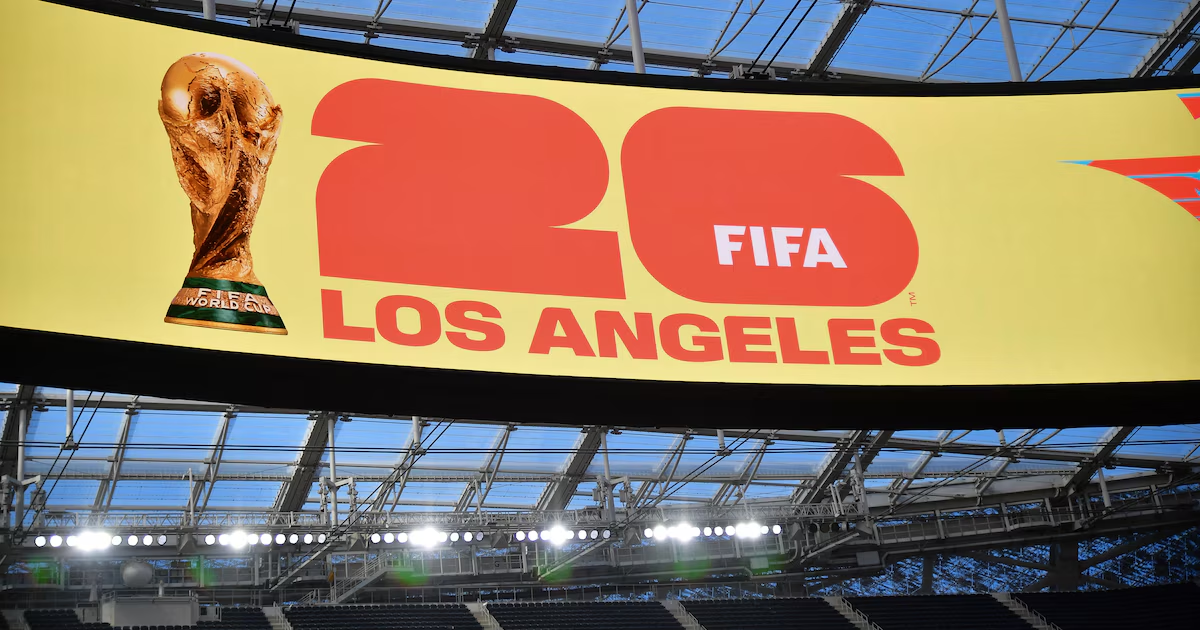
A few weeks before the start of the 2026 FIFA World Cup, Los Angeles hotels are facing an unexpected scenario: reservations remain far below what the sector anticipated for an event of this magnitude. According to a survey by the American Hotel and Lodging Associationreservations in the region are a 60% below usual levels compared to other international events. This drop has generated concern among tour operators, especially since the area will be one of the main venues for the tournament, with eight games scheduled at SoFi Stadium starting June 12 and tickets still available for most games.
The phenomenon has set off alarm bells in a sector accustomed to extraordinary benefits during major sporting events. For many, the low demand breaks with the historical trend of almost full occupancy in periods of high demand such as world events, where the arrival of tens of thousands of international tourists was expected to boost local hotel activity.
Factors that explain the low hotel demand: absence of popular teams and problems with visas
The explanation for this decrease in reservations goes beyond a lower expectation for the tournament. One of the most cited factors is the absence of teams with large fan bases in the games assigned to California. According to Alex Bastiana representative of the American Hotel and Lodging Association, the breakdown of games announced at the end of 2025 showed that none of the teams considered “top”—those with the largest fan bases and most likely to travel—would compete in Los Angeles during the initial phase. This distribution of matches would have made the destination less attractive for international fans willing to travel long distances.
Furthermore, a survey by the same organization detected that More than 47% of participants indicated problems with entry visas to the United States as an obstacle to planning their trip. These administrative difficulties, added to immigration requirements, have limited the arrival of foreign audiences, a traditionally key component in the demand for accommodation during the World Cups. Bastian stressed that these obstacles can significantly affect international travel and, consequently, hotel occupancy in the host cities.
The direct response block: Los Angeles hotels are facing a significant drop in bookings for the 2026 FIFA World Cup, driven mainly by the absence of high-profile teams in the city and the difficulties of international travelers in obtaining US visas, factors that have reduced the usual demand for this type of event.
The situation has led hotel operators to rethink their business strategies. According to the sector report, 65% of hotels are redirecting efforts towards other customer segmentsseeking to compensate for the lower influx of football fans. This reorientation includes, in some cases, special offers and promotion of services for business travelers or domestic tourism.
The testimony of Jeff Arrubbandirector of the Hollywood Hotel, illustrates the real impact of the crisis: in previous years, the establishment reached close to 90% occupancy in Junewhile for the next month it only registers a 37% of confirmed reservationswith a occupancy projection of 67%. Arrubban calls the difference a considerable loss compared to usual expectations.
The rapid reaction of the sector seeks to prevent low demand from translating into greater economic losses during a period that, historically, constitutes one of the peaks of income for the local hotel industry.
He high cost of accommodation and tickets It has also influenced the decision of many fans to change their travel plans. The case of Natalia Vasquezwho planned to attend the games in Los Angeles from Colombia, is representative: faced with the increase in rates, she chose to look for alternatives in Philadelphia, where prices were more accessible for her and her family. Vásquez explained that a reservation for four people in Los Angeles can double its cost on key dates, reaching 300 dollars per night.
For those traveling from abroad, the high prices of hotels and stadium tickets become an additional barrier, reducing the flow of visitors and affecting the profitability expected by the hotel sector.
While traditional hotels see their occupancy decrease, alternative accommodation platforms, such as Airbnbhave experienced notable growth in demand. Average nightly rates remain below 500 dollarswhich represents a more affordable option compared to many hotels. Furthermore, areas such as Hollywood Centralthe north of Hawthorne and west hollywood They have registered increases of up to 251% in reservations, according to company data.
This partial shift towards informal accommodation options reflects a change in the habits of tourists and fans, who are looking for cheaper and more flexible alternatives in the face of the rising cost of traditional hotel offerings during periods of high demand.
Another element that has distorted the market is the initial blocking of rooms by FIFA. According to the industry survey, pre-booking a large volume of rooms for the event led to artificially high demand projections. As expectations did not materialize and part of these reserves were released, many hotels found themselves with more rooms available than originally planned.
This sudden release contributed to an oversupply, forcing hoteliers to adjust their strategies and, in some cases, lower rates or diversify clientele to avoid even lower occupancy. The phenomenon marks a contrast with the sector’s initial estimates and shows the complex interaction between the organization of large events, commercial planning and real demand for accommodation.