The place where we live is not just a setting: it conditions the way we produce, consume, organize ourselves and relate to nature. Although we usually think of the local and the global as separate dimensions, in practice they are part of the same system.
When this relationship becomes unbalanced, the consequences become visible on a planetary scale.
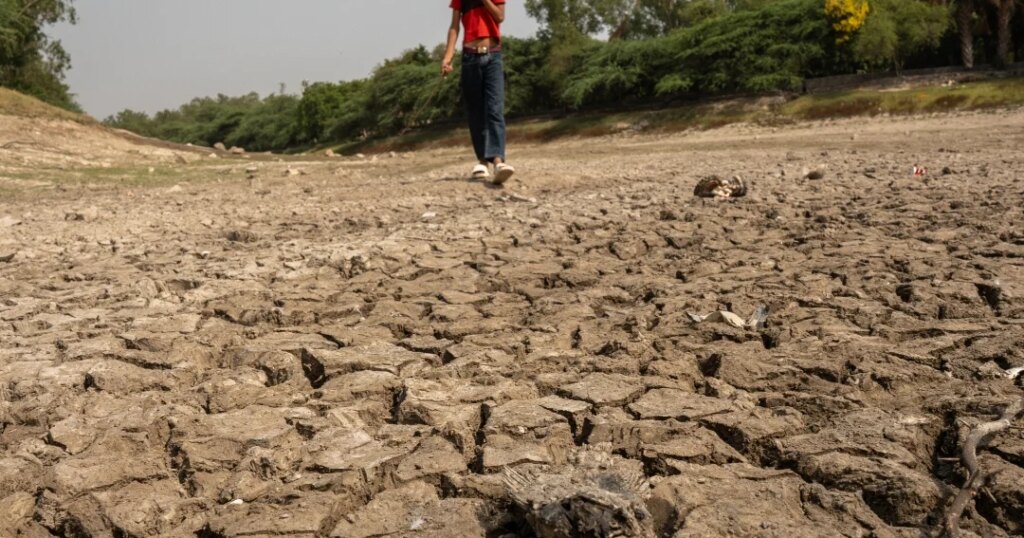
The accelerated globalization of the last fifty years revealed this second dynamic. The result is visible: ecological crisis, growing inequality, weakening of democracies and increasingly frequent conflicts. Measured in terms of life balance and survival, the model shows clear signs of exhaustion.
The challenge is twofold. On the one hand, address the urgency: reinforce peace, social justice and democratic cohesion. On the other hand, think in the long term and invest – materially and symbolically – in a profound transformation that includes food and environmental security, ethical regulation of technology, social equity as a State policy and a firm response to denialism and misinformation.
Measured in terms of life balance and survival, the model shows clear signs of exhaustion
This change requires gradually abandoning a dualistic view, which separates nature and society, economy and life, to adopt a more complex and relational approach. In this framework, the need to build harmony between the global and the local becomes stronger, not as opposite poles, but as interdependent scales.
One of the central axes to drive this turn is territorial planning. This is not a technical or bureaucratic issue, but rather a political decision of the first order. Thinking about development from the territories allows us to recover links with nature, strengthen communities and reduce the asymmetries that globalization generates today.
In countries like Argentinathis discussion is especially relevant. He territorial planning It is directly linked to agricultural sustainability and the agri-food system, one of the most universal pillars of social functioning. Designed in a systemic way, agricultural sustainability appears today as one of the most powerful tools to initiate a positive transformation.
Ultimately, what is at stake is a change of approach: leaving behind the logic of geopolitics – centered on competition and power – to move towards a true Earth policy, oriented to the care of life.
Thinking about development from the territories allows us to recover links with nature, strengthen communities and reduce the asymmetries that globalization generates today.
Faced with such a broad diagnosis, it is logical to ask what role ordinary citizens have. Not everyone can drive structural changes, but everyone can contribute from their place. The actions are multiple: participate in local organizations, strengthen environmental education, support sustainable agricultural practices, defend democracy, promote territorial cooperation, consume more responsibly and reduce waste.
It is also key to strengthen institutions over personalisms and commit to dialogue between scientific, technical and community knowledge.
All this implies, ultimately, collective learning. It means moving from a logic focused exclusively on economic efficiency to another that prioritizes life, environmental balance and the common good. It means recognizing ourselves as part of nature and not as its owners, and leaving behind the simplifying discourses that fragment and polarize.
Change does not begin in the abstract or in a distant center of power. It begins in the territories, in the communities and in everyday decisions. From place to world, and from world back to place.
The author is an agricultural engineer. Participates in the UNESCO Chair (UNAM) and the Center for Studies of the Southwest of Buenos Aires (Cesob, Bahía Blanca)