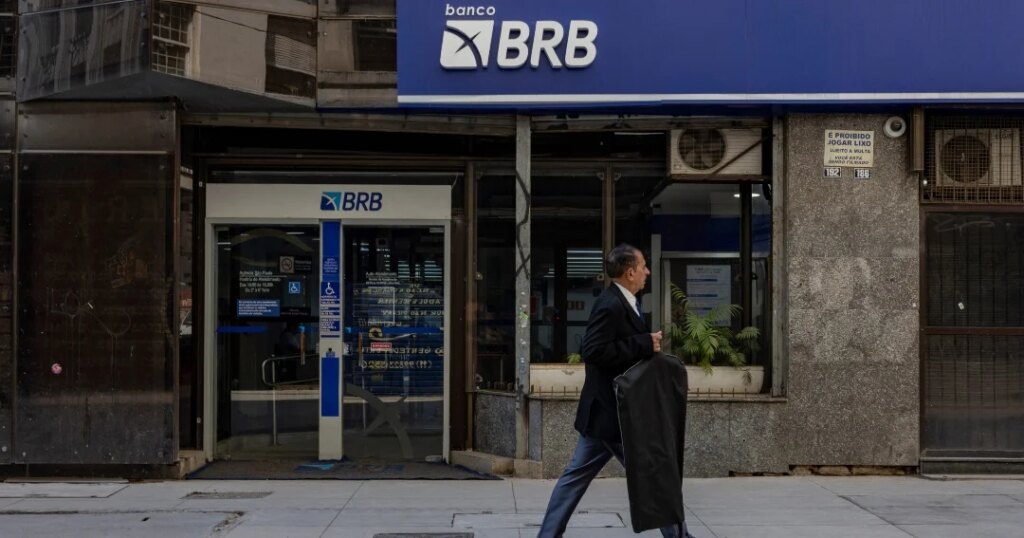
Brazilian banks have turned to their peers in Mexico over the possible repercussions of the United States’ decision to designate Brazil’s two largest criminal groups as terrorist organizations.
Representatives of the Brazilian financial sector have maintained contacts in recent weeks with consultants and banks operating in Mexico, according to people familiar with the matter who asked not to be identified due to the private nature of the conversations. Brazilian entities are seeking to learn best practices for handling these types of situations, including how to identify clients potentially linked to those organizations, the sources said.
Bankers fear that the US could act against Brazilian financial entities using the same tools it deployed last year in Mexico, when it practically expelled three institutions accused of laundering resources from drug trafficking from the financial system. Those entities ended up being sold off piecemeal, triggering a race across the financial sector to beef up monitoring mechanisms for potentially illicit funds.
Terrorist organization designations will force Brazilian banks to rethink their compliance programs, according to Jeremy Panerpartner of Hughes Hubbard & Reed in Washington.
“A simple cross-check with US sanctions lists is no longer enough,” he said. Paner. “Banks must carry out a relatively rigorous due diligence analysis, as these new sanctions are not strictly list-based.”
The administration of donald trump This year, it designated the Primeiro Comando da Capital and the Comando Vermelho as terrorist organizations. The PCC has become a powerful money laundering structure with infiltration into fuel distribution networks and fintech companies, while the CV is the Rio de Janeiro criminal group that was the target of the deadliest police operation in Brazilian history in October.
Similar designations were applied against important Mexican cartels at the beginning of the mandate of trump. Months later, the Network U.S. Department of the Treasury Financial Crimes Control adopted one of its most forceful measures by blocking three Mexican institutions from the US financial system.
One of the main concerns of Brazilian banks after Washington’s decision is how to handle clients suspected of maintaining links with these groups, even when these people do not appear on official lists that have direct relations with the organizations, explained one of the sources.
After the US designation, banks began to evaluate how to meet the requirements of Washington without violating Brazilian legislation, indicated a person familiar with the process. They also seek to better understand how the response of the Mexican authorities conditioned the decisions made by banks in the short and medium term.
Due diligence
The PCC and CV have been the subject of investigations by Brazilian authorities for years. In 2025, an extensive investigation into the PCC revealed a network of fuel distributors and fintech companies used to move and launder resources from illicit activities. Authorities subsequently focused attention on another group of fintechs allegedly used by the organization.
In Brazil, it is common for banks to close accounts suspected of being used for money laundering. However, clients generally do not receive explanations about the reasons for the closure, one of the sources said.
The Brazilian Federation of Banks noted in a statement that the country’s financial entities have consolidated practices to prevent financial crimes, as well as policies aimed at combating money laundering and the financing of terrorism. According to the organization, the consultations and evaluations are “completely expected” given the unprecedented nature of the appointments.
“In this context, it is natural that financial institutions and their representative organizations seek to understand the scope and possible effects of this measure,” he indicated. Febrabanadding that some of these conversations take place within the framework of the Latin American Federation of Banks of which it is a part.
Representatives of Felaban They declined to comment on the exchanges between banks of both countries and indicated that the organization has not held specific dialogues on these matters.