A lack of teachers, full classrooms and dilapidated buildings drove French students to the streets. This Thursday, October 8, marks three weeks since the beginning of a protest that began in a school on the outskirts of Paris and ended up spreading throughout the country, with hundreds of centers affected and growing pressure on the Government to increase resources for education.
The first focus of the mobilization appeared on September 17 at the institute Saint-Exupéry de Créteil. There, the students supported their teachers on strike due to the lack of staff and means to work. Although the center received reinforcements and lifted the protest, the unrest had already reached other schools. The blockades spread to the Paris region and then to other cities.
The dimension of the movement was reflected in the marches on Tuesday, October 6. According to the Home Office256,000 people participated in the mobilizations throughout the country, while the organizing organizations estimated 450,000. In Paris, the figures were also different: 56,000 attendees for the authorities and 100,000 for the organizers, according to France 24.
Behind the marches there are concrete complaints: teachers who are not replaced when they are absent, classrooms with too many students, maintenance problems and school days that can extend from eight in the morning to six in the afternoon. Students, teachers and parents assure that these difficulties have been accumulating for years.
According to cnnsecondary schools have fewer teachers than in 2008, despite serving 250,000 additional students. Furthermore, 70% of public sector classrooms have more than 30 students per class. The problem, therefore, also affects those who continue to attend the schools and they find it difficult to receive their classes. The situation continued to affect classes on Wednesday, October 7.
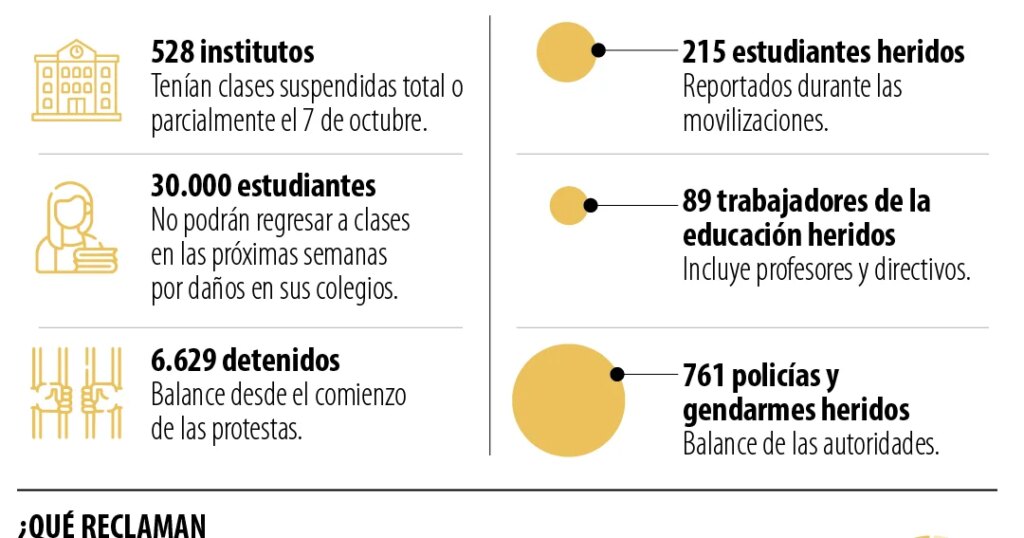
Although 86% of the centers opened their doors, 528 institutes had activities totally or partially suspended, according to provisional figures from the Ministry of Education. The minister also warned that some 30,000 students will not be able to return to their schools in the coming weeks due to damage to buildings.
The clashes added another cause of tension. The balance released on Wednesday by the Minister of the Interior, Laurent Nuñezreached 6,629 arrests, 215 injured students, 761 injured police and gendarmes and 89 affected education workers. Complaints about police action came to occupy a central place in the debate. One of the most serious cases occurred in Lens, where a 15-year-old teenager lost a hand during a confrontation.
Nunez announced the temporary suspension of the use of stun grenades in student protests while what happened is clarified. The minister noted that there is a “high probability” that one of these devices had caused the injury and reported 18 investigations referred to the police inspection.
The prime minister, Sebastien Lecornuasked to prepare proposals to respond to the main demands before the end of October. Among the issues are replacing absent teachers, the length of the school day, lunch breaks and building repairs.
However, responding to these requests requires resources at a difficult time for public accounts. France has a debt close to 120% of GDP and the Government seeks to reduce the deficit to around 5% in 2027. Hiring staff and recovering facilities adds pressure to the budget.
Marches intersect with the presidential race
The educational allocation for 2027, excluding teachers’ pensions, amounts to 65,530 million euros (US$73,354 million) and increases 1.7%, below inflation. This means that, although the amount grows, its ability to cover the costs of the system loses ground. The crisis also intersects with the 2027 presidential elections. Rebellious Francethe party of Jean-Luc Melenchonsupports the protests, while the Government accuses him of taking advantage of the discontent for political purposes.