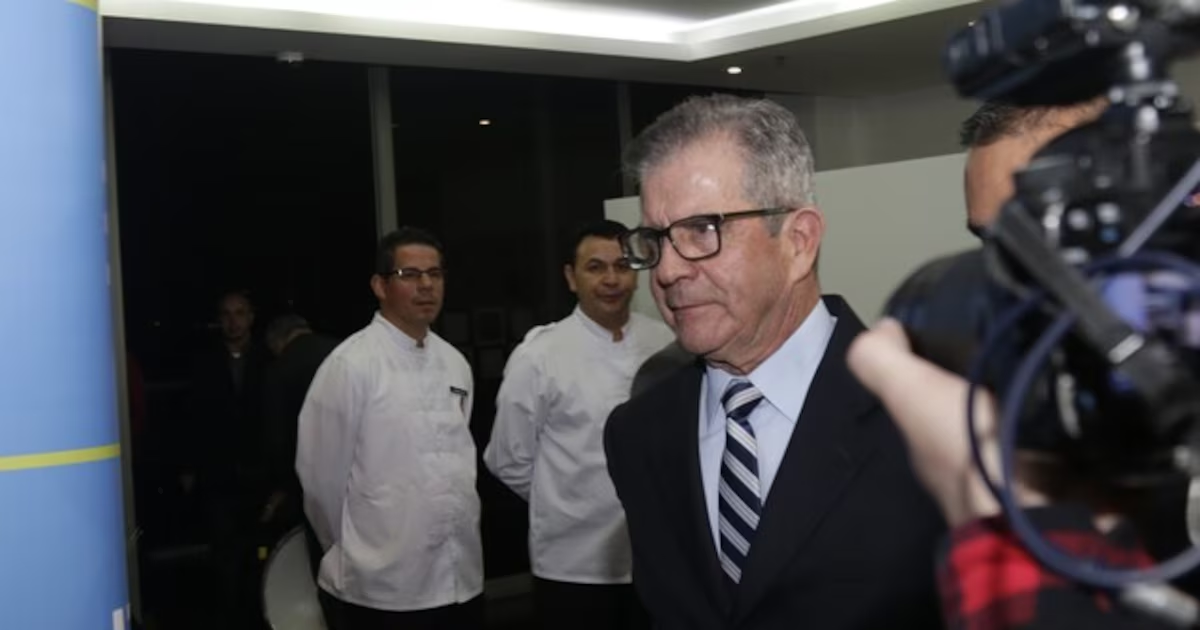
Retired General Mario Montoya Uribe appeared this Monday, June 1, before the Special Jurisdiction for Peace (JEP) in the framework of a new procedure related to investigations into extrajudicial executions known in Colombia as false positives.
The former commander of the National Army was summoned by the Truth Recognition Chamber to respond to events that occurred during his time in different command positions between the end of 2003 and November 2008, according to information known to Week Magazine.
The diligence is part of the JEP’s efforts to establish the level of knowledge and participation that senior military commanders had in the presentation of civilians unrelated to the armed conflict as alleged members of illegal groups killed in combat.
During that period, Montoya occupied strategic positions within the country’s military structure, including the command of the First Division, the Caribbean Joint Command No. 1 and later the command of the National Army.
The special jurisdiction seeks to determine if the patterns of executions documented in different regions responded to isolated dynamics or if there were common elements that evidence a widespread practice within the institution.
According to the information provided by the JEP and cited by Week Magazinethe purpose of the diligence is to compile elements that will clarify whether the macrocriminal patterns identified in departments such as Antioquia, Norte de Santander, Casanare, Meta, Huila and various areas of the Caribbean Coast were reproduced in other territories under similar criteria.
The jurisdiction recalled that these investigations are part of Case 03, related to murders and forced disappearances illegitimately presented as combat casualties by State agents. In the development of this file, members of the Army General Staff and officers who participated in planning, decision-making and institutional supervision processes have also been summoned.
One of the most relevant aspects of the appearance is that the retired general was presented with 30 voluntary versions given by former subordinates that directly indicate that he had knowledge of these extrajudicial executions.
As revealed Week Magazinethese testimonies were incorporated into the proceedings along with sworn statements delivered by different civil officials who held relevant positions during the period investigated.
Among them are a former vice minister of Defense, a former director of the Presidential Human Rights Program and who served as head in Colombia of the Office of the United Nations High Commissioner for Human Rights.
The appearance lasted for several hours and will continue on a new day scheduled for this Tuesday, when the JEP will continue contrasting the testimonies and documents collected within the investigation.
Montoya also faces other processes before the transitional jurisdiction. One of them is related to the forced disappearance and murder of 118 people in eastern Antioquia between 2002 and 2003, a period in which he served as commander of the Fourth Brigade of the National Army.
Additionally, his name has been mentioned in investigations that seek to clarify possible links between state agents and paramilitary structures in operations carried out between 2001 and 2003 in Comuna 13 of Medellín.
Among these files is Operation Orion, one of the most controversial military interventions in the country’s recent history and which continues to be the subject of judicial analysis due to complaints about disappearances, homicides and alleged alliances between members of the public force and illegal armed groups.
Montoya’s new appearance occurs at a key moment for the JEP, which continues to expand investigations into the responsibilities of senior military commanders in the events that left thousands of victims in different regions of the country.
The conclusions that emerge from these proceedings could provide new elements to establish individual responsibilities and contribute to the clarification of one of the most sensitive chapters of the Colombian armed conflict.