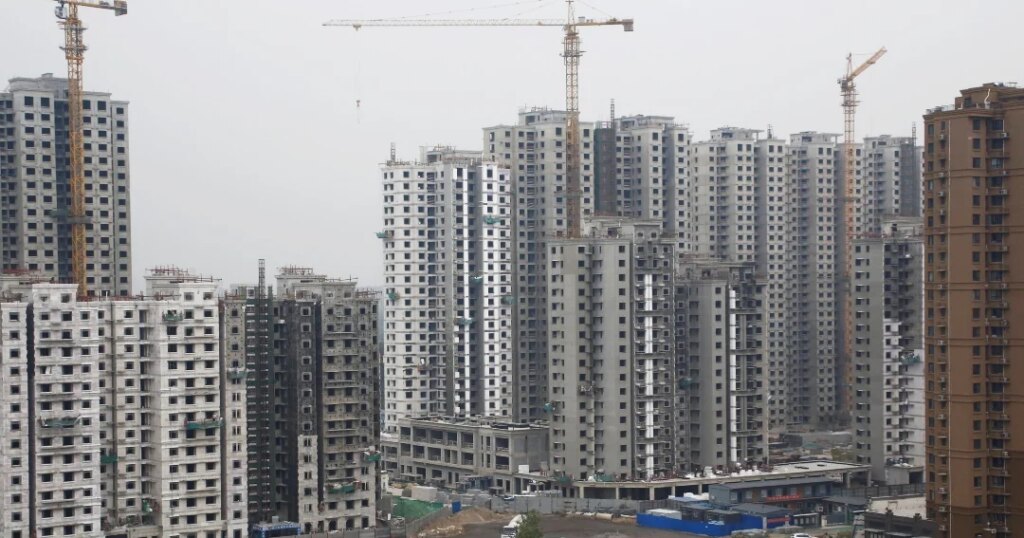
While The real estate market in China is beginning to show some signs of stabilization after the crisis, thousands of families have resorted to a practice unusual that has caused government intervention: keep the ashes of their deceased in empty apartments.
The construction and housing sector has come to account for nearly a quarter of China’s economy. In 2020, the The government imposed strict regulations to stop the reckless indebtedness of developers and thus control housing prices. that at that time were unattainable for the majority of the population.
However, This caused a serious liquidity crisis in promoters such as Evergrandewhich accumulated debts of almost US$330,000 million and faced a judicial liquidation order in 2024. This paralyzed projects and left thousands of unfinished or empty houses in its wake due to the drop in demand and confidence in construction companies.
Given this oversupply of unoccupied homes in China and the increase in the cost of funeral services due to the lack of plots in urban cemeteries, People have chosen to deposit the remains of their loved ones in the empty or unfinished apartments left by that crisis.
A funeral in China costs approximately US$5,400, which represents almost 45% of a person’s average annual salary. It is the second country with the most expensive funeral costs in the world.
The Chinese authorities have sought to prevent construction companies and developers from marketing these homes for funeral purposes, promoting alternatives such as “ecological burials” (spreading ashes at sea). However, experts point out that altering these customs can have strong social repercussions in a country that is aging rapidly.
In February, Prices of new homes fell 0.28%, while those of used homes fell 0.43%, which represented the smallest drop in 10 consecutive months. Real estate investment also fell 11.1% earlier this year, but this represents an improvement over the 17.2% plunge it suffered the previous year.
To mitigate the crisis, The Chinese government has also relaxed the rules for buying homes in large cities such as Shanghai and Beijing, in addition to reducing VAT for the sale of residential properties.