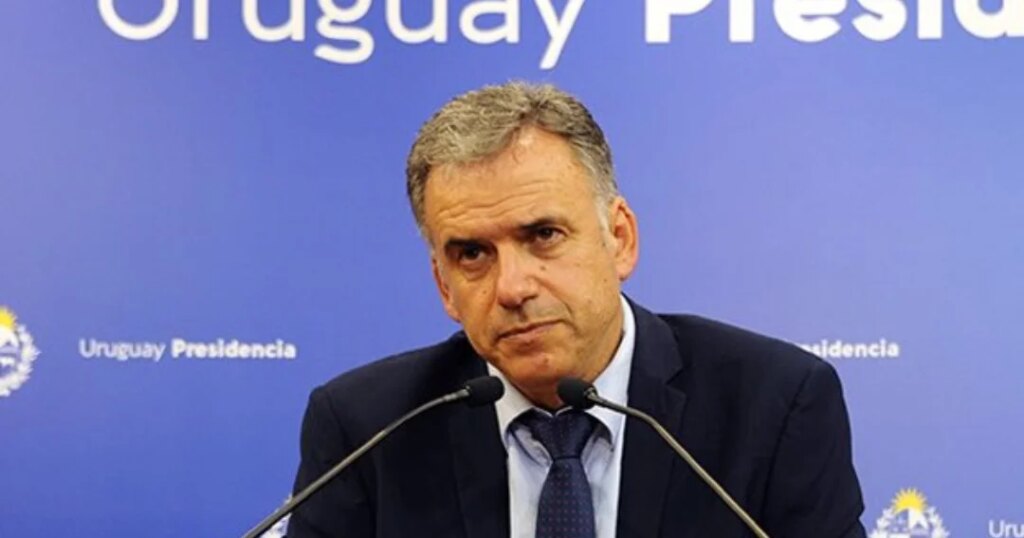
President Yamandú Orsi reported that the government will promote the elimination or correction of the provision on early release included in the draft reform of the Code of Criminal Procedure, given the strong public and political rejection that generated the possibility of early releases.
The text, prepared by a Technical Advisory Group (GAT) of the Presidency led by the deputy secretary Jorge Díaz, it was signed by the president and all the ministers and sent to Parliament on March 26. The modification proposed that judges could evaluate early release in cases that, since 2017, were expressly excluded from the institute.
Orsi stated that, if the proposal “does not comply”, it is necessary to “remove or correct” what represents a risk. He further noted that the early release mechanism already exists in the legislation and that the intent of the change was not to guarantee automatic releases but to allow for a case-by-case judicial analysis.
The controversy raised questions from human rights organizations, which warned that the faculty could benefit soldiers prosecuted for crimes of the dictatorship, and criticism from the opposition. The president said that the initiative will be reconsidered in Parliament and that, if appropriate, certain crimes may continue to be excluded from the possibility of early release or the provision be withdrawn entirely.
Orsi illustrated the discussion with the case of Moisés Martínez, sentenced to 12 years for the murder of his father after years of abuse, and argued that the debate combines legal technique and common sense. He also acknowledged that the project was not designed to protect crimes against humanity, although he admitted that the discussion should take place if it raises concerns.