Franco died 50 years ago, but Francoism did not die with him. ORnot out of five Spaniards consider that the dictatorship was “good” or “very good”a figure that impacts half a century after the death of the dictator, who imposed a military regime that kidnapped the freedoms of citizens after the failed coup against the legitimate and democratic Government of the Republic that led to the bloody Civil War. But,who Can you have a positive outlook on those 40 years?
The CIS bathometer for October shows which two social groups stand out for this assessment: the youngest and the oldest. Among the first, one in five Spaniards from between 18 and 24 years qualifies Franco’s regime as “good” or “very good.” On the other hand, the over 75 years oldwho lived their youth and a good part of their adult life under Franco, have the highest percentage of positive evaluations. Thus, 25.8% of those born before 1950 classify the years of the dictatorship as “good” or “very good.” However, in the comparison between democracy and dictatorship, this age group shows a greater preference for the democratic system than young people. Still, among the 4,029 respondents, 222 people believe that current democracy is “much worse” that the dictatorship and 472 consider it “worse.” Franco is still alive in them, in 5.5% and 11.8% of Spaniards, respectively.
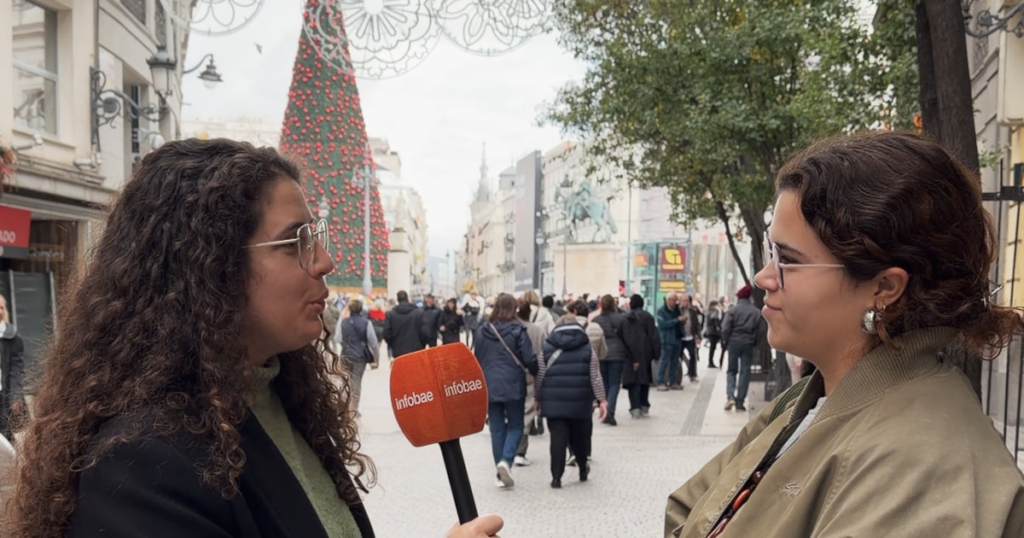
To delve deeper into these opinions, Infobae has taken to the streets to ask ordinary citizens what their opinion is and the majority of those interviewed consider that the Franco era It was negative for the country. “I think it was not a good time, it was a very poor time,” says a young woman. But testimonies have also been heard from those who lived through those years firsthand, such as that of a woman who recalled: “I was very little during Franco’s time. I know that life was good in my house.” Another interviewee reflects: “Well, I think that if someone lived well back then, of course, it would seem like a good time.”
When analyzing the reasons behind the positive view of Francoism among young people, several citizens have pointed to the lack of information and the influence of speeches on the internet. In this sense, one of the young people interviewed is clear: “People should inform themselves a little more, stop eating hoaxes” “It is spoken from misinformation, from a discourse that has permeated the extreme right,” says another. Along the same lines, a voice has expressed the opinion: “I personally believe that because they have not lived it.” Regarding freedoms, another citizen has highlighted: “At the level of freedom of expression, I think that time is worse than this.”
Some participants have pointed out the impact of social networks and misinformation digital. One of the opinions collected by Infobae has been: “Normally on the Internet there are many influences that are catastrophic.” Furthermore, reference has been made to international phenomena, such as the case of the United States, to illustrate how certain discourses can permeate society: “You only need to see the effect of Trump. They wanted so much a person who had or more signs of a dictator and now they have it and almost the majority of their voters regret it.”
Experts agree that these figures respond to pressure from the extreme right, but also to lack of information and training. These are issues that are not studied in most classrooms. The academic curriculum established by each autonomous community includes the entire 20th century, even the beginning of the 21st, but that does not guarantee that they will be studied.
In general, lessons on the Civil War, Francoism and the Transition begin in the fourth year of ESO, but remain relegated to the end of the bookone that is almost never dealt with lack of time. Added to this is that the subject of History of the Contemporary World in the first year of Baccalaureate is only mandatory in the Humanities and Social Sciences modality, so Science and Arts students do not have in-depth training in contemporary history beyond what is studied in ESO.
Only second-year high school students, those who face selectivity, get to study the history of their grandparents and great-grandparents. So, thousands of Spaniards are left without training in this area, since this last cycle is not mandatory, and those who opt for other academic routes, such as Vocational Training, or abandon their studies, They will never have received a single lesson about the last century of his country’s history. Therefore, when the call comes from the CIS, they respond that it was a good time, because they know little or nothing about it.