Despite the relative calm, cross-border politics around South Asia’s big rivers have been in turmoil lately. In late October, Afghanistan revealed its plans to build dams on the Kabul River, angering Pakistan, with whom it had skirmished on the border just days earlier. Also last month, thousands of Bangladeshis took to the streets to protest against India’s influence over the flow of the Teesta River, a tributary of the Brahmaputra (known as Jamuna in Bangladesh). India has not yet reinstated the Indus Waters Treaty, a water-sharing agreement with Pakistan in place since 1960, which it suspended in April following a terrorist attack in Kashmir. Furthermore, the Indian authorities are very concerned about a new dam that China plans to build 30 km. upstream of the Indian border in the Brahmaputra (called Yarlung Tsangpo in Tibet). This dam, with a cost of 167 billion dollars, It would be the largest in the world if it were built as planned. The consequences for downstream neighbors will undoubtedly be enormous.as well as the ecological impact of the dam in an area rich in biodiversity.
Everything indicates that the region’s water policy is becoming more dangerous. Rising demand for renewable-based electricity is driving South Asian countries to increase investment in hydropower. At the same time, the retreat of glaciers and Erratic weather patterns caused by climate change are making river levels and flows more unpredictablewith repercussions on the livelihoods of some 2 billion people in South Asia. To manage these risks and prevent them from triggering more conflicts, the countries of the region need to dialogue and cooperate. However, there are numerous obstacles to this.
Water politics in South Asia has historically been complex. The largest rivers in the region – the Indus, the Ganges and the Brahmaputra – originate in the glaciers of the Himalayas. The Indus rises in China and passes through Ladakh (India) and disputed Kashmir, before emptying into the Arabian Sea through Pakistan. Although the Brahmaputra rises in China and only flows through India and Bangladesh, much of Nepal is located within the vast Ganges-Brahmaputra basin.
Sharing waters is complex in a region marked by mistrust. The conflict between India and Pakistan over Kashmir is long-standing. China and India dispute borders. Bangladesh and Nepal fear undue influence from both India and China. This makes it tempting for some countries to use water to put pressure on their neighbors. Between 2019 and 2023, 191 water-related disputes were recorded in South Asiaaccording to the Pacific Institute, a California-based research group. With the exception of the Middle East, no other region has such a critical water situation.
The situation is likely to get worse. One problem is that, in addition to power generation, countries are increasingly using dam construction to project power, consolidate their territory and coerce their neighbors, says Hari Godara of OP Jindal Global University in Sonipat, India. Chinese dams in Tibet allow it to exert influence over a troubled region. Pakistan’s construction of dams (with increasing support from China) in the areas of Kashmir it controls serves to reinforce its territorial claims and provoke India. In response to China’s new dam on the Brahmaputra, India plans to build its own mega dam downstream of the Chinese project. Currently, riverine Bangladeshis complain that India fails to warn when it releases large quantities of water from existing dams, wreaking havoc downstream. Water disputes are often intertwined with other conflicts.
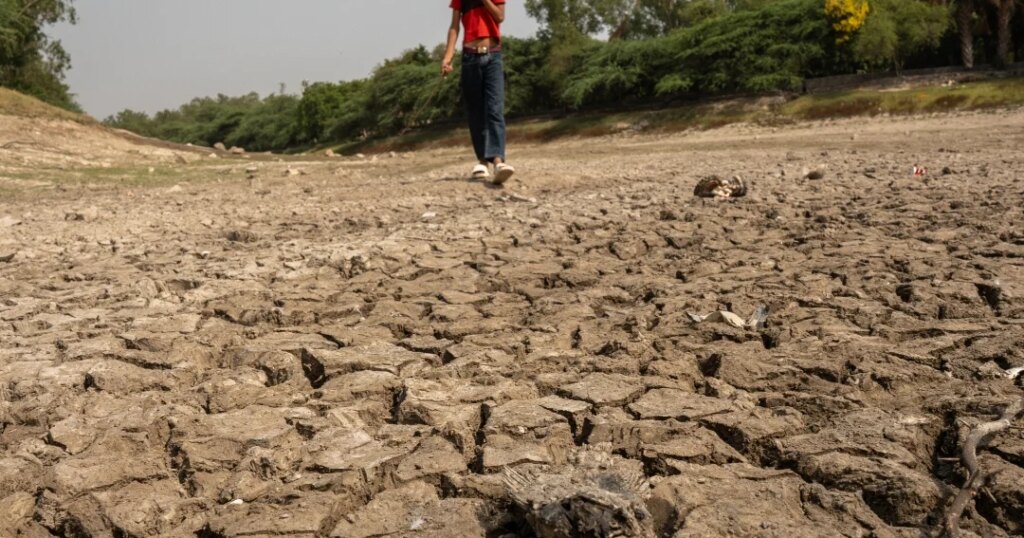
South Asia is one of the most water-stressed regions in the world, with water scarcity in much of its territory, at least for much of the year. A study published this year by researchers at Ludong University in China confirms that regions where water scarcity is an issue are more likely to experience conflict.
Greater energy demand could aggravate the situation. Economic growth, urbanization and the rise of data centers have increased the need for reliable electricity supply. Hydroelectric energy, which does not suffer from the intermittency that affects solar and wind energy, is an attractive renewable source. Pakistan already gets a fifth of its electricity from hydropower and aims to increase that share. India wants to increase its 42 GW hydropower capacity by more than 50% by 2032, and possibly build 200 new dams in the coming decades. Nepal already produces more hydroelectric electricity than it consumes. However, it continues to increase its capacity and hopes to export the surplus. It has long supplied electricity to India and recently began selling power to Bangladesh as well, using the Indian power grid, although it took a long time to reach an agreement.
To avoid open conflict, it is essential to have diplomatic channels to manage the impact of dams. One of the clearest indicators of water disputes is the construction of a dam without a treaty in place, says Aaron Wolf, an expert on transboundary water agreements at Oregon State University in the United States. Ecological concerns also arise. Dams fragment rivers, destroy habitats and displace communities; damage that is worsening in the fragile terrain of the Himalayas. For these reasons, India’s plans for the future megadam sparked protests from communities in the area.
Strengthening diplomacy becomes even more urgent given the growing fragility of the environment in South Asia. Glaciers are melting at an accelerated rate. This can cause more irregular river flow, destabilize the rock on which dams and homes are built, and increase the risk of flooding. Monsoon rains are becoming less predictable. Rather than suspending or abandoning water agreements, countries should strengthen and update them to reflect this reality.
Some indications suggest that countries are aware of this. Despite April’s suspension of the Indus Treaty, India continued to share flood forecasts with Pakistan. According to research by Mr. Wolf, no war has been fought directly over water in the last century. However, water management in the region remains a confusing web of bilateral agreements that allow countries to treat rivers as currency, rather than shared ecological systems. Closer cooperation would be a safer way to keep rivers flowing and preserve peace.
© 2025, The Economist Newspaper Limited. All rights reserved.