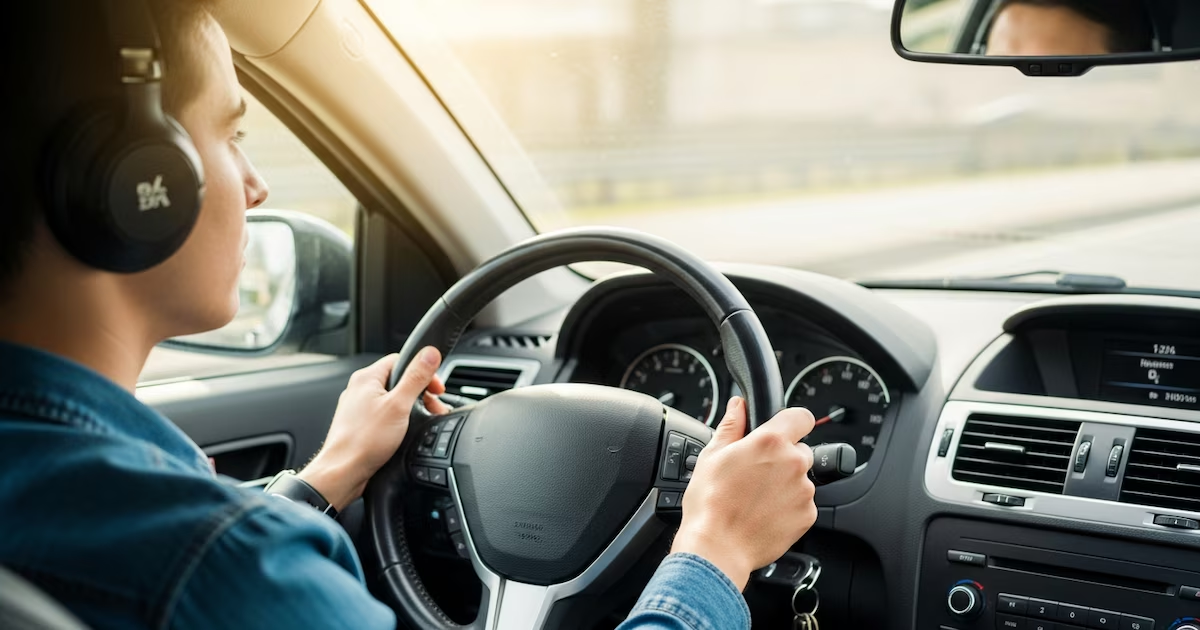
He using headphones while driving It is a practice that raises doubts among motorists in Texas, especially given the diversity of regulations in different states of the United States. While in places like California there are clear restrictions, in Texas The legal landscape is different and may surprise those who expect strict regulations. Knowing in detail what the law allows and what the authorities’ recommendations are is essential to avoid penalties and drive responsibly.
In Texas, the legislation is clear in one aspect: There is no specific prohibition on the use of headphones or earphones while driving a motor vehicle. He Texas Department of Public Safety (DPS) has noted that nothing in the Texas Transportation Code explicitly prevents a driver from using headphones while driving. This position has also been confirmed by the San Antonio Police Department (SAPD)which has stated that its officers will not stop a driver solely for wearing headphones.
The contrast with other states is notable. In CaliforniaFor example, The law only allows the use of a headset in one of the earsso that the driver maintains the ability to perceive surrounding sounds and, especially, emergency sirens. Texas adopts a more permissive attitude, but this does not mean that the use of headphones is without risks or possible indirect legal consequences. The DPS reminds that there are other restrictions in the law that seek to reduce distractions while driving, such as the prohibition of reading, writing or sending text messages while driving, except when the vehicle is stopped. Additionally, driver-viewable video screens are only permitted if the vehicle is parked or with the parking brake applied.
Although It is not illegal to wear headphones when driving In Texas, this does not imply complete immunity from the law. He San Antonio Police Department (SAPD) has clarified that a driver will not be fined simply for wearing headphones. However, if the use of these devices affects the ability to drive and an infraction is committed, the sanction will fall on the dangerous behavior, not on the use of the headset itself.
For example, if a driver wearing headphones does not yield to an emergency vehicle because he or she does not hear the siren, he or she could face a fine for failing to comply with traffic regulations. This scenario is contemplated in the section 545.156 of the Texas Transportation Code. Likewise, if the driver manipulates the headphones while driving and this causes a distraction, they could also be penalized for distracted driving.
In short, the presence of headphones does not constitute an infraction in itself, but it can be a determining factor if it contributes to traffic violations already stipulated in the law. The authorities insist that the driver’s attention and responsiveness must always be guaranteed.
The use of headphones, although permitted, may have legal and financial repercussions in the event of an accident. According to the lawyer Justin Hill from the Hill Law Firm, the key in these civil cases is in determine whether the driver acted with due diligence under the circumstances. In situations where headphones prevent critical signals, such as emergency sirens or instructions from an officer, and this contributes to the accident, this could be considered evidence of negligence.
This means that, Although the law does not prohibit wearing headphones, their use can harm the driver’s position in an insurance claim or civil lawsuit. Insurers and courts may negatively evaluate the decision to use headphones if it is shown that they reduced attention or the ability to react to a risk in public.
In practice, this means that the use of headphones can become a central element when determining responsibilities and damages in a judicial process or in the resolution of a traffic accident claim.
The distracted driving It is one of the main risk factors on the roads. Although Texas law does not classify the use of headphones as a prohibited act, it does provide for penalties for those who drive dangerously or without due attention. Attorney Hill argued that this could be a legally ambiguous situation: If the headphones prevent the driver from paying attention to traffic signs or traffic rules and this results in a violation, a fine for distracted or dangerous driving could be issued.
However, proving that the headphones were the direct cause of the distraction can be difficult. Authorities and courts must evaluate each case based on the available evidence and the specific circumstances. Even so, the risk of a penalty increases if the use of headphones is associated with conduct that compromises road safety.
Given the potential for distraction that comes with using headphones, the San Antonio Police Department (SAPD) recommends drivers eliminate or limit distractions while driving. Their recommendations include fastening your seat belt before starting the journey, avoiding adjusting controls while driving, not using your cell phone, not driving under the influence of alcohol or fatigue, maintaining the appropriate speed, controlling your distance from other vehicles and avoiding eating or drinking while driving.
The SAPD advises that, if headphones are to be used, they should be placed before the vehicle is started and verified that they do not hinder the perception of outside sounds. In addition, Attorney Hill suggests avoiding the use of headphones when driving, or in any case, opting for a single headphone and keeping the volume low so as not to isolate yourself from the environment.