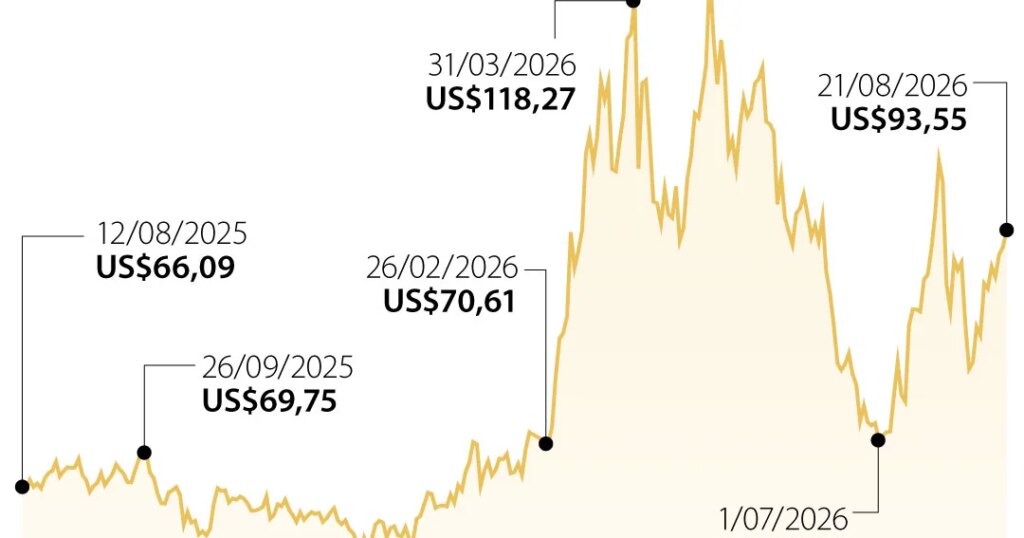
Gasoline prices have skyrocketed across the United States as a result of the war with Iran, But this increase is causing greater economic problems in some cities than others.
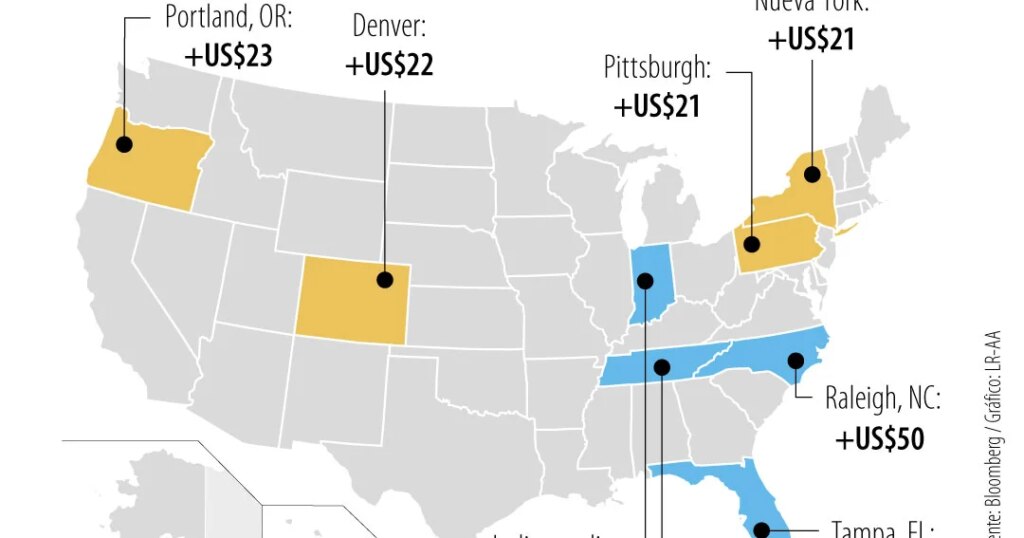
And it’s not necessarily the places where gas prices have risen the most, like Chicago or Los Angeles. Instead, it is concentrated in smaller, more dispersed cities, such as Nashville or Indianapolis, according to an analysis of local gas prices through April 9 by data aggregator GasBuddy and figures on driver mileage from the Federal Highway Administration.
Many of the most affected cities are located in the Sun Belt and in some areas of the South. Drivers in the Nashville metro area, for example, have paid an average of nearly $70 more a month for gas since March 1, at least $13 more than in any other city. Not only has Nashville seen one of the largest increases in gas prices, but its residents also tend to drive more than any other large metropolitan area.
In Raleigh, North Carolina, gas prices rose less than in Nashville ($1.25 per gallon versus $1.48), but also less than in at least two dozen other cities. Still, the average resident drives 34 miles a day, increasing monthly expenses by about $50, the fourth-largest increase among major metropolitan areas.
Drivers in Indianapolis, Orlando and Louisville, Kentucky, have also faced some of the biggest increases.
Meanwhile, the monthly costs of driving in densely populated cities such as New York, San Francisco and Portland, Oregon, have not increased as much. New Yorkers have paid an average of about $20 more a month in driving costs, mainly because many use public transportation instead of driving.
“Cities are designed based on the transportation options they offer, and the decisions people make about transportation are a consequence of urban design,” said Yonah Freemark, a researcher at the Urban Institute. “Together, these options either reinforce car dependency or allow people to free themselves from it.”
The repercussions of that division are particularly evident now. The 10 metropolitan areas least impacted by rising gasoline prices have about twice as many people per square mile as the 10 cities where costs have risen the most.
However, some cities do not quite fit this pattern. Pittsburgh’s population density is very similar to Nashville’s, and neither city prides itself on its use of public transportation. Still, driving costs in Pittsburgh rose by less than a third, mainly because people in Nashville drive, on average, more than twice as far.
Chicago has seen a greater increase in average costs than Los Angeles, despite having a more efficient public transportation system. This is largely because a disproportionate share of miles driven are on urban streets, rather than on highways, where driving is more efficient. Los Angeles residents spend a lot of time in their cars, mostly in traffic, which reduces their actual fuel consumption.
The 50 largest metropolitan areas encompass 155 million people, or almost half of the United States population. Another 82 million people live in hundreds of smaller cities with a population of 50,000 or more and tend to drive less than residents of larger metropolitan areas, according to data from the Federal Highway Administration.
However, these data do not include 30% of the country’s population who live in rural areas. These residents generally have limited access to public transportation and rely on their cars to purchase food and other necessities.
In the short term, the most car-dependent city dwellers can’t do much to reduce their gas bills beyond the usual tips that the Department of Energy and the Environmental Protection Agency include in their annual fuel economy guide. The most significant change the guide recommends is avoiding harsh acceleration or braking, which can save between 10% and 40% in fuel consumption in stop-and-go traffic.