He Oil prices rose after efforts to restart peace talks over the war with Iran failed, leaving the Strait of Hormuz virtually impassable and prolonging the supply disruption that has shaken global markets.
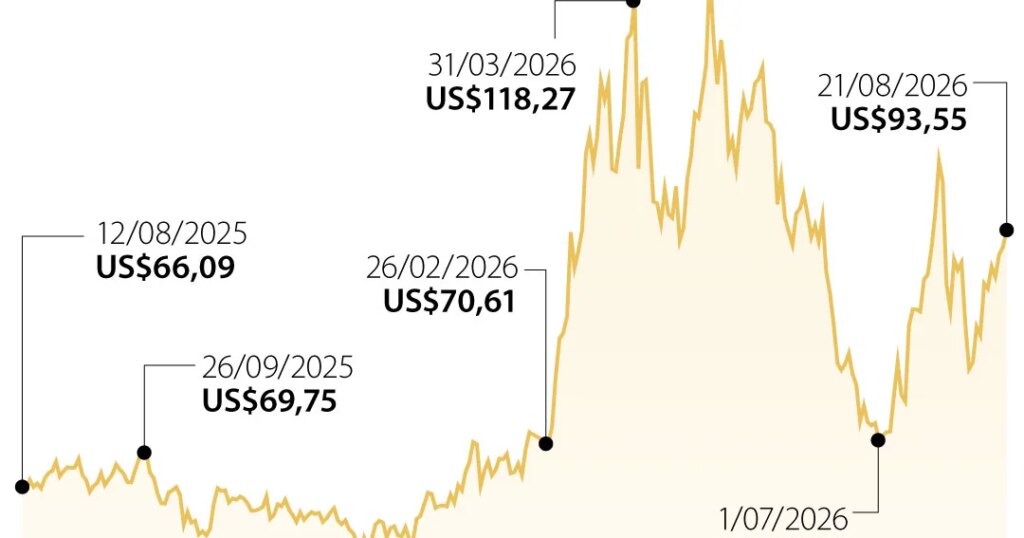
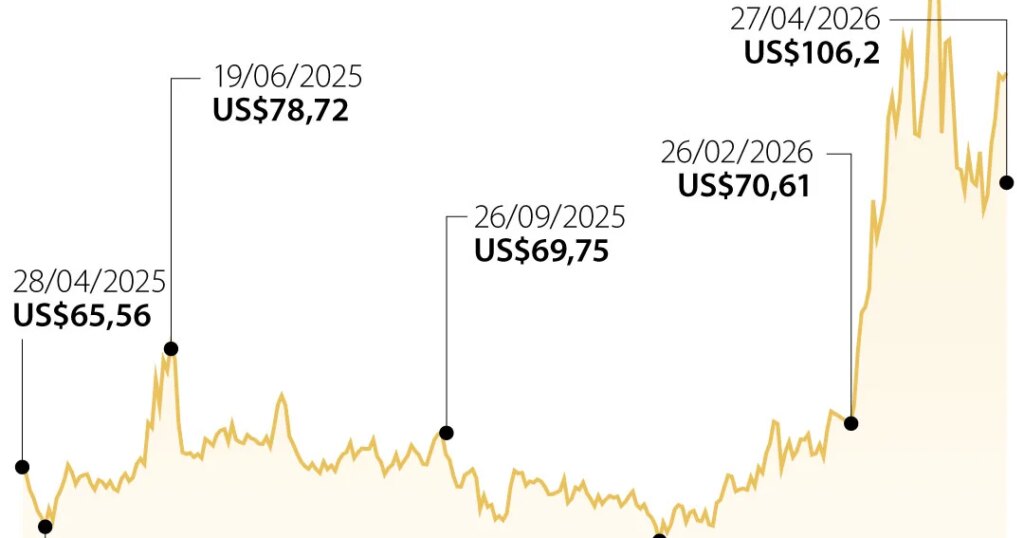
Brent crude oil rose up to 3%, reaching US$108.50 per barreland West Texas Intermediate advanced toward $97, before giving up some of its gains after Axios reported that Tehran offered the United States a new proposal to open the strait. Over the weekend, President Donald Trump canceled a planned trip by his top envoys to Pakistan, a country mediating the talks, while Iran declared it will not negotiate if it feels threatened.
The ceasefire has largely held since early April, but maritime blockades imposed by both the United States and Iran have reduced daily transit through the Strait of Hormuz to almost zero. This supply disruption has crippled crude oil, fuel, natural gas and fertilizer reserves, raising concerns about a possible inflationary crisis.
«The world lives on borrowed barrels and borrowed time until the Strait of Hormuz is reopened», said Bjarne Schieldrop, chief commodities analyst at SEB AB in Oslo. «The alarms will ring loudly if the strait is not reopened during May. A global recession is guaranteed if it is not reopened in time.
Iran offered the United States, through Pakistani mediators, a proposal to reopen the strait and end the war, postponing nuclear talks to a later stage, Axios reported, citing anonymous sources, including a US official. Trump is expected to hold a meeting on Monday with his national security and foreign policy team to address the impasse, the agency added.
On Saturday, the US president ordered his envoys, Jared Kushner and Steve Witkoff, to cancel their trip to Pakistan, and later told the press that Iran “offered a lot, but not enough.”. Iranian President Masoud Pezeshkian stated that his country will not participate in “negotiations imposed under threats or blockade.”
The The war with Iran, now in its ninth week, has sent energy prices soaring and caused shortages of key products such as liquefied petroleum gas in India.. The International Energy Agency says the conflict is causing the biggest supply crisis in history.
The longer the Strait of Hormuz remains closed, the greater the need to adjust consumption downward to compensate for a drop of at least 10% in supply. according to the operators. A loss of one billion barrels is virtually certain, more than double the emergency reserves that governments released after the conflict.
So-called demand destruction is likely to spread, such as the reduction in the number of scheduled flights by airlines.
According to the United States Central Command (Centrocomunicador Central), US forces intercepted a sanctioned ship in the Arabian Sea on Saturday, as part of the blockade. A Navy helicopter intercepted the vessel, which subsequently followed military orders to return to Iran under escort.. A total of 38 vessels have been diverted since the beginning of the blockade, the Central Communication Center reported.
Most of Iran’s crude oil is exported to China, the country’s private refineries – known as “kettles” – taking advantage of the lower price per barrel. On Friday, the United States sanctioned the Hengli Petrochemical (Dalian) refinery for its ties to Tehran, just weeks before the planned summit between Trump and Chinese President Xi Jinping. Hengli has denied any business relationship with Iran.
“This combination is unstable in a particular way,” said Martijn Rats, global oil strategist at Morgan Stanley. «Every day that the current situation persists, the oil market contracts, putting upward pressure on prices. On the other hand, if a peace agreement were announced soon, oil supply could improve and part of the risk premium in prices could dissipate.