Two years ago, Evyatar David and Guy Gilboa-Dalal attended an all-night desert music festival together near the Gaza border. At dawn, thousands of rockets rained down from Gaza as armed invaders mowed down 400 of their fellow partygoers. David and Dalal were among the first to be kidnapped and taken to Gaza.
Over the summer, Hamas released a video of David, emaciated and desperate, digging his own grave in a Gaza tunnel. The images shocked many people, including US President Donald Trump.
On or before Monday, the two friends, now 24, are scheduled to be released along with 18 other hostages believed to be alive, all of them men.
For many Israelis, the return of the last 48 hostages from Gaza will mark one of the most emotional moments of the two-year war.
Along with relief at the safe return of the hostages still alive, there is a sense of closure for the rest of the conflict. And not just among family and close friends. A large portion of the Israeli public — 82%, according to a poll by local broadcaster Channel 13 — supports Trump’s 20-point plan to end the war.
Only now can Israeli society begin to heal from the atrocities committed by Hamas on October 7, 2023 and the brutal war that followed, according to many who supported the “Come home! Now!” campaign.
The men who will return are the last of approximately 250 kidnapped Israelis and foreigners believed to be alive. Two previous ceasefire agreements prioritized the release of children, women, the elderly and the wounded.
fateful festival
Eleven of the survivors were kidnapped from the Nova music festival. This site recorded the highest number of victims among several massacres carried out against Israelis in villages and military posts near the Gaza Strip, in which some 1,200 people died.
Rom Barslavski, 21, worked as a security guard at the festival. He spent several hours helping evacuate wounded attendees and bodies from the compound under enemy fire, and was eventually captured and taken to Gaza. Like David, his Islamic Jihad captors filmed him over the summer, looking emaciated and frail. Medical experts estimated that Barslavski had lost up to 50% of his body weight and was in imminent danger of death.
David Lammy, then UK foreign secretary, called the images “disgusting”. French President Emmanuel Macron, who has advocated for recognition of a Palestinian state, said the videos portrayed the “abject cruelty” of Hamas.
Avinatan Or, 32, an Nvidia employee, was kidnapped along with his partner, Noa Argamani, who was released last year. A photo of the couple being separated before being taken to Gaza became an iconic image of the horrors of that day.
They were also taken from the music festival and are believed to have survived Alon Ohel, 24, a talented pianist who lost vision in his right eye; Bar Abraham Kupershtein, 23 years old; Yosef-Chaim Ohana, 25 years old; Eitan Abraham Mor, 25 years old; Segev Kalfon, 27 years old; Elkana Bohbot, 36, Rivka’s husband and father of a five-year-old son; and Maxim Herkin, 37, father of a 3.5-year-old daughter.
Zanguake’s defenser
Kibbutz Nir Oz was one of the most affected communities on October 7. Of the 76 hostages taken, the last four survivors are expected to return home.
Matan Zangauker, 25, was taken from his home along with his partner, Ilana Gritzewsky, who was detained separately and released in November 2023. However, it was his mother, Einav Zangauker, a divorced single mother from the Israeli town of Ofakim, who has become a household name in Israel in the past two years.
Leading the battle for his release, he locked himself in a cage on Tel Aviv’s main highway and became the face of a public campaign, issuing weekly statements and appearing multiple times in the Israeli parliament.
Zangauker, a former supporter of Benjamin Netanyahu, said during the ordeal that the Israeli prime minister “stabbed me in the back twice: on October 7, when my son was kidnapped, and from then until today.”
David and Ariel Cunio are brothers who were taken separately from their homes during the Hamas attacks.
David, 35, was kidnapped along with his wife Sharon and their 3-year-old twin daughters, Emma and Yuli, after fighting for five hours against Hamas militants who tried to enter the family’s safe room. Sharon Cunio and the twins were released in late 2023. She has since stated that overwhelming concern for her husband has prevented any attempts at rehabilitation until he returns home.
Twin captives
Ariel Cunio, 28, was kidnapped along with her partner Arbel Yehud, the last living woman to be released from captivity earlier this year.
Eitan Horn, 38, was kidnapped while visiting his older brother, Iair, in Nir-Oz. They remained together in captivity until Iair’s release earlier this year. He was last seen hugging his brother tightly before separating them.
Twins Gali and Ziv Berman, 28, were kidnapped from Kfar-Aza. Ziv was kidnapped from his home and Gali from the home of Emily Damari, a captivity survivor, to whom he went to keep her company and support on the morning of October 7.
The last living civilian hostage to return home to Nahal Oz will be 48-year-old Omri Miran. On the morning of the attacks, he was kidnapped while his wife, Lishay Miran Lavi, and their two young daughters watched helplessly.
Two IDF soldiers will also be released: Matan Angrest, 22, who was taken from a military post while wounded and unconscious, and Nimrod Cohen, 20. Both were the only survivors of their four-member tank crews.
There is no clarity on the fate of two other men: Tamir Nimrodi, a 20-year-old IDF soldier, and Bipin Joshi, a Nepalese farm laborer taken from Kibbutz Alumim.
Died in captivity
Six hostages were killed while held captive: Inbar Hayman, 27, kidnapped from the Nova festival and the last remaining female captive in Gaza, and five men: Sahar Baruch, 24, Guy Illouz, 26, Arie Zalmanowicz, 85, Amiram Cooper, 85, and Yossi Sharabi, 53. Sharabi is the brother of captive survivor Eli Sharabi, freed earlier this year, who has since been a strong advocate for the liberation of those left behind.
Nineteen more people, including citizens of Thailand and Tanzania, were killed on October 7 and their bodies were taken away by Hamas. Among them is Asaf Hamami, an Israeli colonel who served as commander of the Southern Brigade in the Gaza Strip and was one of the main commanders who died that day. Hamas has stated that it may not be able to recover all the bodies immediately, and it is unclear how many of them will be returned immediately..
Also expected to be handed over to Israel is the body of Hadar Goldin, a lieutenant in the Israel Defense Forces’ Givati Brigade who was killed and kidnapped in Gaza during Operation Protective Edge in 2014.
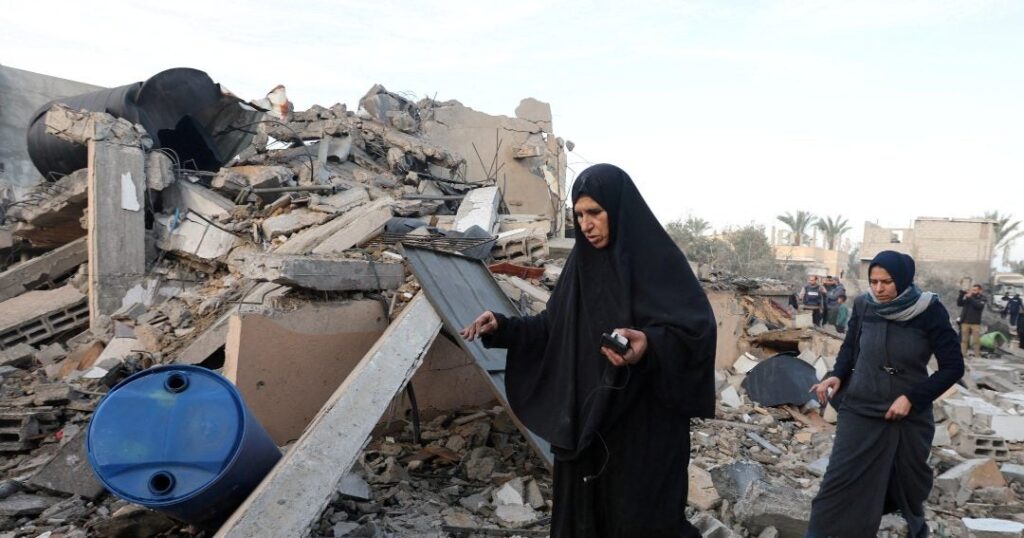
More than 67,000 Gazans have died in the war sparked by the October 7 attacks, according to the Hamas-run Ministry of Health, which does not distinguish between civilian casualties and combatants. Some 450 Israeli soldiers have been killed in combat in Gaza.