European Central Bank President Christine Lagarde said two main factors surrounding the war in Iran are hampering efforts to define a monetary policy response.
The duration of the disruption and the possible pass-through of energy prices into broader inflation are complicating the ECB’s work, Lagarde said Monday in Berlin.
“This double uncertainty about the duration of the shock and the amplitude of the pass-through suggests collecting more information before drawing firm conclusions for our monetary policy,” he stated at the annual reception of the Association of German Banks.
His comments come after tensions in the Middle East escalated over the weekend, with a confrontation in the Strait of Hormuz that threatens to worsen the global energy crisis and cools hopes for a quick end to the conflict.
“The intermittent nature of the conflict—war, ceasefire, peace talks, its collapse, a naval blockade, its lifting, its reestablishment— makes it exceptionally difficult to assess the duration and depth of the consequences,” Lagarde said.
Monetary policymakers are still assessing the implications of rising energy costs and geopolitical uncertainty. Interest rates will likely be left unchanged at this month’s meeting, as investors bet on increases later in the year.
“What is clear is that there is no easy path back to where we were before this conflict broke out,” Lagarde said. Despite this, “until now we have not seen energy prices rise enough to clearly place us in our adverse scenario.”
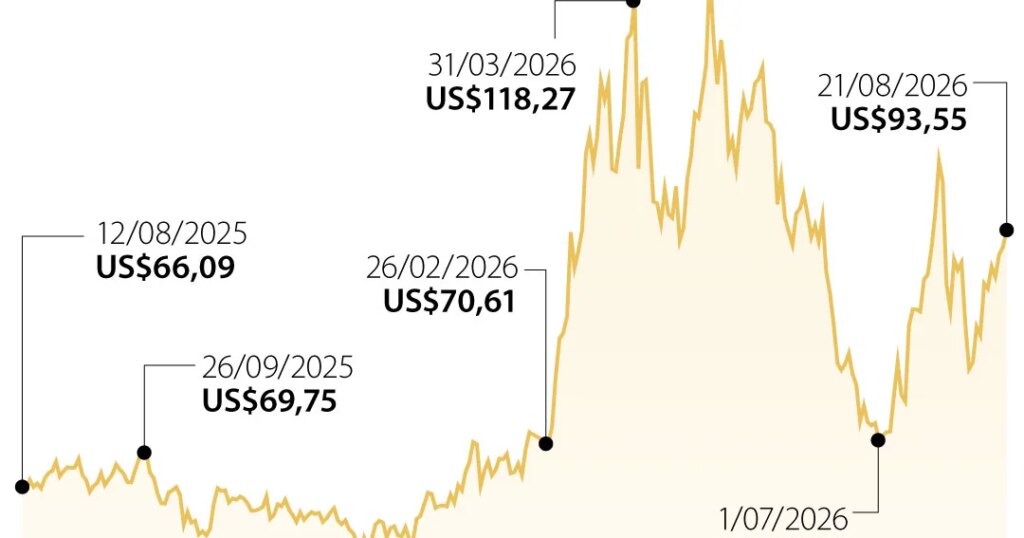
Although spot and future oil prices are above the ECB’s baseline projections, “markets seem to be betting that the disruption will be short-lived,” he noted. Natural gas prices are even below the base case and there are limited signs of disruptions to supply chains.
Eurozone inflation is expected to accelerate towards 3% this month, while April business surveys are likely to show another deterioration in activity, increasing the risk of stagflationary scenarios.
For Lagarde, although the economic outlook remains “deeply uncertain,” the ECB is ready to act as the situation requires when there is sufficient information.
“Our commitment and our compass are clear,” he said.