Follow and read us on Google Discover
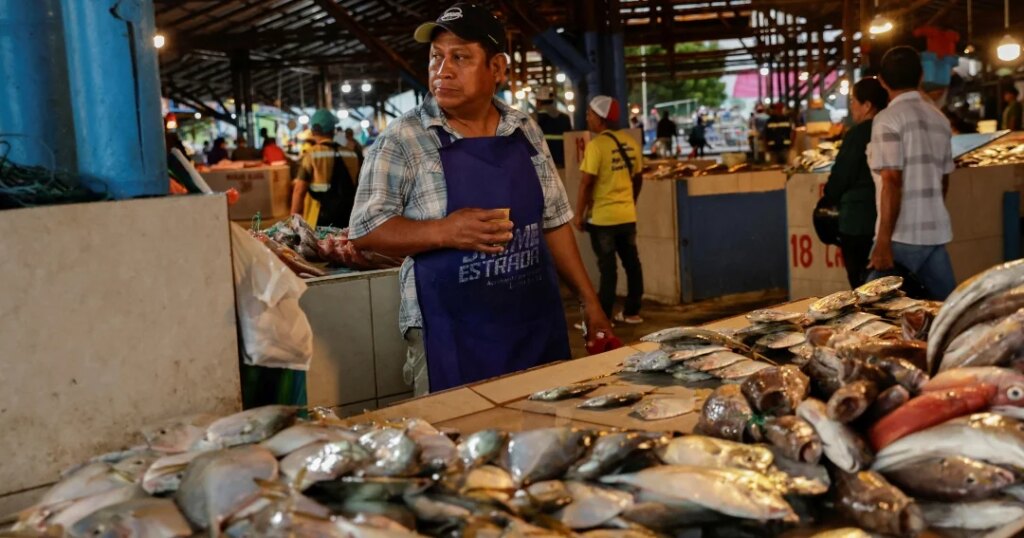
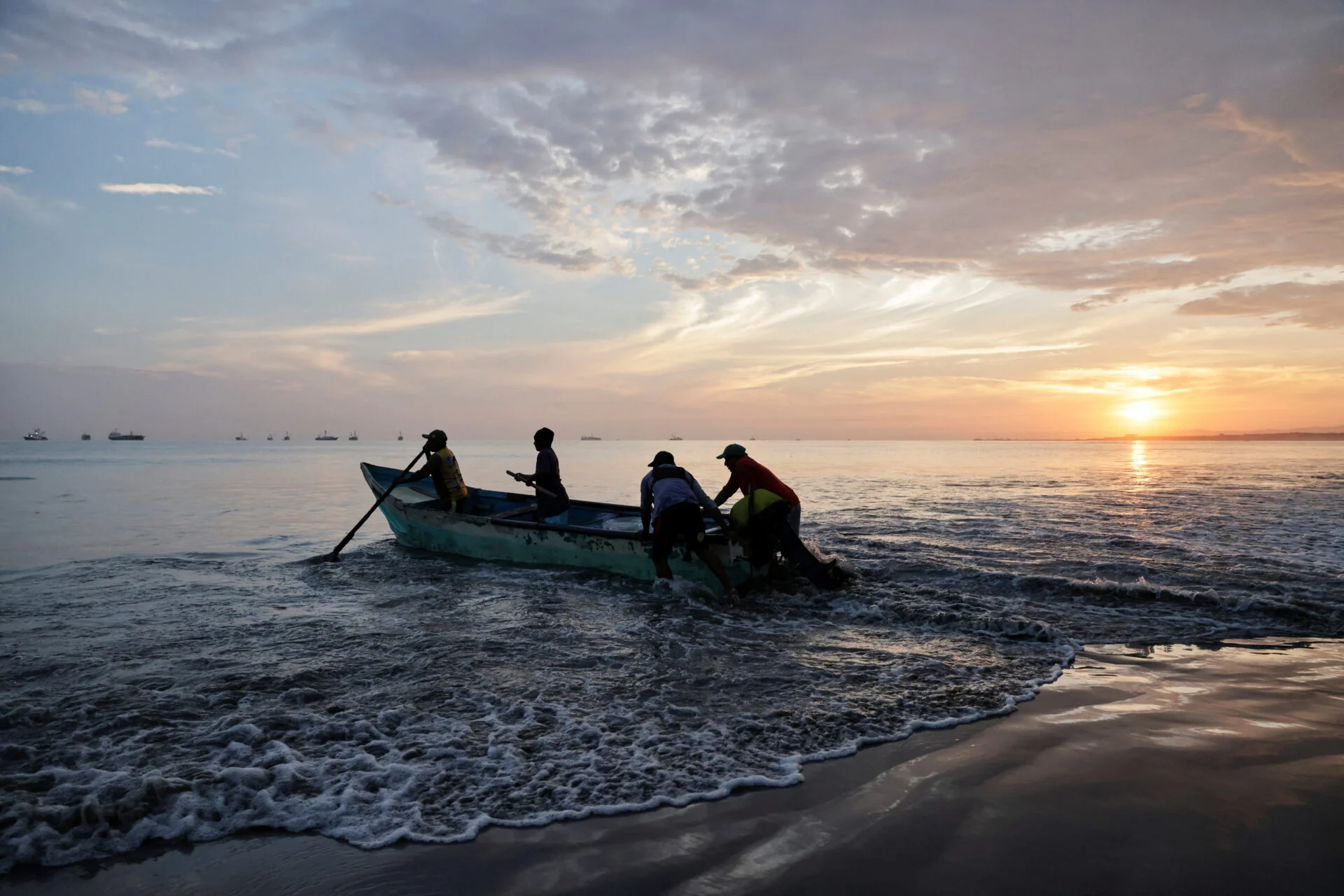
At dawn on Ecuador’s Pacific coast, small boats disperse from the towns of San Mateo and Jaramijó, their bows pointing toward deeper waters and the promise of good fishing.
Others reach the tide-worn coves, where crews unload albacore and billfish and merchants rush to inspect the day’s catch.
This scene hides the dangers that some artisanal fishermen in Ecuador face when entering the sea.
On the mainland, cartels have turned the small ports of Manabí province into a drug trafficking hub, extorting local fishermen who are valued for their navigational skills. They are presented with an impossible choice: earn more than a year’s basic salary trafficking drugs or face extortion, threats and violence.
On the high seas, violence comes without warning with airstrikes against suspected “narcoterrorists.” The US military has destroyed 67 vessels and killed more than 220 people since September last year as part of Operation Southern Spear.
Washington has claimed responsibility for those raids and deaths. Other attacks – for which he has not claimed responsibility, but with similar characteristics – involved fishing boats in Manabí, according to Reuters interviews with three survivors and a dozen testimonies collected by the local organization Permanent Human Rights Committee.
He Washington Post reported this week that the ships had been attacked as part of a covert CIA program.
The fisherman Simon Villacreses He was part of the 16-person crew of the Negra Francisca Duarte II, which set sail from Manta, the largest port city in Manabí. On March 17, out at sea, they heard the drone of a drone just before an attack that caused the ship to catch fire.
Some crew members jumped into the Pacific while others boarded two smaller motorboats, according to Villacreses and two other survivors. The crew headed toward what they believed was a nearby tuna boat, but were met by armed men who spoke English and wore military uniforms, according to their story.
“They started targeting us, they put us on board, they hooded us with our hands tied behind us,” he told Reuters Villacreses52, who suffered a head injury during the attack.
They were then transferred offshore to an El Salvador Navy ship, which took them to the Central American country, where they received medical care and repatriated them on commercial flights, according to survivors and the human rights organization.
A similar sequence of events unfolded nine days later with another drone attack on a ship called Don Maca, from the same province.
At least eight fishermen from a third boat, the Fiorella, have been missing since January. Two members of its crew, who were in a smaller, separate boat, testified before the Standing Committee that they had seen smoke at the last known location of the main ship.
Three security experts interviewed by Reuters said the United States was almost certainly responsible for the attacks, given its current offensive in the area.
Since last year, the United States, Ecuador and El Salvador have announced that they will intensify maritime cooperation against drug trafficking in the eastern Pacific, a key corridor for northbound cocaine shipments. The effort includes intelligence sharing, surveillance and coordinated interceptions.
The US Department of Defense referred questions about the three attacks to Southern Command, which declined to comment citing “operational security and force protection reasons.”
The press office of the president of Ecuador, Daniel Noboadid not respond to Reuters’ request for comment and the military declined to respond, saying information on the fight against drug trafficking is classified.
The Salvadoran Navy did not respond to requests for comment, but in a March 23 Facebook post it reported having rescued 16 shipwrecked Ecuadorians.
Villacreses is still affected by the experience and does not want to return to the sea. “Maybe I’ve kind of given up fishing,” he said.
Extortion to continue fishing
The Negra Francisca used to be anchored in San Mateo, an artisanal fishing port, where most residents live in poverty.
In recent years, two of Ecuador’s most powerful criminal groups – Los Choneros and Los Lobos – have expanded into coastal areas, forcibly recruiting fishermen for drug trafficking, according to Ecuadorian anti-narcotics officials, provincial police and residents.
The United States designated both organizations as terrorist groups last year. They are linked to Mexican drug trafficking organizations: Los Choneros is aligned with the Sinaloa Cartel, while Los Lobos has ties to the Jalisco Nueva Generación Cartel.
Police and locals say many are forced to pay “fees” of $1,200 per fishing trip – three or four times their average monthly income, according to fishermen – or risk retaliation against themselves and their families.
If they transport cocaine, they can earn up to $40,000 per trip, said fishermen from San Mateo and Jaramijó, their relatives and the provincial police.
“Some fishermen are forced to participate in these activities, leaving them exposed both to the action of the authorities and to reprisals by the criminal organizations themselves,” explained the Ecuadorian Police in response to a request for access to public information made by Reuters.
Police estimate that about 300 Jaramijó residents have been incarcerated in U.S. and Salvadoran prisons on drug trafficking charges in the past five years.
Maria Meromarried to a fisherman from the boat Fiorella, said that some men are reducing their trips due to threats from drug traffickers and military attacks. “The fishermen don’t want to go out anymore,” he said.
Others declared Reuters who fish at night or change their routes to avoid extortion attempts.
A San Mateo fisherman said he had paid extortion on four occasions. In exchange, the gang provided him with the coordinates of a route he could follow and urged him to keep his lights on to avoid being demanded another payment.
Smaller boats that fish near the coast of Manabí are charged less and are given identification proving the payment of the extortion, he explained.
“Everyone is replaceable”
While Southern Command has released nightly videos of attacked vessels catching fire, it has generally only released casualty figures and little information about survivors.
Leonel Pilay21 years old, who was injured along with Villacreses in the March 17 attack, claimed that the crew was not trafficking drugs and that their vessel had been boarded and inspected by the Ecuadorian Coast Guard hours before the drone attack.
“We are fishermen, we are not up to bad things,” he declared to Reuters. “The Ecuadorian Coast Guard checked us and found nothing, they let us continue on our way to land.”
According to testimonies collected by the Permanent Committee on Human Rights, the crew members of the ship Don Maca told a similar story: they were picked up by people who believed they were Americans and handed over to a Salvadoran Navy boat before being repatriated.
Mike Vigilformer head of international operations at the DEA He stated that there was “abundant evidence” that the US Southern Command carried out the attacks on the vessels, based on the testimony of survivors and what he called an “unmistakable military footprint.”
He pointed out that the Ecuadorian Navy does not have the drone technology necessary to carry out attacks.
Renato Riverasenior analyst at the Geneva-based Global Initiative Against Transnational Organized Crime, and Wagner Bravoformer head of the Ecuadorian army, agreed that the United States was likely to have carried out the attacks because of the location, its military campaign against suspected drug trafficking vessels, and the lack of any other actor in the region capable of carrying out such attacks.
The United States and Ecuador say interceptions on the high seas are crucial to combating drug traffickers, and both countries have celebrated major seizures this year.
The United States Coast Guard reported that its parallel campaign against drug trafficking had resulted in the seizure of 91,000 kilograms of cocaine and the arrest of 160 suspected drug traffickers as of April.
In March, the United States Coast Guard and the Ecuadorian Navy recovered 760 kilograms of cocaine from an Ecuadorian-flagged fishing vessel, representing approximately 6% of the total seized on the high seas by the South American country during the first half of 2026.
However, such efforts are unlikely to curb drug trafficking as long as the cartels have large numbers of fishermen to recruit and extort, Vigil said. “Sinking these ships is not going to stop anything,” he said.
And despite the increased use of small fishing vessels by cartels, the vast majority of cocaine shipments continue to transit through large commercial ports, he noted. Michelle Maffeiorganized crime expert at the University of Guayaquil.
“The current government, like the United States, puts too much emphasis on speedboats,” he said. “The fact that they are linked to more fishermen, more people in poverty and more people in vulnerable situations is not going to stop because they are simply dropping bombs into the sea.”
Drug traffickers can change who dies or is arrested. “Organized crime understands something fundamental: everyone is replaceable,” he stressed.