The trump administration faces a new judicial controversy after starting a federal lawsuit to expropriate 5.6 hectares of land belonging to the Catholic Diocese of Las Cruceswith the aim of install an additional stretch of border barrier in an area of strong value religious and cultural.
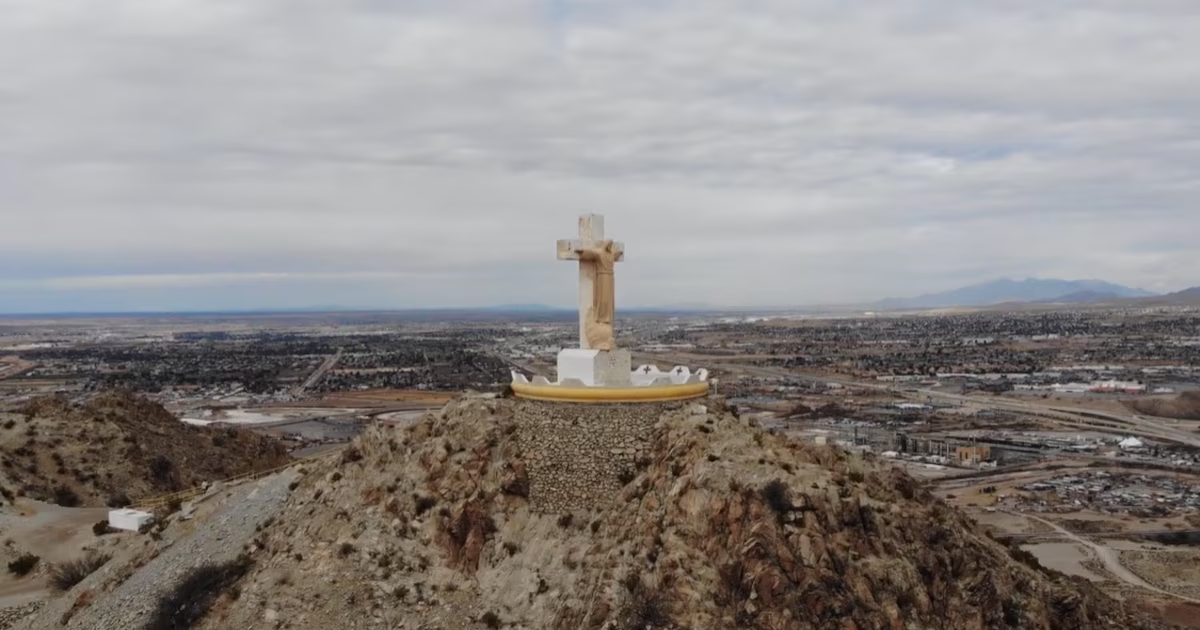
The property, located on the slopes of the Mount Christ the King —a 219 meter mountain crowned by an 8.8 meter statue of Jesus high—is a center of annual pilgrimages that gather up 40,000 people and constitutes a site protected by religious freedom in both cultural and liturgical use, according to the diocese.
The government’s central argument maintains that expropriation is necessary to strengthen security in border between the United States and Mexicowhile the diocese denounces a violation of the First Amendmentas documented The Texas Tribune and expand The New York Times.
According to court documents cited by The Texas Tribunethe administration of donald trump offered the diocese a compensation of USD 183,000 through the land, located in the only stretch without a fence in the El Paso areawhich would allow barriers and advanced surveillance technology to be installed.
This sum comes within the framework of a series of similar actions in the American Southwest: in 2025, plans to install physical barriers in the Big Bend National Park were finally discarded following public opposition from both Democratic and Republican sectors, as well as environmental groups and local residents, according to The New York Times.
The Diocese of Las Cruces resists the initiative and alleges in the lawsuit that the construction would irreversibly affect the sacred character and traditional use of the sitein addition to hindering pilgrimage routes and transforming a religious meeting space into a division symbol.
The document emphasizes: “Any federal action to confiscate this land, erect physical barriers or prevent access to Monte Cristo Rey would constitute a significant infringement of religious freedom and worship rights,” as quoted The Texas Tribune.
The site in dispute has historical background that reinforce their cultural meaning. According to The New York Timesin the 1930s, the diocese commissioned the Spanish sculptor Urbici Soler design the statue that stands at the top today.
Since then, every autumn a religious ceremony to celebrate the festival of Christ the Kingcurrently celebrated in November and which brings together faithful from both dioceses—Las Cruces and El Paso—; some They participate barefoot and others travel the 5 kilometers of ascent on their knees.
The area is also a natural corridor and part of a bi-national zone of high biodiversity. Ray Aguilarbiologist and conservationist Ciudad Juarezwarned The Texas Tribune that installing more barriers could aggravate the risk of extinction of local flora and fauna.
This is because Monte Cristo Rey connects the Sierra de Juárez in Mexico and the Franklin Mountains in Texas: “Plants and animals do not recognize borders.” Impacts of this magnitude only put already threatened biodiversity at risk, he said.
The federal government based the lawsuit on the need to seal a corridor that, according to the Border Patrolis used by human traffickersalthough migratory crossings have been drastically reduced since 2025, according to data reported by The New York Times.
The area recorded a record of deaths of migrants since the military presence and technological surveillance increased.
Meanwhile, there are different positions within the local community. Ruben Escandon, Jr.spokesperson for Mount Cristo Rey Restoration Committeea non-church organization that monitor the placeexpressed support for new barriers and claims that security It will not prevent access by the faithful and will help preserve the artistic and religious aspect of the site.
In contrast, the congresswoman Veronica EscobarDemocrat of El Paso, criticized The Texas Tribune the Trump administration’s strategy: “There are other ways to ensure border security. Instead, the Trump administration prefers to destroy this sacred site.”
The final decision on the expropriation will be decided in federal court, and if the diocese wins the lawsuit, the case could escalate to a higher levelas reported The New York Times.
This is the latest in a series of similar initiatives: in Arizonaconstruction of barriers in 2025 damaged an indigenous archaeological site more than 1,000 years olda fact that provoked condemnations from heritage organizations.
In 2026, the company SLSCO obtained a contract USD 95 million to erect steel barriers reinforced with concrete 9 meters tall near Monte Cristo Rey, where the work began, according to reports The Texas Tribune.