World Hand Hygiene Day It is commemorated every year on May 5 with the purpose of raising awareness among the population and health professionals about the importance of keeping hands clean.
This date, established in 2009 by the World Health Organization (WHO)responds to the need to reduce the transmission of microorganisms and infections associated with medical care. The permanent campaign “Save Lives: Clean Your Hands” It has been consolidated as a global action to strengthen disease prevention and control.
The initiative emphasizes that adequate and frequent hand washing represents a simple and effective measure to safeguard individual and collective health.
He World Hand Hygiene Day It was established by the World Health Organization (WHO) in 2009, within the framework of the international campaign “Save Lives: Clean Your Hands”.
This anniversary is celebrated annually on May 5 with the aim of promoting hand hygiene as an essential strategy in the prevention of infections, especially within healthcare environments. The WHO selected this date to Align global hygiene awareness with peak respiratory disease season on several continents.
Since its inception, the event has sought to involve both health professionals and citizens. The campaign emphasizes that handwashing with soap and water or disinfectant solutions is a low-cost, highly effective intervention to reduce the spread of bacteria, viruses and other pathogens. Each year, WHO chooses a theme to focus specific efforts and messages. In 2024, the motto has been: “Promote knowledge and capacity-building of health and care workers through innovative and impactful training and education in infection prevention and control, including hand hygiene”.
The first international edition of this day was held in 2009 and, since then, the commemoration has grown in scope and impact. The Ministry of Health of Peru actively participates in the campaign, adapting messages for the national context and promoting continuous training in health centers.
The campaign “Save Lives: Clean Your Hands”promoted by the WHO, is part of a broader effort to improve safety and quality in healthcare worldwide. According to agency data, healthcare-associated infections represent one of the most frequent adverse events in hospitals and clinics, with serious consequences for millions of patients each year.
Hand hygiene is recognized by the scientific community as one of the most effective barriers to prevent the transmission of multiresistant microorganisms. The WHO points out that an average university hospital can generate 1,634 tons of sanitary waste annuallya figure that increases between 2% and 3% each year, mainly in countries with greater resources.
For this reason, the organization recommends reflecting on the rational use of gloves and highlights that their use must always be complemented with hand hygiene, so as not to increase the generation of waste unnecessarily.
In the healthcare field, correct hand disinfection before and after contact with patients is essential to reduce the risk of infections. The Spanish Ministry of Health emphasizes the message: “Before contact and also after. Hand hygiene: for the patient, for the center, for you”. The institutional commitment translates into the development of training materials and information campaigns aimed at both professionals and citizens.
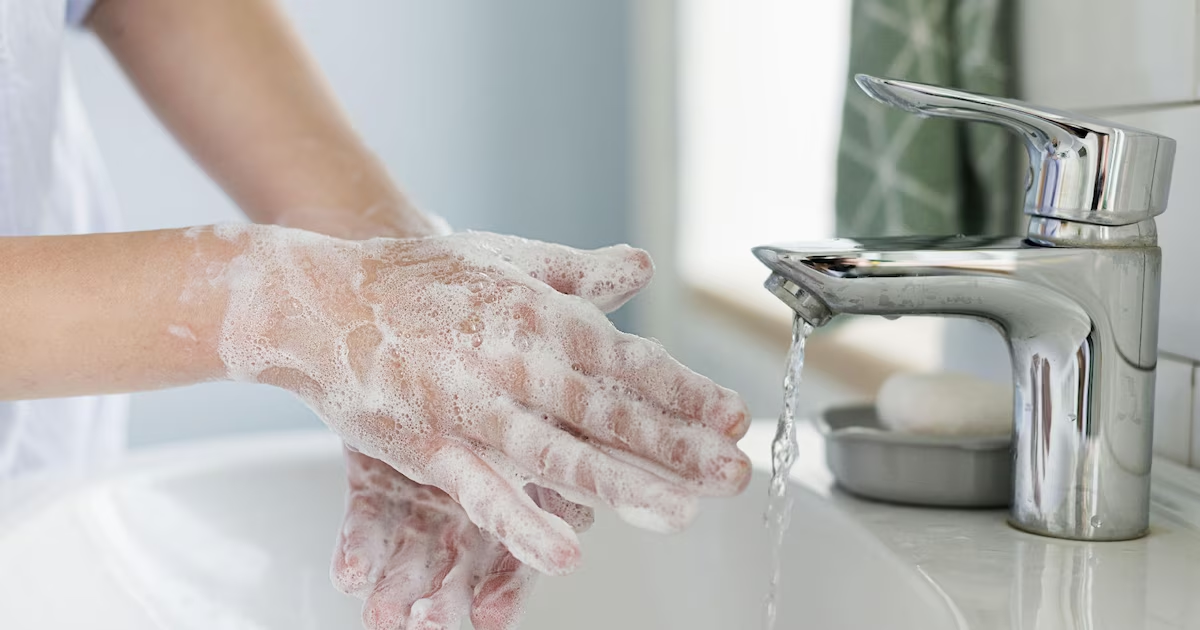
The proper practice of handwashing is one of the most reiterated recommendations by international public health organizations. The basic procedure involves washing your hands for at least 40 seconds using soap and water, paying attention to all surfaces, especially after going to the bathroom, coughing, sneezing, handling food, or touching potentially contaminated surfaces.
In addition to frequent hygiene, it is advisable to keep nails short and clean to avoid the accumulation of dirt and microorganisms. After using cleaning products or handling chemicals, It is necessary to wash your hands carefully to avoid skin irritation or infections. In the healthcare environment, continuous training and awareness are key tools to maintain high safety standards.
The WHO international campaign has served to consolidate the World Hand Hygiene Day as a global reference in the promotion of preventive practices. The collaboration of national health systems, such as the Spanish Ministry of Health, and the involvement of professionals and citizens, reinforce the message that hand hygiene is a simple gesture with a significant impact on reducing infections and improving public health.