Chile’s economic activity registered the first monthly increase of the year in March, according to a report released days after central bankers warned of a more adverse impact of the war in the Middle East on both global growth and inflation.
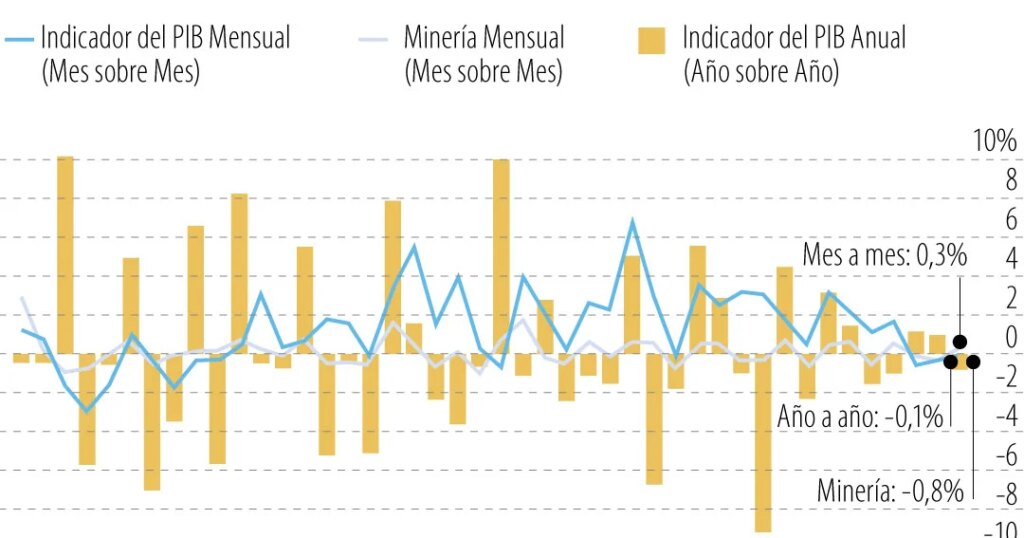
The Imacec index, an indicator of gross domestic product, rose 0.3% compared to February, exceeding the average forecast of 0.1% of analysts consulted by Bloomberg. The economy contracted 0.1% year-on-year, the central bank reported Monday.
Chilean economic policymakers face the prospect of higher inflation and lower activity this year, due to the prolonged conflict with Iran. Last week they left borrowing costs unchanged and warned about the possibility of oil prices remaining high for longer. Meanwhile, President José Antonio Kast’s government is trying to revive optimism by unlocking stalled investment projects and pushing legislation that includes corporate tax cuts and employment subsidies.
Trade rose 1.9% in March, while services rose 0.4%, according to the central bank. On the other hand, mining fell 0.8% in the month, while industry fell 1.1%.
According to economists surveyed by the central bank in April, annual inflation is expected to accelerate to 4.3% this December, from 2.8% in March. Analysts also reduced their 2026 gross domestic product forecasts from 2.5% to 2%.
The Chilean economy received bad news last week, when the national statistics agency reported that unemployment increased more than expected in the quarter ending in March, reaching 8.9%, due to the loss of formal jobs. Government data also showed continued weakness in industry and the manufacturing sector.
Given the increase in short-term inflationary expectations, Central bankers announced Tuesday that they will pay attention to factors that could generate inflationary pressures throughout the economy. The Chilean economy is particularly vulnerable to fluctuations in global crude oil prices, given that it imports virtually all of its fuels.