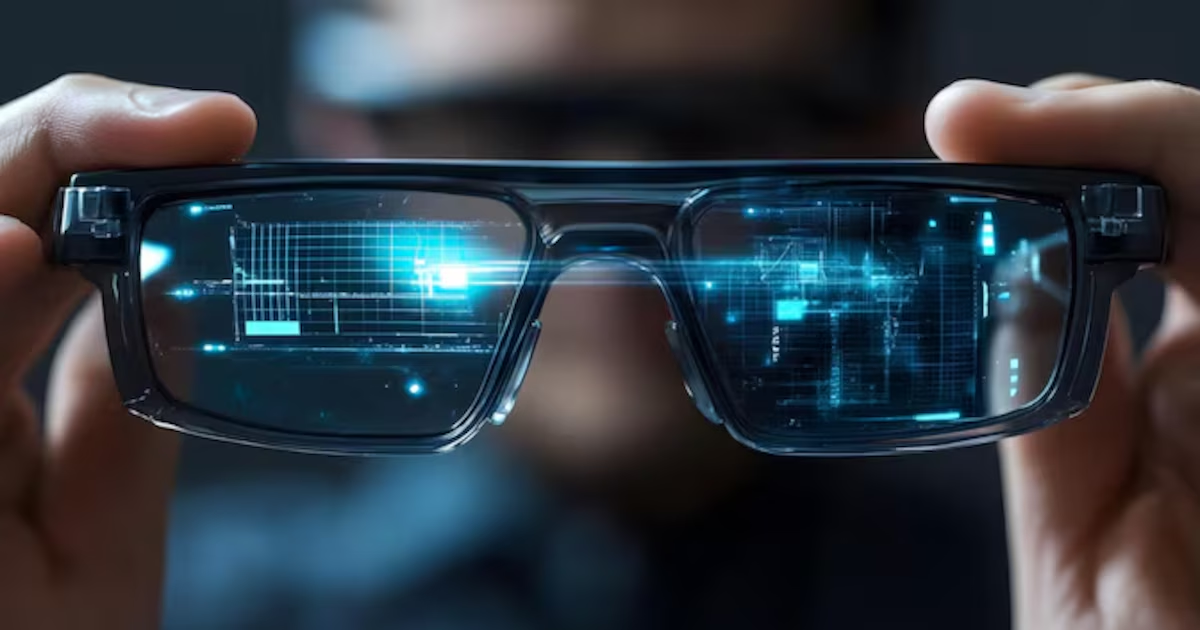
Google is preparing the launch of a new generation of smart glasses for 2027 in collaboration with Gucci, in a movement that seeks to combine advanced technology with luxury design to expand the reach of this type of devices beyond the traditional audience.
The information, advanced by Reuters, confirms that The company is committed to positioning this product not only as a technological gadget, but also as a fashion accessory.. The project is part of Google’s strategy to compete in the emerging smart glasses market, where there are already proposals such as the Ray-Ban Meta and Apple’s ongoing developments.
Furthermore, unlike previous initiatives focused primarily on functionality, Google now seeks to make its smart glasses also stand out for their aesthetics. The collaboration with Gucci introduces a component of exclusivity that could attract new users, especially those interested in fashion and trends.
Until now, the company had already explored partnerships with brands such as Warby Parker or Gentle Monster, but the link with Gucci represents a leap towards a higher segment of the market. The strategy seems clear: transform a niche product into an aspirational accessory.
Google’s interest in this approach responds to a market reality. Smart glasses have yet to achieve mass adoption and are typically aimed at technology enthusiasts. Incorporating luxury design could be key to broadening your appeal.
Although the technical details of the model planned for 2027 have not yet been revealed, These glasses are expected to work with Android XR, the platform developed by Google for extended reality devices. This system is designed to integrate artificial intelligence, advanced sensors and immersive experiences.
Unlike other augmented reality devices, these glasses would not include a conventional screen, but would instead focus on AI-assisted functions and interaction with the environment. This approach seeks to offer a lighter experience that is more adaptable to everyday use.
The development of these glasses is part of a broader roadmap. The first step will be the launch of a previous model, known internally as Project Aurawhich could arrive sooner and would have a design closer to that of the Ray-Ban Meta, with robust frames and a functional focus.
Beyond the design, Artificial intelligence will be one of the pillars of the device. Google has been integrating this technology into different productsand smart glasses will be no exception.
AI is expected to enable features such as contextual assistance, environment recognition, voice interaction and task automation, aligning with the current trend of devices becoming more autonomous and integrated into daily life.
This approach also responds to competition in the sector, where other companies seek to position their devices as useful tools in everyday life and not just as experimental gadgets.
The interest of Google in this segment reflects a broader trend within the technology industry. Smart glasses are emerging as one of the next key formats of digital interaction, along with smartphones and other wearable devices.
However, the challenge remains to make these products attractive and functional for the general public. The collaboration with Gucci aims precisely to solve part of that challenge, integrating technology in a format that also responds to aesthetic criteria.
For now, the price and final features of the device remain unknown. However, the alliance between Google and Gucci marks an important step in the evolution of smart glasses, combining technological innovation with high-end design in an attempt to redefine this type of device.