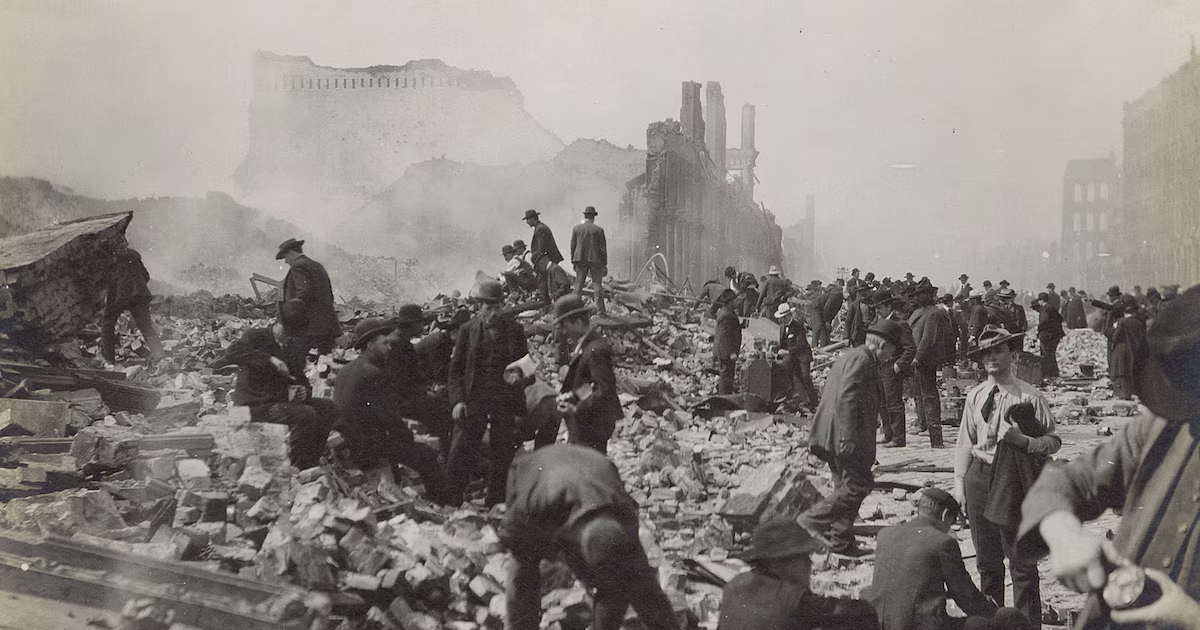
San Francisco, California, Wednesday April 18, 1906, 5.13 in the morning. Towards the east, the reddish color of the sky heralded the arrival of a new day, one more to continue cradling the ambitious American dream. But that day would be different: without any warning, nature would demonstrate with a single resounding blow that man’s projects can collapse just like a house of cards. First the desperate chirping of thousands of birds was heard as they abandoned their nests and fled in different directions; then, a terrifying thunder coming from the bowels of the Earth. And three seconds later, the world fell apart. In less than a minute the city was in ruins. As if the planet wanted revenge for so many years of plundering its bowels, it destroyed in an instant the emblematic capital of the voracious gold seekers. In the world it was known as “the San Francisco earthquake”, but they called it simply and tragically The Big One.
By 1906 San Francisco had about 400,000 inhabitants and it had one of the largest and safest ports in the world, an active center of trade with Oceania and the Far East. It was also the seat of “la vida loca” that money could grant, because in addition to the mineral wealth of the region, composed of gold, silver, copper, mercury, lead and coal, California was one of the three most important states in the oil production. The dollars were flowing, and so was the fun. In the residential neighborhoods of San Francisco, millionaires’ palaces They gave the city a European appearance. The recently inaugurated City Hall filled everyone with pride and Chinatown was a true piece of Shanghai, with its narrow alleys full of magic, its silk and porcelain shops and its opium smoking places. All of that would disappear in the blink of an eye.
The spring evening of Tuesday, April 17, was special for those who attended the Grand Opera Theater to delight in the voice of Enrico Caruso, the greatest tenor of the time, in his interpretation of Don José from the opera Carmenby Georges Bizet. Once the show was over, the public took to the streets and spread out to the bars, restaurants and cabarets to end the day. Thus the night progressed, until little by little the streets became empty. The night owls went to bed almost at the same time that on the opposite shore of the bay, the agricultural population of the orange vineyards and farms was preparing to start another day of work. They were the ones who saw the strange phenomenon of the birds that abandoned their nests and they kept fluttering and chirping in the air, as if they were afraid to land on the ground or the trees. Immediately afterward the earthquake occurred.
In the city, with the first shock, people tried to escape from their homes looking for places under the open sky so as not to end up crushed by the roofs of the buildings that began to collapse. The majority did not make it. There were four more shocks, one after the other, for endless moments. 48 seconds. The noise was deafening, as the roar of the earth was added to the roar of falling buildings. The pavement was filled with huge cracks and there were trees that, torn from the ground, rolled down the hill. To increase the general horror, the city was shrouded in darkness by the dust that floated mixed with the mist of the sea. Then fires broke out everywhere.
Seismographs around the world recorded the tremor, which had an intensity of 8.3 degrees on the Richter scale, with the epicenter northwest of the city, in the depths of the Pacific. The dead were first counted in the hundreds and later in the thousands.
At the time of the earthquake, Enrico Caruso was reading the correspondence that had arrived from Europe and New York in his room on the third floor of the Palace Hotel, one of the best in the city. With the first tremor, he threw away the cardsjumped out of bed and he ran down the hallway dressed in his pajamas, a fur coat that he managed to fumble with, and a scarf around his neck. “As soon as I left my room the ceiling collapsed. When I reached the street I saw that the buildings were shaking and that large pieces of masonry were falling away. I heard screams of men, women and children. Very soon it seemed that the entire city was on fire. I wandered the streets all morning and tried to leave San Francisco, but the soldiers would not let me pass. That night, when many hours had passed since the earthquake, I lay down on the floor to sleep. He didn’t give any more. My legs, shoulders and head still hurt just remembering it,” he told the press.
It was more supportive the soprano Madame Fremstadwho accompanied Caruso in the role of Carmen. While the great tenor tried to leave the city, she dedicated herself to taking food from the Palace Hotel to distribute among the victims. He did so without pause until seconds before the building was dynamited to prevent it from collapsing uncontrollably. For three days, The singer collaborated with the teams that assisted the victims.
The two artists could consider themselves lucky to have saved their lives. The 75 people who were crushed to death in the Hotel Valencia could not say the same. In the Court Palace, in the back of which the Model Prison was located, it also completely collapsed and crushed most of the prisoners. On the fifth floor of a building on Market Street, where a printing press operated, the weight of the machines accelerated the collapse and crushed those on the lower floors.
Those admitted to the Agnew psychiatric hospital were freed by the nurses themselves when the building began to collapse and they scattered throughout the city. According to a chronicle of those days, some of them crossed paths with the young actor on the street. John Barrymorewho the night before had attended the performance of Carmen and he was still awake, having a drink in the bar of the Saint Francis Hotel because an hour later he had to board a steamship that was leaving for Australia. “I found myself on the street tailcoat dress and top hat. I must confess that the incessant shaking of the earth never ceased to frighten me. I don’t know why, To give myself courage, I began to recite out loud the monologue of Hamlet. Most of those who passed by looked at me in amazement, but little by little a group of gentlemen in underwear surrounded me who, with significant gestures, gave me to understand that they largely agreed with my attitude and the meaning of my recitation. His approval really gave me courage and I began to feel proud of myself, until a police officer approached me and told me that this select group of admirers were pensioners from the local asylum,” he said. Whether the story is true or Barrymore’s invention is impossible to know, but the man managed to get it published in a newspaper.
In the midst of the fear, the solidarity: Hundreds of people quickly organized themselves into rescue brigades, while others headed to hospitals and improvised medical camps to collaborate. But the coin also showed the other side and there were many who dedicated themselves to plunder what they could from the abandoned houses and ruins. The thieves mingled among the rescuers who were removing bodies from the rubble and when they found a body they stole the rings, chains and money they had on them. During the first two days, more than two hundred looters were shot summarily. Three army regiments arrived on forced marches from Oakland and Seattle to try to impose order and the martial law. The inhabitants of San Francisco had to obey the Army’s orders that were communicated through signs placed on public buildings.
The tremor had lasted only 48 seconds, but three days later The fires continued. The balance of the earthquake began to be translated into figures: around 2,000 deadmore than 15,000 injured, 28,000 buildings collapsed that left 250,000 homeless people and damages of more than 200 million dollars. Only at dawn on Saturday the 21st did the firefighters achieve a final hard-fought victory against the flames. The catastrophe had mainly affected the commercial center of the city and if there were no more victims it was because, at the time of the earthquake, the shops, schools, factories and offices were empty.
Once the earthquake had passed and the fire had been put out, the only thing left to think about was rebuilding the city. Without wasting time, President Theodore Roosevelt gave a message to the country asking for help: “The United States is in a position to help American misery with American money,” he said in one of his paragraphs. Instead of thanking him for the message, the city authorities of San Francisco responded defiantly: “The city needs charitable contributions for its reconstruction. With the 170 million that must be paid by companies, what we have been able to save from local banks and the rich crops of California we can face everything. No financial aid will be accepted if it does not conform to the strictest commercial principles.”
After that official response, the authorities began an advertising campaign with posters distributed throughout the city: “Don’t talk earthquake. Talk business (Don’t talk about the earthquake. Talk about business,” they read.