The escalation of prices beef in USA is directly affecting consumers’ purchasing ability, according to the latest monitoring carried out by CBS Newsthe American news network.
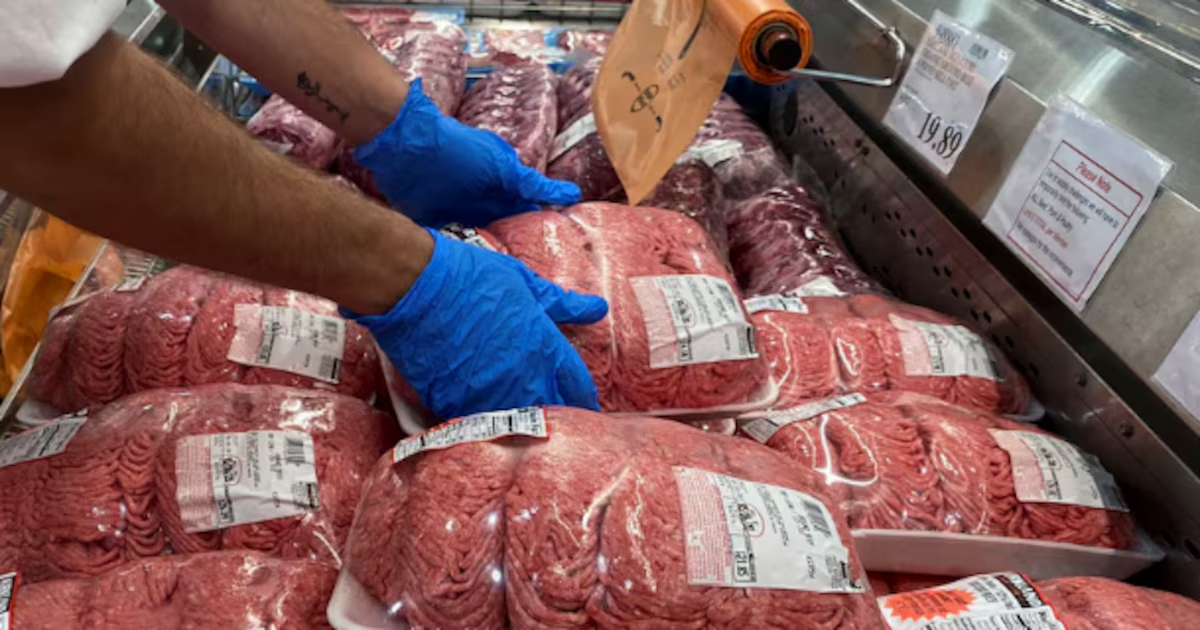
The prices of the ground meatone of the cuts most popular and common in the local diet, reached in March USD 6.70 per pound (USD 14.76 per kilogram), a figure that represents an increase of 16% compared to the previous year, while the cost of steaks came to USD 12.73 per pound (USD 28.08 per kilogram), an increase proportional to that of ground beef.
These increases occur at a time when, unlike products such as eggs whose contributions decreased, beef consolidates its rise in price and official forecasts anticipate that this trend will persist.
The current price doubles that registered in 2021when ground beef was paid USD 3.96 per pound (USD 8.72 per kilogram), and almost quadruples compared to the average values of a decade ago (US$3.75), according to data from Federal Reserve Bank of St. Louis cited by CBS News.
This comparison brings perspective about the speed of inflationary phenomenon in this good that, despite its sustained increase in price, maintains solid demand in the domestic market due to the central role of beef in the American diet and consumer preference, which reduce other expenses but prioritizes his meat consumption.
The Department of Agriculture foresees increases of up to 18% in 2026
Pressure on beef prices shows no signs of immediate relief. The United States Department of Agriculture, USDAprojects that meat values will increase more than 10% in 2026even reaching 18% increaseaccording to the national average anticipated in its latest report.
This forecast occurs in a context of broader inflationwith the index of Consumer Prices reporting a general rise in 3.3% YoY in Marchalmost a percentage point above the previous record, according to CBS News.
The conflict in Middle Eastin particular the escalation of regional tensions with the participation of Irangenerated a rising prices of essential inputs as gas and heating fuel, a situation that impacts the food chain.
The food economist David Ortegaof Michigan State University, explained to CBS News that the increases in diesel they make each link of the process more expensivefrom the operation of agricultural machinery to the transportation of the finished product. Ortega warned: “Higher diesel prices will impact costs throughout the entire agri-food chain, from the use of harvesters to the shipment of already processed meat to stores.”
Meanwhile, internal price monitoring carried out by CBS News indicates that the cost of food in general in the country rose almost 20% since January 2022.
Declining livestock numbers drive shortages
The rise in beef prices not only responds to international macroeconomic factors, but mainly to a sustained decline in cattle herds in the United States.
The USDA found that the number of cows destined for beef production fell in January to less than 28 milliona reduction of 1% compared to the previous year and the lowest level since 1960saccording to the organization. This figure responds to the drought which especially affects the west of the country, where the most relevant producing regions are concentrated.
That climatic phenomenon aggravated the cost of maintaining livestock in 2022; The lack of pastures forced producers to feed livestock with more expensive inputs and, in many cases, reduce detours. Furthermore, the Russian invasion of Ukraine In the same period, it raised forage prices even more, increasing pressure on the margins of bovine production, as Ortega explained to CBS News.
This combination of factors led many producers to sell animals ahead of schedule and limited the ability to continue increasing meat supply. Ortega specified: “It was more expensive to maintain the livestock, so many producers sold a significant number of animals, which reduced herds and made future expansion of supply difficult.”
Domestic demand is sustained in the face of rising prices
Despite these increases, the report prepared by the international consulting firm NielsenIQ and shared with CBS News indicates that the pace of beef sales measured by units it just went down 4% year-on-year until the end of March, while sales in monetary terms increased 8%.
According to Andrew CoppinCEO of the technology firm Ranchbotspecialized in water monitoring for livestock ranchesbeef consumption did not decrease significantly: Red meat even gained ground against pork and chicken despite price pressure, because American consumers tend to maintain their eating pattern by prioritizing beef.
Producers seek to rehabilitate herds with female retention
In the medium term, analysts identify some signs of stabilization on the horizon. David Ortega highlighted, based on figures from the USDA cited by CBS Newsthat ranchers began to slaughter fewer cattle and increase the number of breeding cows, pointing out a priority in the recovery of the rodeos to increase future supply.
Ortega explained: “These high prices are the signal that leads producers to rebuild the herds and expand supply. Due to these high prices, it is possible that in the coming months or years we will observe a greater supply that helps moderate current values.”
According to CBS Newscurrent US beef price dynamics are deeply linked to the lower availability of livestock and the resilience of local consumptiondespite the inflationary context and international tensions in the supply chain.